Plenty of modern self-help books talk about the art of living well. But as Christians, we ought to be equally concerned with dying well.
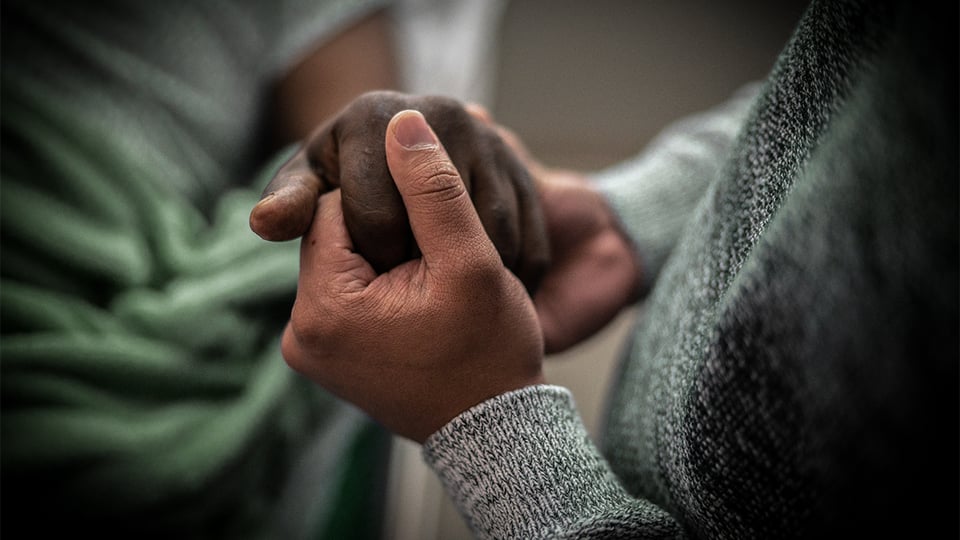
Almost 10 years ago, a dear friend and mentor of mine died of complications from ALS. He was a pastor, and his death sent shockwaves through a small community of believers who knew and loved him.
(I say, “who knew and loved him,” but this is redundant. To know him was to love him. It was impossible not to.)
In the days and weeks that followed, my social media feed was flooded with fond memories and tearful goodbyes for a man who had impacted so many lives during a relatively short time here on earth. I remember the gist of those comments, but I don’t think I could recite any of them from memory—with one exception.
In a sea of other heartfelt reflections and condolences, a mutual friend offered a few short words—but they turned out to be indelible ones, still etched into my memory almost a decade later:
“He showed us how to live and how to die.”
In the storeroom of my mind, wherever the permanent, unforgettable things are stored, that phrase is carefully preserved in the precious box of sentences that have changed how I look at the world. Every so often, I pick it up to inspect it again—to turn it over and feel the weight of it in my hands.
How to live. How to die.
Three requirements for dying well
As a Christian, I spend a lot of time thinking about that first part. How to live. That’s why we’re here, isn’t it? To “live godly in Christ Jesus” (2 Timothy 3:12).
I don’t spend as much time thinking about how to die. Dwelling on death (especially my own) is unsettling, and I’d rather commit to thinking about it later. (Preferably much later and at a very unspecific time.)
Death is not the end. It’s the end of this physical life, yes, but not the end of God’s plan for each of us.
But that’s foolish. Death is guaranteed. “It is appointed for men to die once” (Hebrews 9:27), regardless of how uncomfortable we are with thinking about it—which is exactly why we must think about it.
Everyone dies.
Not everyone dies well.
So what’s the secret?
The art of dying well requires three things from us.
That’s all—just three. They aren’t even complicated things—but then, they aren’t easy things either.
First, we must accept that death—our death and the deaths of those we love—is both unavoidable and unpredictable.
Second, we must understand the future in store for us after our death.
Finally, we must live in a way that both embraces and prepares us for that future.
1. Accepting the inevitability of death
It would probably be easier to think about death if we knew when it was coming. If I knew I only had five years left, maybe I could start coming to terms with it now—making plans, engaging in more self-reflection, course-correcting where it’s needed.
But I don’t know. For me—for any of us—death could come tomorrow or in a decade. It could come in the form of a terminal diagnosis or a tragic accident or it could happen peacefully in our sleep.
We don’t know. We can’t know. But we have to live each day without knowing whether it’ll be our last—which ultimately means we ought to live each day as if it might be.
Because . . . it really might be.
The self-reflection and course correction can’t wait.
2. Understanding what comes after death
But coming to terms with our own mortality is helpful only when we place that mortality in its proper perspective:
Death is not the end.
It’s the end of this physical life, yes, but not the end of God’s plan for each of us.
God’s people know that at the return of Jesus Christ to the earth, “the dead in Christ will rise first” (1 Thessalonians 4:16). And not just rise—“the dead will be raised imperishable, and we shall be changed” (1 Corinthians 15:52, English Standard Version, emphasis added).
And not just changed, but transformed in the most unbelievable way. As children of God, “we shall be like Him, for we shall see Him as He is” (1 John 3:2).
Death is not an end, but an interlude—nothing more than a temporary pause on the way to this incredible future. And because we see that future—because we believe in it and see it as something more real, more concrete than even the physical life we’re living right now—we make the choice to live differently today.
3. Embracing and preparing for the future
God’s people have a long history of dying well, precisely because they treat God’s promises as being more tangible than the life in front of them. Their desire to be part of that future prompts them to live as if it’s already here, making sure their lifestyle lines up with what God expects from them.
And that is how you die well.
The cause of your death is irrelevant.
The age at which you die is irrelevant.
The amount of time you have to prepare for that death is irrelevant.
What matters—the only thing that ultimately matters—is living right now, today, in a way that prepares you for the future that’s waiting for you.
The apostle Paul died well because he committed himself to “forgetting those things which are behind and reaching forward to those things which are ahead” while he pressed toward “the goal for the prize of the upward call of God in Christ Jesus” (Philippians 3:13-14).
And as his death approached, he was able to say with confidence, “I have fought the good fight, I have finished the race, I have kept the faith. Finally, there is laid up for me the crown of righteousness, which the Lord, the righteous Judge, will give to me on that Day” (2 Timothy 4:7-8).
Dorcas died well when she left behind a legacy of “good works and charitable deeds which she did” (Acts 9:36).
Jesus died well, “knowing that the Father had given all things into His hands, and that He had come from God and was going to God” (John 13:3).
And that’s just scratching the surface. Hebrews mentions countless others who died well—who “were tortured, not accepting deliverance, that they might obtain a better resurrection. Still others had trial of mockings and scourgings, yes, and of chains and imprisonment. They were stoned, they were sawn in two, were tempted, were slain with the sword. They wandered about in sheepskins and goatskins, being destitute, afflicted, tormented—of whom the world was not worthy” (Hebrews 11:35-38).
My friend and mentor died well too—not because of the manner of his death, but the manner of his life. A terminal diagnosis with a merciless disease didn’t change who he was or how he lived. Till the end, he continued faithfully pastoring and serving the people of God, trusting that a crown of righteousness was also laid up for him.
Joining the ranks of strangers and pilgrims
What about you?
Will you die well?
Dying well is an art, but it’s not an impossible goal.
It’s not about when or how it happens. It’s not about how much money we have or how long we live or how influential we are.
It’s about pursuing a future that means more to us than anything this world has to offer—and about working with God until we’re the kind of people who belong in that future. And in that process, we will join the ranks of all those who came before us:
“These all died in faith, not having received the promises, but having seen them afar off were assured of them, embraced them and confessed that they were strangers and pilgrims on the earth. For those who say such things declare plainly that they seek a homeland. And truly if they had called to mind that country from which they had come out, they would have had opportunity to return. But now they desire a better, that is, a heavenly country. Therefore God is not ashamed to be called their God, for He has prepared a city for them” (Hebrews 11:13-16).
(Read more about that future in our booklet God’s Purpose for You: Discovering Why You Were Born.)
The crown of righteousness
You’re going to die one day.
Whether or not you die well is up to you.
Christ will give the crown of righteousness to Paul—and “not only to me but also to all those who have set their heart on waiting for [Christ’s] appearance” (2 Timothy 4:8, Common English Bible).
The crown will be given to my friend who finished his race.
The crown will be given to countless Christians who came before him, living their lives in preparation for the homeland God promised them.
And the crown can be there for you too.
About the Author

Jeremy Lallier
Jeremy Lallier is a full-time writer working at the Life, Hope & Truth offices in McKinney, Texas.