While in a city known for pagan worship, Jesus revealed a vital truth that would mark a major change in how God would work through His people on earth.
Andry Djumantara via Getty Images
After healing the blind man in Bethsaida, Jesus and the disciples traveled about 25 miles north to Caesarea Philippi, a mostly gentile city at the foot of Mount Hermon and one of the principal sources of the Jordan River.
Here, far from the crowds of Galilee, Jesus revealed a truth that would shape the future of His followers for generations to come.
A brief history of Caesarea Philippi
After Herod the Great’s death in 4 B.C., the region north of the Sea of Galilee came under the rule of his son Philip, who renamed the city of Paneas as Caesarea Philippi in honor of Caesar Augustus and himself.
The area had long been associated with pagan worship. The Greeks dedicated it to Pan, a god they depicted as having the legs and horns of a goat. A nearby cave, devoted to Pan, was believed to be an entrance to Hades, the realm of the dead, because it seemed bottomless.
The Gospels don’t explain why Jesus brought His disciples there, but as we’ll see, it provided a setting for a pivotal conversation that changed the trajectory of their lives and marked a major transition in how God would work with and through His people.
Jesus asks the big question
After arriving in Caesarea Philippi, Jesus asked them a question: “Who do men say that I, the Son of Man, am?” (Matthew 16:13).
Though statements about Jesus’ identity are peppered throughout the Gospels, this seems to be the first time He directly asked the disciples to identify Him.
The disciples shared some of the opinions they had heard from their countrymen—that Jesus was John the Baptist, Elijah, Jeremiah or another one of the prophets (verse 14). Many apparently believed He was a past prophet who had returned from the dead.
But Jesus wasn’t just interested in the opinions of others. These 12 men had spent hundreds of hours with Him—witnessing miracles, listening to His teaching and observing His example. He also wanted to know where they stood.
“But who do you say that I am?” (verse 15, emphasis added throughout).
Peter, a man who rarely held back his thoughts, spoke up first: “You are the Christ, the Son of the living God” (verse 16).
Peter was making two crucial declarations of faith and belief:
- That Jesus was “the Christ.” The Greek word Christos means “anointed” and is the Greek equivalent of the Hebrew māšîaḥ (“Messiah”). Peter was declaring that Jesus was the fulfillment of numerous Old Testament prophecies foretelling a Savior who would deliver His people from their sins and ultimately rule the earth (Isaiah 53:5; 9:6-7).
- That Jesus was the “Son of the living God.” Peter was acknowledging not only that Jesus was the Messiah, but that He was also the eternal and divine Son of God.
After being with Him nearly three years, Peter and the others were now beginning to understand that they had found not only the Messiah—but the very Son of God.
After commending Peter for accepting what God had revealed to him and answering correctly (Matthew 16:17), Jesus knew they were ready to receive one of the most significant revelations of His ministry.
“I will build My Church”
What Jesus said next would literally change the course of history.
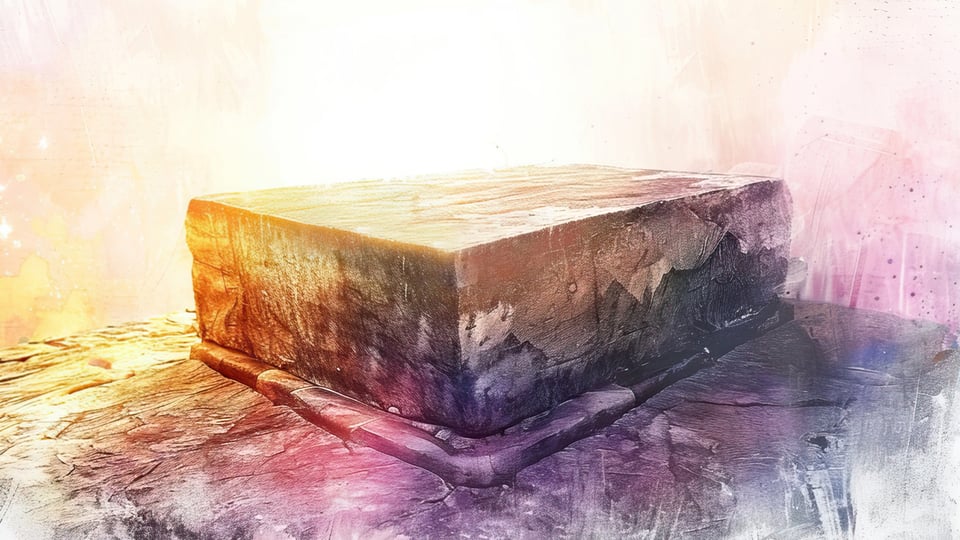
“And I also say to you that you are Peter [petros, a small stone], and on this rock [petra, a large mass of rock] I will build My church, and the gates of Hades shall not prevail against it” (Matthew 16:18).
This involves three major revelations:
- Christ would build a new spiritual entity apart from Israel. The word He used, ekklesia, would have been familiar to the disciples. It described a formally called-out assembly of people, usually in a civic context. The focus of God’s work would shift to an ekklesia—which the Bible shows to be a called-out assembly of people from all nations.
- Christ would be the foundation. Simon, now called Peter, though often strong and fearless, would not be the central figure on which this Church would be built. Though Peter would play an important role, Christ would be its head and foundation.
- This Church would never be destroyed. It would not be a temporary assembly that would appear briefly and then disappear. The “gates of Hades”—a synonym for death itself—would never prevail against it. Standing near a cave many associated with the realm of the dead, Jesus declared that neither death nor the powers of darkness would ever destroy this Church.
Jesus then assured Peter and the disciples that they would play a vital leadership role in guiding God’s people within that Church.
For a more thorough explanation of Jesus’ words and the purpose of the Church, read “On What Rock Did Christ Build His Church?” and “What Is the Church?”
The Church as “the body of Christ”
Jesus likely spoke these words in the late summer or early fall of A.D. 30, just months before His death on the Passover of A.D. 31. Though He revealed He would build the Church, it would not begin until Pentecost of the following spring.
Not long after His ascension, Christ began the Church. Through this new spiritual body, He would continue the work He had personally carried out during His earthly ministry.
The establishment of that Church marked a significant turning point in God’s dealing with human beings. No longer would He work just through one physical nation, but He would now call people out of all nations into this new entity, the Church of God.
Later in the New Testament, Paul wrote to the Church and described it in a unique way: “Now you are the body of Christ, and members individually” (1 Corinthians 12:27). Later, he wrote that the Father “gave Him [Christ] to be head over all things to the church, which is His body, the fullness of Him who fills all in all” (Ephesians 1:22-23).
Of course, Jesus’ literal body was transformed to spirit at His resurrection, and He is now enthroned at the Father’s right hand in heaven.
If Jesus is in heaven, how is the Church His body?
During His 3½-year ministry, Jesus was active on earth, vigorously doing the work of His Father—proclaiming the gospel, modeling His way of life and training and preparing the disciples the Father had called and given Him.
But those essential functions of His work would not cease after Jesus left and returned to heaven.
Not long after His ascension, Christ began the Church. Through this new spiritual body, He would continue the work He had personally carried out during His earthly ministry.
Instead of Christ being on earth and physically doing the work Himself, He would now accomplish it through the Church. In fact, He even declared that His Church would ultimately do “greater works” than He did during His short ministry (John 14:12).
Under His leadership, the spiritual Body of Christ would perform the same functions His physical body had performed while He walked this earth.
- As Jesus had proclaimed the gospel message to those He could reach during His physical ministry (Matthew 4:23; Mark 1:14-15), the Church would now be responsible for spreading the same gospel to the entire world (Mark 16:15; Acts 1:8).
- As Jesus had perfectly modeled God’s way of life by His example (1 Peter 2:21-22), the members of the Church would now be expected to live and model God’s way of life by their example (Matthew 5:14-16; 1 Peter 2:11-12).
- As Jesus had trained and prepared His disciples for future leadership in the Church and in the Kingdom of God (Mark 3:13-14), the Church would equip its members for service and leadership both now and in the coming Kingdom of God (Ephesians 4:11-13; Colossians 1:28).
As the Body of Christ, the Church continues the work and activities that Jesus fulfilled physically while on earth. It does so not by its own might or by human intellect, but under the leadership and through the power of Christ Himself (Ephesians 1:22-23; Colossians 1:18).
Jesus Christ works through the Church to accomplish the Father’s work on earth.
The Church that walks as He walked
The theme of this series is to examine various episodes in Christ’s life and highlight how we can learn from and follow His example.
This particular moment in Christ’s life—when He declared that He would build His Church—shows us that following His example isn’t something God calls us to do in isolation.
God is calling individuals out of this world to be part of something much bigger than themselves and together do the most important work on earth today. Those seeking that Church should look for the body that faithfully follows Christ’s example and carries on His work. (Study this further by downloading our booklet Where Is the Church Jesus Built?)
Jesus is still building His Church, and its members are tasked with the most remarkable individual and collective mandate ever given to human beings . . .
Walk as He walked.
About the Author

Erik Jones
Erik Jones is a full-time writer and editor at the Life, Hope & Truth offices in McKinney, Texas.