The Gospel of John presents the most detailed look at Jesus’ words on the night before His death. In His severest trial He gave us great encouragement.
Volodymyr via Adobe Stock
All four Gospels record memorable and meaningful sayings of our Savior. But only John records many specifics of Jesus’ final message for His closest disciples—and for us.
His friends could sense His sorrow and apprehension about the suffering just ahead. But instead of focusing inward, Jesus turned His attention to comforting, encouraging and strengthening them.
They were about to experience their greatest test as well, and He was preparing them for it.
What John wants us to know
John was not limited by the normal vagaries of memory or restricted by a need to give a full overview of Jesus’ life and teachings. Three others had already done that, and God supplied John with the recall to be able to choose other episodes from the vast store of things Jesus did (John 14:26; 21:25).
So why did John choose to write what he did? He gives his purpose in John 20:30-31.
“And truly Jesus did many other signs in the presence of His disciples, which are not written in this book; but these are written that you may believe that Jesus is the Christ, the Son of God, and that believing you may have life in His name.”
He wrote these things for you and for me.
We also need to believe. Seeds of doubt, waves of sadness, attacks of discouragement besiege us as well. We need Christ’s comfort and assurance. We need to see the fruit of God’s Spirit conquer the works of flesh and darkness.
The details of Jesus’ final discourse and prayer (John 13:31 through 17:26) are unique to the book of John.
John’s Gospel is different. He compels us to look harder, dig deeper, think more intensely, feel more fully.
Jesus’ words in this passage confront us with a deeper symbolism that provoked misunderstandings even among His disciples.
But in the end, His message strengthened His disciples for the devastating trial they were about to face.
And John’s record of it has empowered Christ’s followers from the first century to today.
Jesus comforts His disciples
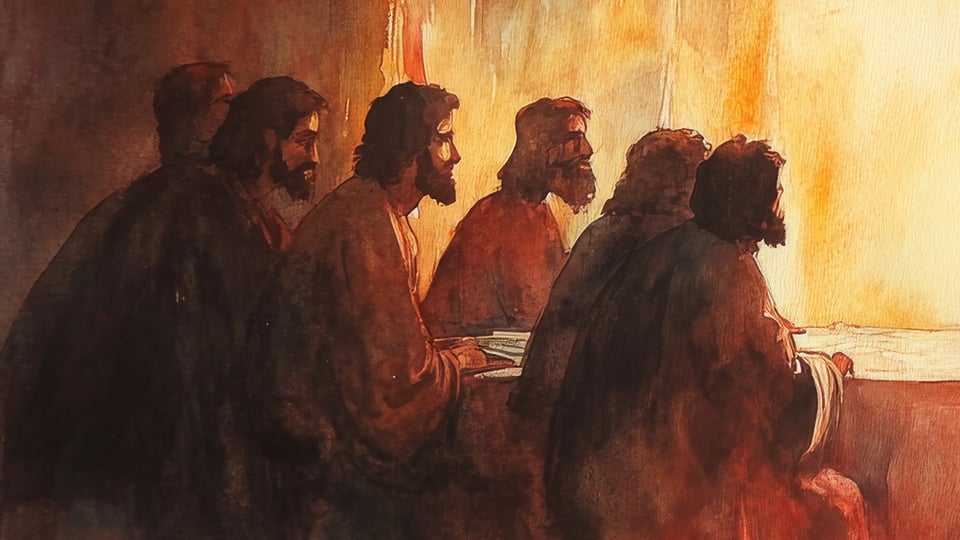
Jesus told His closest friends that one of them would betray Him (John 13:21). He and His disciples were understandably troubled.
Jesus didn’t sugarcoat the upheaval to come. But He did pivot to a message full of comfort. He displayed and offered them love, peace and joy. He demonstrated calm confidence in the face of impending crisis.
Twice in John 14 Jesus said, “Let not your heart be troubled” (verses 1, 27).
That’s easier said than done, of course. But God offers faith and peace as antidotes to fear.
Christ promised to prepare a place for His followers and to return (John 14:2-3; to explore this passage more deeply, see “Many Mansions (in Heaven?)”). Christ the King will abundantly welcome and meaningfully employ His followers when He comes. This good news of the Kingdom of God provides an anchor of hope. It illuminates a vision that can inspire and motivate us.
But John reminds us that understanding Jesus’ message does not come easily. First Peter, then Thomas, then Philip, then Judas (not Iscariot) sought clarification.
Ultimately, understanding Jesus’ answers requires spiritual help through “the Helper, the Holy Spirit” (John 14:26).
Jesus teaches about relationships
Christ calls Christians to abide in Him—to connect to Him. We must remain attached even when enduring the pain of pruning—the removal of aspects of our lives that don’t reflect Him, the true vine (John 15:1-8). Our relationship to Christ allows us to bear the spiritual fruit He desires.
Whenever a Christian is facing turmoil, trials or even the tediousness of life, Christ’s farewell message can give comfort and rejuvenation.
Christ also instructs His followers to “love one another as I have loved you” (verse 12).
Though Christians are to treat all with love, Jesus warned that in this world, they won’t always receive love in return. In fact, as the world hated Christ, those in the world will hate us (verse 18). Jesus gave this warning so we wouldn’t be surprised and stumble (John 16:1).
But He will send the help we need.
The Holy Spirit and the fruit of the Spirit
Jesus promised not to leave His disciples as orphans, alone and in need. He had been their Helper and Comforter, and now in His absence He would send another Helper, the Holy Spirit (John 14:16-18).
The word translated “Helper” in the New King James Version also has other translations, such as Comforter in the King James Version. “The word paracletos signifies not only a comforter, but also an ‘advocate,’ a ‘defender’ of a cause, a ‘counsellor, patron, mediator’” (Adam Clarke’s Commentary, comment on John 14:16).
At that point the disciples had the Holy Spirit with them, but soon, Jesus told them, the Spirit “will be in you” (verse 17). This “Promise of the Father” would come to them on the Day of Pentecost (Acts 1:4; 2:4).
Through the Holy Spirit, Jesus and the Father dwell with us, enabling us to produce fruit in our lives—spiritual fruit such as love, joy and peace:
- “If you keep My commandments, you will abide in My love, just as I have kept My Father’s commandments and abide in His love” (John 15:10).
- “A new commandment I give to you, that you love one another; as I have loved you, that you also love one another. By this all will know that you are My disciples, if you have love for one another” (John 13:34-35).
- “Most assuredly, I say to you that you will weep and lament, but the world will rejoice; and you will be sorrowful, but your sorrow will be turned into joy. A woman, when she is in labor, has sorrow because her hour has come; but as soon as she has given birth to the child, she no longer remembers the anguish, for joy that a human being has been born into the world. Therefore you now have sorrow; but I will see you again and your heart will rejoice, and your joy no one will take from you” (John 16:20-22).
- “Peace I leave with you, My peace I give to you; not as the world gives do I give to you. Let not your heart be troubled, neither let it be afraid” (John 14:27).
- “These things I have spoken to you, that in Me you may have peace. In the world you will have tribulation; but be of good cheer, I have overcome the world” (John 16:33).
Study more about spiritual fruit in the Bible Journey “The Fruit of the Spirit.”
The High Priestly prayer (John 17)
After these three chapters of instruction to the disciples, John gives us a glimpse of Jesus’ heartfelt prayer for His disciples—and for us. None of His other prayers are recorded as fully as this one.
It is often called the High Priestly prayer, since in it Jesus Christ interceded for us (Hebrews 7:25).
First Jesus talked to the Father about the work He had accomplished and His longing to return to the glorious state He had had with the Father “before the world was” (John 17:1-5).
Then He prayed specifically for His disciples. “Holy Father, keep through Your name those whom You have given Me, that they may be one as We are” (verse 11).
Jesus considered His followers a precious gift from the Father, a fact He mentioned seven times (verses 2, 6 [twice], 9, 11, 12, 24).
They were in the world, but not of this evil world—this society influenced by Satan. Jesus asked the Father to protect them from the evil one (verse 15). They were to be sanctified—set apart—by God’s truth (verse 17).
And He prayed for us!
“I do not pray for these alone, but also for those who will believe in Me through their word; that they all may be one, as You, Father, are in Me, and I in You; that they also may be one in Us, that the world may believe that You sent Me” (verses 20-21).
Jesus desired that His Church would experience the unity He and the Father enjoyed. Love and unity were to be hallmarks of His followers.
Comfort and inspiration for today
Christ’s final discourse and prayer continue to encourage, strengthen and motivate God’s people today. Many study them in preparation for the New Testament Passover each year, and ministers of the Church of God read through these profound words at the Passover service.
And whenever a Christian is facing turmoil, trials or even the tediousness of life, Christ’s farewell message can give comfort and rejuvenation.
“It is often in the words of a dying person that one learns what is dearest and most crucial to him” (A Complete Literary Guide to the Bible, 1993, pp. 414-415).
Knowing what was important to our Redeemer can help reorient us to what is truly important.
Study further in our articles “The Gospel of John” and “I Am the Way, the Truth, and the Life.”
About the Author

Mike Bennett
Mike Bennett is editorial content manager for the Church of God, a Worldwide Association, in the Dallas, Texas, area. He coordinates the Life, Hope & Truth website, Discern magazine, the Daily Bible Verse Blog and the Life, Hope & Truth Weekly Newsletter (including World Watch Weekly). He is also part of the Personal Correspondence team of ministers who have the privilege of answering questions sent to Life, Hope & Truth.