How to Pray Effectively
An ancient religious practice offers insight on how to pray. What can we learn? How can we pray more effectively?


undefined undefined/iStock via Getty Images
When you think of how to give your prayer life a boost, your mind probably doesn’t go to what you can learn from incense.
The two sound like they have nothing in common, but in John’s glimpse of the heavenly throne room, he wrote about 24 angelic creatures “each having a harp, and golden bowls full of incense, which are the prayers of the saints” (Revelation 5:8, emphasis added throughout).
For a first-century Jewish audience, the picture that would have immediately come to mind was the incense offered at the temple in Jerusalem—a ritual that goes back to when God, through Moses, commanded the priests to burn incense as part of their daily duties at the tabernacle.
To see the spiritual parallels, we have to closely examine God’s initial instructions about incense. And when we do, we find some very helpful lessons to apply in our own prayer life.
1. Set aside time each day and don’t compromise
For the priests, offering incense wasn’t a matter of if, it was a matter of when. “Aaron shall burn on it [the altar of incense] sweet incense every morning; when he tends the lamps, he shall burn incense on it” (Exodus 30:7).
Every. Morning.
God commanded the priests to offer incense at the temple to represent the prayers of God’s people. andipantz/iStock via Getty Images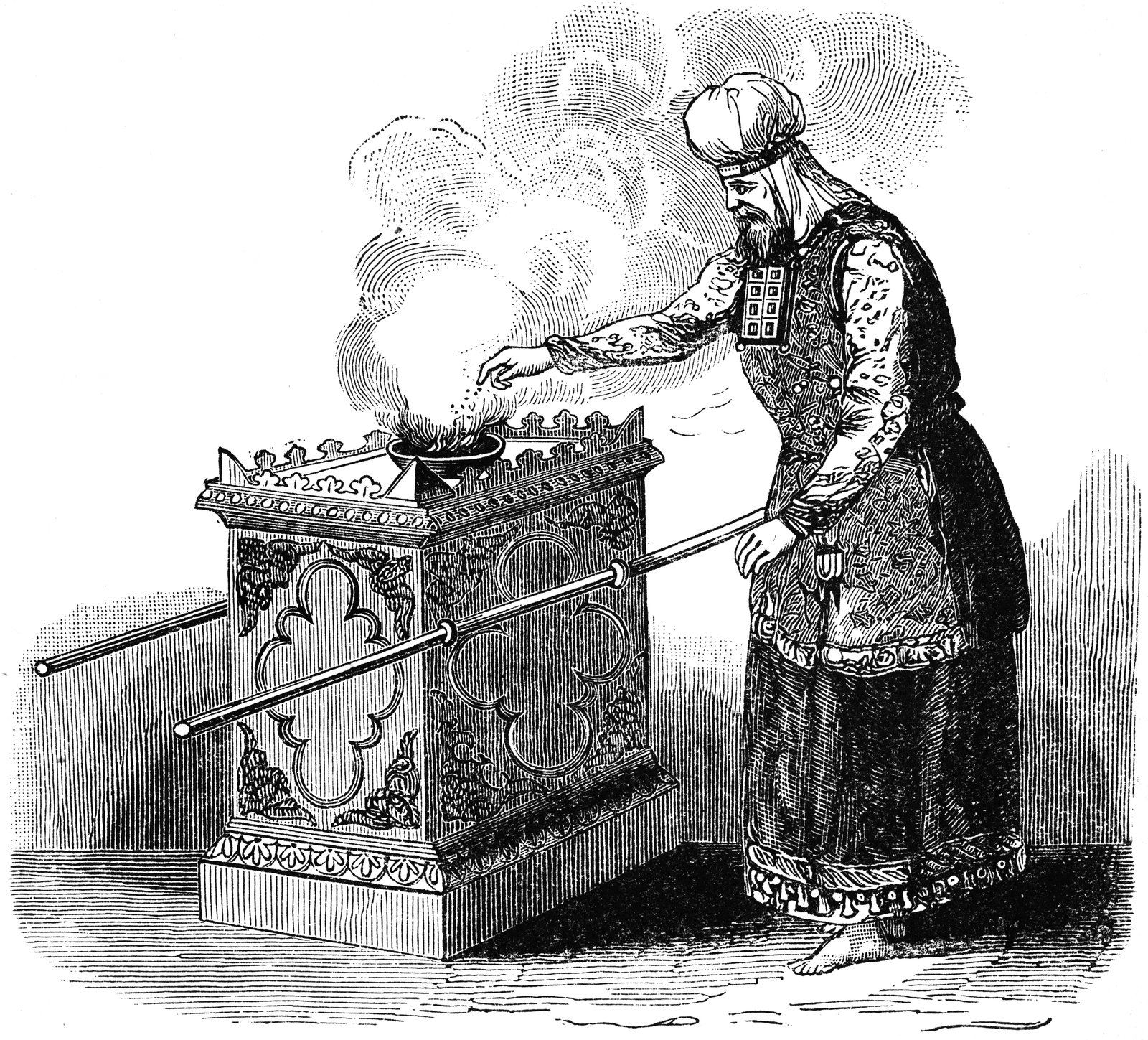
God wants us to be just as uncompromising when it comes to our prayers.
We have to make prayer an indispensable cog in our daily routine. It should be just as important, if not more important, than the physical nonnegotiables we make room for each day—like eating, drinking and sleeping.
Those are all necessary and good, but they’re not as spiritually valuable as contact with the One who gives us everything, including our lives.
King David internalized the need to pray. “Evening and morning and at noon I will pray, and cry aloud, and He shall hear my voice” (Psalm 55:17). Daniel also knelt down before God three times a day, a custom he had held “since early days” (Daniel 6:10).
The practical takeaway for us, then, would be to find times throughout the day that work best and designate them as “prayer o’clock”—and stick to them.
In his book, Atomic Habits: An Easy and Proven Way to Build Good Habits and Break Bad Ones, James Clear writes, “Professionals stick to the schedule; amateurs let life get in the way.”
To learn more about the importance of regular prayer, read “Pray Without Ceasing.”
2. Use Christ’s model prayer
The incense offered by the priests was not an arbitrary concoction of herbs and spices carelessly thrown together from whatever was available. God selected ingredients, created instructions and told the priests everything He wanted. He explained what to use, with proportions, and how to prepare the incense.
“Take sweet spices, stacte and onycha and galbanum, and pure frankincense with these sweet spices; there shall be equal amounts of each” (Exodus 30:34).
When it comes to prayer, God also provides a kind of recipe. Jesus told His disciples:

“Give us this day our daily bread. And forgive us our debts, as we forgive our debtors. And do not lead us into temptation, but deliver us from the evil one. For Yours is the kingdom and the power and the glory forever. Amen” (Matthew 6:9-13).
This is sometimes called “the Lord’s Prayer,” but really these verses comprise more of an outline—a list of themes our prayers should include. So it would be more accurate to call it “the Lord’s Model Prayer.”
According to Jesus, prayer involves:
- Praising God (verse 9).
- Expressing our desire for Jesus to return and establish His Kingdom (verse 10).
- Genuinely asking for His will to be done in all aspects of our lives.
- Recognizing our total dependence on Him to provide our basic needs (verse 11).
- Pleading with God to forgive our sins (verse 12).
- Asking for spiritual strength to overcome our human nature and Satan the devil (verse 13).
Some prayers may hit all of these items, but it’s perfectly okay if we choose to focus on only one or two elements at a time.
To study Jesus’ recipe for prayer in greater depth, read “Do You Pray the Way Jesus Taught?” You may also find our infographic “Jesus Christ’s Model Prayer” a helpful study tool.
3. Take the time to be detailed in your prayer
We can also draw an important lesson about prayer from how incense was prepared:
“And you shall beat some of it [the incense] very fine” (Exodus 30:36).
If at any point a priest saw chunks or lumpy granules in the incense, he had to continue beating it. Coarse fragments were unacceptable. God wanted a texture that was “very fine,” which called for both intense effort and an eye for detail.
We’ve heard a hundred times that details matter, and it’s true—we tend to notice a difference in quality whenever people invest both time and effort to make something better. A barber who hurriedly cuts hair in five minutes versus a barber who takes 50 minutes. Food that’s been thrown into the microwave for three minutes versus food that’s been carefully prepared and marinated for three hours.
In the same way, slow, deliberate prayer is more effective than rushed prayer. So let’s take our time and be detail-oriented. Prayers should be “very fine”—specific, meaningful.
Matthew 6:9-13 was not intended to become a chant that we recite to ourselves and then call it a day—although many do that exact thing. (For more insight on this pitfall, read “How to Avoid Repetitious Prayer.”)
We should elaborate when we talk to God—cover what we need to cover carefully, intentionally and in a heartfelt way. Like a loving human father, God wants us to share our deepest thoughts, worries and feelings with Him.
The next time you’re on your knees, remember to grind the spiritual incense extra fine.
For more insight on communicating with God, read “How to Talk to God” and “Ask, Seek, Knock: What Is the Meaning of Luke 11:9-10?”
4. Pray wholeheartedly
The final key in this short list is not explicit in the instruction for incense, but more broadly follows an expectation God always has of His people:
Do everything with all your might (Ecclesiastes 9:10).
We should elaborate when we talk to God—cover what we need to cover carefully, intentionally and in a heartfelt way.
James wrote, “The effective, fervent prayer of a righteous man avails much” (James 5:16). And when Hosea saw the spiritual poverty of Israel, he lamented, “They never put their heart in their prayers” (Hosea 7:14, Moffatt).
Hebrews tells us that our Savior “offered up prayers and supplications, with vehement cries and tears to Him who was able to save Him from death, and was heard because of His godly fear” (Hebrews 5:7).
Jesus’ prayer life was the kind James wanted for every Christian, and the kind Hosea wished for the people of his day. Jesus poured out His heart to the Father when He prayed.
We can follow His example and do the same.
To learn more about praying to God from the heart, read “Prayer From the Heart” and “What Can We Learn From Daniel’s Passionate Prayer?”
After the amen
God wants His servants to stay in constant communication with Him, and prayer is an important way to do that.
Applying these four keys can help us immensely and make our prayers more effective. Set aside time to pray each day, hit the items God wants covered contemplatively, be detailed and speak from the heart.
Then we can confidently say, as David did, “Let my prayer be set before You as incense, the lifting up of my hands as the evening sacrifice” (Psalm 141:2).
Date Posted: May 7, 2026
About the Author

Kendrick Diaz
Kendrick Diaz is a full-time writer at the Life, Hope & Truth offices in McKinney, Texas. He spends his workdays writing blog posts and articles for Discern magazine and LifeHopeandTruth.com.