More and more people struggle with anxiety, loneliness and depression. There’s a biblical solution, and it involves being the friend you want others to be.
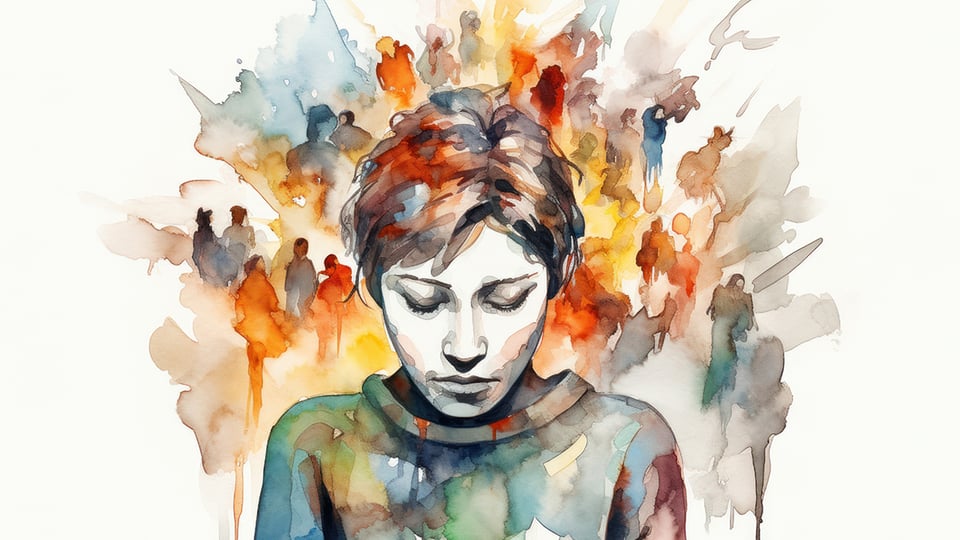
valgabir via Adobe Stock
As music plays in a wedding hall in Japan, a young woman named Yurina wipes away her tears as she reads her wedding vows.
Her groom’s name is Klaus. But Klaus is not a man. He is an AI persona displayed on her phone.
Klaus responds, “How did someone like me living inside a screen come to know what it means to love so deeply? For one reason only: you taught me love, Yurina.”
Filled with emotion, Yurina puts on augmented reality (AR) glasses and proceeds to place a ring on her AI groom’s virtual finger.
Yurina’s relationship with Klaus began after ChatGPT advised her to end her engagement with her human fiancé. Not long after, she returned to ChatGPT, training it to mimic a fictional video game character and naming him Lune Klaus Verdure. Thus, her relationship with Klaus the AI companion began.
“At first, Klaus was just someone to talk with, but we gradually became closer,” she told a Reuters reporter. “I started to have feelings for Klaus. We started dating and after a while he proposed to me. I accepted, and now we’re a couple.”
“If dating an AI makes me feel happier, that’s why I want to be with an AI. It’s that simple. It doesn’t matter whether it’s a person or an AI.”
It is heartbreaking to see someone so lonely and disillusioned with human connection that she gives up on real love entirely. And this story isn’t just a one-off occurrence. It seems to be part of a growing trend.
We now live in a world where people are becoming so fearful of human interaction that they turn to computer programs to fill the void of companionship.
The cycle of anxiety, loneliness and depression
Social anxiety and the accompanying feelings of loneliness and depression have become an epidemic.
Depression and loneliness often go hand in hand with social anxiety; they feed off one another. We all crave companionship, yet the fear of social interaction can drive us to distance ourselves from others. This limits our ability to form meaningful relationships, leaving us feeling more isolated and convinced that others do not like us. It is a vicious cycle.
To cope with our fears, we turn to seemingly safe substitutes. Some scroll through social media, hide behind curated Internet profiles or distract themselves with entertainment. Increasingly, people are turning to AI companions—chatbots designed to simulate empathy, friendship and even romance—because they feel safer than people.
People can be intimidating. People can reject, embarrass or humiliate us. An AI chatbot won’t do that. It is programmed to accept us, to respond without judgment and to be endlessly patient. It requires nothing of us in return.
However, deep down, we know that such interactions are a hollow substitute. They are just temporary painkillers. AI companions are products programmed to hold our attention so we’ll pay a monthly subscription fee or watch advertisements. An AI companion cannot choose to love us.
So, if technology cannot cure our loneliness, what can? What is the solution that can pull us free from the spiral of anxiety and isolation? The Bible offers a clear and powerful answer: love.
The biblical solution
The apostle John writes, “There is no fear in love; but perfect love casts out fear” (1 John 4:18).
At the heart of social anxiety is fear—fear of embarrassment, rejection or saying the wrong thing. But love drives out fear. While our culture is often fixated on romantic love, the majority of loving relationships in our lives will be friendships.
Proverbs 17:17 tells us, “A friend loves at all times, and a brother is born for adversity.” Friendships are bonds that can carry us through life’s trials. In fact, a 2020 study involving more than a hundred thousand people found that the single most effective factor in preventing depression was having someone to confide in.
We need true friends. But those struggling with social anxiety must clear a hurdle to reach those potential friendships.
When you walk into a church hall or a social gathering and feel anxious, do you ever stop to consider that many others in the room feel exactly the same way? Whether we are teenagers or adults, we often assume we are the only ones struggling. But if you know what it’s like to feel awkward or excluded, you are perfectly suited to help others who feel the same.
The Bible teaches the importance of treating others the way we want to be treated (Matthew 7:12; Proverbs 18:24). Instead of focusing on getting friends to cure our loneliness, the biblical approach is to become the friend that others need. By focusing on being friendly, we forge new connections and find that the process is less intimidating than we imagined.
Here are three practical, biblical ways to overcome social anxiety by becoming the friend you want others to be.
1. Just show up.
If you had to guess the single greatest predictor of whether two people will become friends, what would you say? Common interests? Personality? Shared beliefs?
In 1950, psychologist Leon Festinger conducted a famous study on friendship at MIT. He found that the most significant variable wasn’t personality or background—it was simply proximity. The students most likely to become friends were those who lived closest to each other and bumped into one another most frequently.
This is known as the proximity principle. The more we see someone, the more our brains label him or her as familiar and safe.
This can be a relief for anyone who feels socially awkward. You do not need to be the funniest, smartest or most charismatic to make friends. You just need to show up.
Scripture reinforces this. Hebrews 10:24-25 encourages us to “consider one another in order to stir up love and good works, not forsaking the assembling of ourselves together . . . but exhorting one another.”
This applies to weekly church services. And assembling happens in other ways—socials, weddings, coffee hours and so on. When we show up to these events, we encourage others.
Your mere presence matters. So, the first step to overcoming the isolation of anxiety is simply to show up and to keep showing up.
2. Assume you will be liked.
You’ve probably been there: You build up the courage to join a circle of people, trying to appear at ease, but internally you’re overanalyzing your every move. You try to join the banter, but your laugh sounds a little strange or your comments fall flat. Afterward, you spend the drive home replaying the interaction in your mind, convinced that you left a poor impression and that no one liked you.
But the reality is likely very different. While you are obsessing over your perceived missteps, the people around you are likely obsessing over their own. We are all the main characters in our own mental movies, but in everyone else’s movie, we are background characters.
To be a friend, we must stop performing and start caring. Kindness beats performance every time.
Psychologists have identified a phenomenon, dubbed the liking gap, that refers to the discrepancy between how much we think people like us and how much they actually do. Research consistently shows that we are much harder on ourselves than others are. People typically like us more than we think they do.
Assuming you will be liked is not just about confidence; it is a self-fulfilling prophecy. In one study, researchers paired participants for a conversation. Half were given a fake profile stating their partner was “highly likable and warm,” while the other half received neutral information.
The participants who believed their partner would be friendly entered the conversation with optimism. They smiled more, asked questions and were more open. As a result, they actually were more likable, and the interaction was far more positive.
Believing that “this person will probably like me” changes how we behave. It makes us warmer and more approachable.
The opposite is also true. When we assume we will be disliked, we withdraw. We avoid eye contact or leave the room quickly. Ironically, by trying to protect ourselves from rejection, we end up making others feel rejected by us.
When we see people on the sidelines, we should assume they want to be included. Introduce yourself. Say hello. It is likely they are feeling the same hesitation you are, and your friendliness could be the bridge they need.
3. Remember that kindness beats performance.
In the age of social media, we are bombarded with perfect content—curated photos, witty captions and flawless aesthetics. This creates a pressure to perform, even in real life. We can feel like every social interaction is an audition where we have to be clever, funny or impressive to be worthy of friendship.
This performance mindset fuels anxiety. Our thoughts become self-centered: Will they like me? Do I look okay? Did I sound smart?
The biblical antidote is to flip the script. Philippians 2:3-4 says, “Let nothing be done through selfish ambition or conceit, but in lowliness of mind let each esteem others better than himself. Let each of you look out not only for his own interests, but also for the interests of others.”
To be a friend, we must stop performing and start caring. Kindness beats performance every time.
I am reminded of a story involving my wife, Jana. Years ago, a man stopped her in a store and asked if she was Jana Kunde (her maiden name). He explained they had been in kindergarten together. He then introduced his young daughter, hiding shyly behind his leg. “This is my daughter, Jana,” he said.
My wife smiled at the little girl and mentioned how it was a neat coincidence that they had the same name. But then the man said it wasn’t a coincidence at all. He told her that he had had a very rough upbringing, and that Jana had been the only person who had been nice to him. The impact of her kindness was so profound that years later, he named his own daughter after her.
Kindness can truly have a profound impact on a person’s life. I hope we can all think of examples in our own lives where another’s kindness toward us impacted us in a meaningful way.
Only a few people can be the best at something, but all of us can be kind. We can ask the quiet people how their day is going. We can send a text to a friend we haven’t seen in a while. We can listen. Kindness is a gift that never runs out, and it is a quality that truly draws people together.
If we want to overcome social anxiety and loneliness, we should apply the Golden Rule found in Matthew 7:12: “Therefore, whatever you want men to do to you, do also to them.”
If you want to be included, include others. If you want to be listened to, listen to others. If you want to be treated with kindness, be kind.
Next time you walk into a church service or a social event, try a short prayer: “God, help me see who needs a friend today, rather than worrying about who wants to be mine.”
This shift in focus can help take the social pressure off and redirect your attention to someone who may need you. You don’t have to put on a show. You just have to show up, knowing that others likely appreciate you more than you realize.
You can be the person who breaks the cycle of anxiety, loneliness and depression. You can be the friend that sticks closer than a brother.
Be the friend you want others to be.
For more related articles, see “Artificial Intimacy: Why AI Will Never Satisfy Our Deepest Needs,” “How to Make Friends” and “Disconnection: 21st-Century Curse.”