Germany in Prophecy, Part 1: Germany Dominates the Holy Roman Empire
Germany has played a pivotal role in history, including the two world wars. Is Germany found in prophecy? What is Germany’s legacy and influence today?

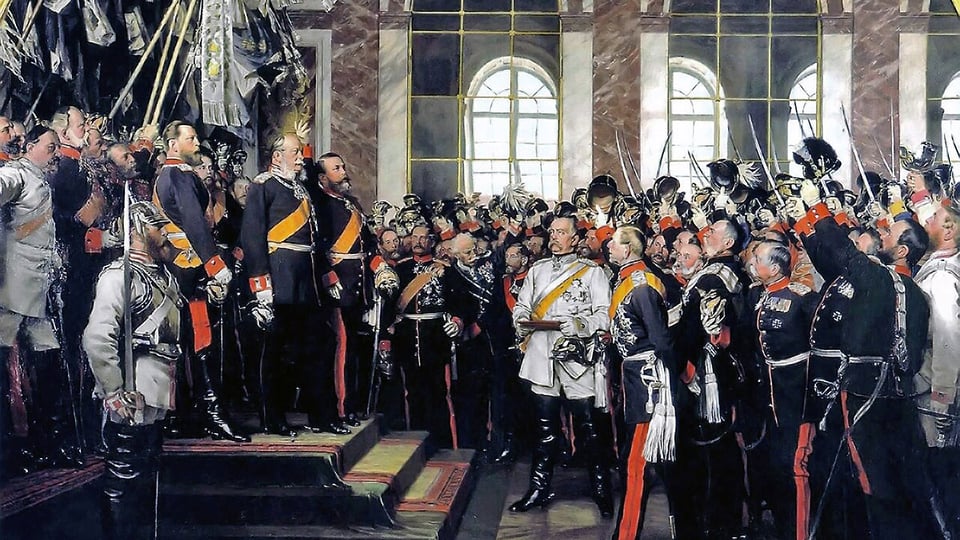
Anton von Werner’s painting depicting the proclamation of the German Empire on Jan. 18, 1871.
“If Europe wants to avoid war, it must prepare for it.”
These were the striking words of European Commission President Ursula von der Leyen not long after President Donald Trump’s clash with Ukrainian President Volodymyr Zelensky.
The idea of Europe rearming to secure peace can seem paradoxical, yet it is rooted in history. Nations build up powerful militaries to deter conflict or impose their will on others, seeking to make war seem unthinkable. This reflects the spirit of the Latin saying, “If you want peace, prepare for war.”
But in the last year, the United States has signaled less involvement in conflicts such as that affecting Ukraine. President Trump has urged Europe to take greater responsibility for its own security, remarking, “This war is far more important to Europe than it is to us.”
On Jan. 19, 2026, Ursula von der Leyen responded to developments in the transatlantic alliance by declaring, “It is time to seize this opportunity and build a new independent Europe.” She went on to assert, “Europe needs to adjust to the new security architecture and realities that we are now facing. This is why Europe is preparing its own security strategy, which we plan to publish later this year.”
This shift does not bode well for America, which is prophesied to decline as Europe rises.
The resurgence of German militarism in Europe is poised to reshape the global order.
Europe’s quest for independence
Today, we are witnessing a geopolitical realignment as the U.S. is distancing itself from Europe, while Europe is striving for greater independence. This shift has been developing for years, but notably accelerated in 2017 when Angela Merkel called for Europe to rely less on U.S. support during President Trump’s first term.
Two factors make today different.
First, the U.S. is giving its blessing and making plans to withdraw. U.S. Defense Secretary Pete Hegseth bluntly told Europe, “The time when the U.S. was the sole guarantor of European security is over. This is long overdue.” The United States transferred management of the Ukraine Defense Contact Group to the U.K. and Germany.
Germany is no ordinary nation. As a central aggressor in both world wars, it nearly brought the world to its knees twice.
The U.S. withdrawal from the world stage is being felt globally, but most acutely in Europe, where it is increasingly viewed as a signal that Europeans must now assume greater responsibility for their own security and that the relationship between the U.S. and Europe will never be the same.
This shift was underscored by the title of the Munich Security Conference 2026 (MSC), “Under Destruction,” which reflected the perception that the existing world order is being dismantled—and that Europe must move to fill the emerging vacuum.
A second difference lies in Germany’s large-scale rearmament plans. Because of its history and influence, Germany is no ordinary nation. As a central aggressor in both world wars, it nearly brought the world to its knees twice.
In the aftermath of World War II, this gave rise to what became known as the “German question.”
What was the German question?
The German question was how to integrate Germany into Europe and prevent another conflict.
Essentially, how could the world avoid Germany starting World War III?
Eighty years later, that question seems largely forgotten. German nationalism is on the rise, and the nation is rearming. During Chancellor Friedrich Merz’s visit to the White House, President Trump remarked on Germany’s rearmament: “I’m not sure that General MacArthur would have said it’s positive, you know, he wouldn’t like it, but I sort of think it’s good.”
Bustling Berlin. Germany has risen from the destruction of World War II to regain its place as Europe’s economic powerhouse. Nikada/iStock via Getty Images
After World War I, French military leader Ferdinand Foch warned against the dangers of complacency in allowing Germany to rearm. He cautioned that if the Allies remained indifferent, Germany would rise again and another global conflict would follow. His warning proved prophetic: Allied complacency and miscalculation helped pave the way for the rise of Nazi Germany and the outbreak of World War II. That lesson again seems in danger of being forgotten, as we risk repeating similar mistakes today.
Following two devastating wars, the victor nations sought to ensure it would not happen again. So they established two institutions to prevent Germany from having a powerful army.
The first institution was NATO. NATO’s first secretary general, Lord Ismay, famously described its mission as, “Keep the Russians out, the Americans in, and the Germans down.”
The second institution was the six-nation European Coal and Steel Community, the precursor to the European Union. It was designed to pool key resources, stimulate economic recovery after World War II and strictly limit Germany’s ability to rearm by tying its coal and steel production to a shared authority.
Despite these two institutions, which were designed to contain and control Germany, the country did inevitably regain its place as the most powerful nation in Europe. Germany has risen from the destruction of World War II to become the world’s leading creditor nation today.
Germany is now using its wealth to rearm.
Chancellor Merz said, “The federal government will provide all the financial resources that the Bundeswehr needs to become the strongest conventional army in Europe,” a sentiment echoed again at the MSC. And other nations are joining Germany. The prime minister of Denmark has voiced support for Europe to rearm. Prime Minister Mette Frederiksen emphasized: “For me, the most important thing is to rearm Europe . . . If Europe is not able to protect ourselves and to defend ourselves, then it’s game over.”
Foreign Affairs recently published a thorough article on Germany’s military rise, titled “Europe’s Next Hegemon: The Perils of German Power.” In it, author Liana Fix warned that Germany could “emerge as a go-it-alone, nationalist, militaristic hegemon in Europe.” She highlighted the serious risks that a militarily dominant Germany could once again pose to the continent. She also raised concerns that Germany’s growing military power could come under the control of a far-right party (like the Alternative for Germany party), cautioning: “A militarily dominant Germany could prove particularly dangerous if its centrist domestic leadership starts to lose power—as it just well might.”
Life, Hope & Truth and its predecessors have long warned that Germany would rise again to a position of dominance in Europe—and ultimately on the world stage. Now many secular analysts are expressing similar concerns.
Yet most secular commentators do not consider that Germany is prophesied in the Bible to dominate the world one final time. But before we explore that, we must consider some more history.
Germany dominated the Holy Roman Empire
Daniel 7 contains a prophecy of four kingdoms represented by four fierce and wild beasts. These kingdoms are identified as the empires of Babylon, Medo-Persia, Greece and Rome.
The final empire, Rome, is depicted as “dreadful and terrible, exceedingly strong . . . [and] different from all the beasts that were before it” (Daniel 7:7). Part of what set the Roman Empire apart from all earlier empires was its “ten horns” (verse 7). In Bible prophecy, a horn symbolizes power, such as a king or government. The “ten horns” are further described as “ten kings” arising from this kingdom (verse 24).
Unlike the previous empires, which eventually fell and were not revived, the Roman Empire was prophesied to rise 10 times after its fall. To date, it has been revived nine times.
A 10-horned beast. Daniel 7 describes an aggressive beast with 10 horns, representing Rome and its 10 future revivals. LHT Staff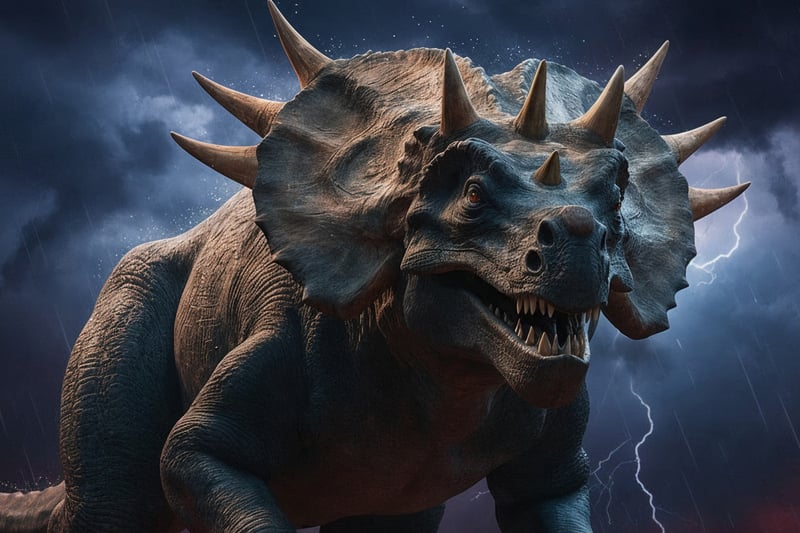
The little horn is described as “making war against the saints,” speaking “pompous words against the Most High,” changing “times and law” and persecuting “the saints” (verses 21 and 25). All these actions describe a religious power that opposes God, His truth and His people.
History shows that before the collapse of the Roman Empire, a new religious power rose to prominence within the empire: the Roman Catholic Church. (To learn more, read “The End-Time Ride of the White Horse of Revelation.”)
Then came Justinian, identified as the fourth horn, who sought to restore the Roman Empire in what is called the “Imperial Restoration” (554). Through a series of wars, he defeated and displaced several barbarian tribes in Western Europe. They soon vanished from prominence or, as the Bible describes them, were “plucked out by the roots.” Justinian reasserted the sovereign authority of the Roman emperor, and from his reign onward, imperial power was tied to the authority of the Catholic Church.
Afterward, Charlemagne emerged as the fifth horn. Often called the “Father of Europe,” he was crowned by Pope Leo III in 800. Some view him as the first Germanic king, though the French also claim him as their own. Through a series of brutal campaigns, he united much of Europe under the Roman Catholic Church, forcing conquered peoples to convert or die.
To this day, Europe commemorates his legacy with the annual Charlemagne Prize, awarded to individuals who promote European unity. In 2025 it was given to Ursula von der Leyen, who urged Europe to unite and prepare for war. Charlemagne is regarded as the first of the Holy Roman emperors because of his close alliance with the Catholic Church.
From then on, the Germanic emperors dominated what became called the Holy Roman Empire. Otto the Great was the sixth horn. He secured the empire for the German people and was crowned by Pope John XII in 962. He is noted for bringing stability to the empire and officially transferring the office of the Holy Roman emperor to the kingdom of Germany. This further reinforced the idea that the German kings acted as guardians of the church and the empire.
Next came Charles V, the seventh horn, who was crowned Holy Roman emperor by Pope Clement VII in 1530. He sided with the pope against the reformers during the Protestant Reformation.
He was followed by Napoleon, the eighth horn, in 1804. This revival was not Germanic. Napoleon was born in Corsica, shortly after it had been ceded to France, and was of Italian descent. He played a crucial role in ending Germanic rule in Europe and paving the way for Britain’s rise to power. The timing of this was significant.
The rise of the Israelite nations
God foretold that the beast representing the Roman Empire would dominate the world and persecute God’s people for “a time and times and half a time” (Daniel 7:25). In biblical terms, a “time” is 360 days, a prophetic year. Therefore, this phrase signifies three and a half “times” (or 3.5 x 360 days, totaling 1,260 days). In this case, applying the day-for-a-year principle from Numbers 14:34 and Ezekiel 4:6, this period totals 1,260 years.
The period between Justinian’s imperial restoration in 554 and the end of Napoleon’s rule in 1814 was 1,260 years.
God promised Abraham he would become a “father of many nations” (Genesis 17:4-5). His grandson Jacob’s name was changed to Israel (Genesis 32:28), and God told him his descendants would form “a nation and a company of nations” (Genesis 35:11). At the end of his life, Jacob prophesied that his sons, the 12 tribes of Israel, would exist as multiple nations in the “last days” (Genesis 49:1).
Jacob gave his grandsons Manasseh and Ephraim a special blessing (Genesis 48:5; compare 1 Chronicles 5:1). Ephraim’s descendants would become a multitude, or group, of nations. His brother Manasseh’s descendants would become a single great nation (Genesis 48:19).
Around 722 B.C. Assyria took captive the northern kingdom of Israel, including Manasseh and Ephraim.
God told Israel that because of their disobedience, “I will punish you seven times more for your sins” (Leviticus 26:18; see also verses 21, 24, and 28). The phrase “seven times” can refer to both the intensity and the duration of punishment. In terms of duration, a time is a year, or 360 days; so seven times equals 7 × 360 days, or 2,520 days. Applying the day-for-a-year principle, this represents 2,520 years. Counting from Israel’s fall in 722 B.C. brings us to the 1800s, when the birthright promises began to be fulfilled among the descendants of Ephraim. These prophecies were realized in the rise of the British Empire, which later became the British Commonwealth.
Their dominance began to wane with the rise of the ninth horn.
To learn more, study our infographic “Abraham’s Descendants” and our article “The 12 Tribes of Israel in History and Prophecy.”
The rise of Germany
Under Otto von Bismarck’s leadership, the German states were unified into a single nation called Germany (or Deutschland, in German).
In 1871, Wilhelm I was proclaimed German emperor and Bismarck became the new empire’s first chancellor, marking the beginning of what historians call the Second Reich.
In just 43 years, the newly unified German nation would play a central role in plunging the world into war. In 1914, the assassination of Archduke Franz Ferdinand, heir to the Austro-Hungarian throne, by a Serbian nationalist set off a chain reaction. Germany gave Austria its unconditional support, known as the “blank cheque,” in its actions against Serbia and subsequently declared war on Russia and France and then invaded Belgium.
Within little more than a month, Europe’s major powers were at war.
The Iron Chancellor. Under Otto von Bismarck’s leadership, the German states were unified into a single nation called Germany (or Deutschland).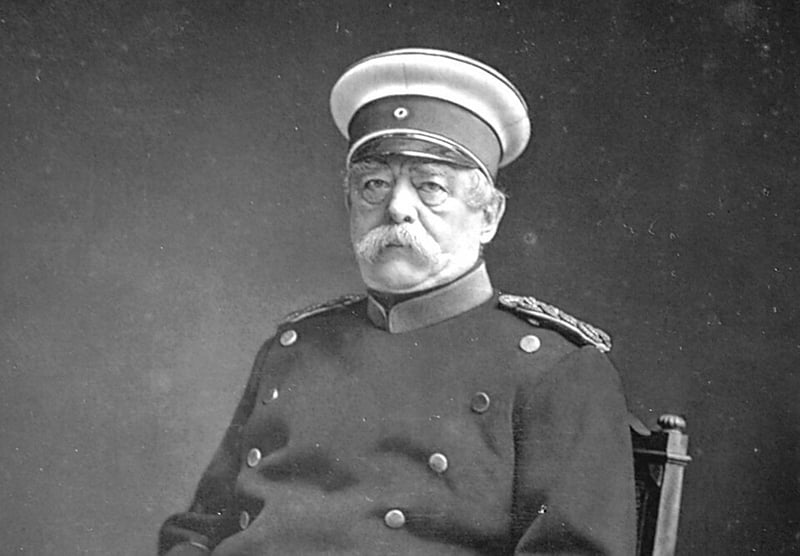
Twelve years later, in the 1930s, the global economy was in crisis, hitting Germany especially hard. Amid the turmoil, Adolf Hitler rose to power, promising to be Germany’s savior. He revived the economy through massive infrastructure projects and a program of rearmament. In 1939, Hitler plunged the world into World War II by invading Poland.
Hitler had entered an alliance with Benito Mussolini in 1936 (strengthened in 1939) and signed an agreement with the Vatican to protect the Catholic Church. He branded his leadership Germany’s Third Reich, or the third German Empire. In his view, the three Reichs were:
- First Reich: The Holy Roman Empire, beginning with Charlemagne (800) and lasting until Napoleon’s rise in the early 1800s.
- Second Reich: The German Empire, from the unification of Germany in 1871 to the end of World War I in 1918.
- Third Reich: Hitler’s regime, which he declared was beginning a 1,000-year reign of German global domination.
Thankfully for the world, his evil reich was much shorter—ending with Germany’s military defeat and Hitler’s inglorious suicide in his Berlin bunker on April 30, 1945.
Toward the end of World War II, the Allies resolved to end German militarism once and for all.
In a joint statement on the Yalta Conference, Feb. 11, 1945, the Allied leaders declared: “It is our inflexible purpose to destroy German militarism and Nazism and to ensure that Germany will never again be able to disturb the peace of the world. We are determined to disarm and disband all German armed forces; break up for all time the German General Staff that has repeatedly contrived the resurgence of German militarism; remove or destroy all German military equipment; eliminate or control all German industry that could be used for military production.”
The Allied victory marked the end of the ninth horn.
However, there is still a 10th and final horn to rise, which will plunge the world into a war even more widespread, deadly and terrible than the world wars of the 20th century (Matthew 24:21-22).
Though this final revival has not yet risen, it is beginning to emerge in Europe with a revitalized Germany once again in the lead.
“Times of the Gentiles”
The Bible prophesied that Ephraim’s blessing would come first (Genesis 48:20).
After World War II, Great Britain was left bankrupt, paving the way for the United States to take its place as the world’s leading superpower. As the descendants of Joseph’s other son, Manasseh, the U.S. began to experience the blessing of becoming a “great” nation.
In the years after World War II, the United States reshaped the global order, ushering in a period of relative peace and prosperity that has lasted for 80 years.
Today, however, America is experiencing a gradual decline. The nation faces deep political divisions, unsustainable debt, social and cultural decay and the weakening of its global influence as rival powers emerge that are challenging its dominance.
Biblical prophecy shows that the end times will be dominated by non-Israelite nations, or gentiles (Luke 21:24; Revelation 11:2; 13:5). As such, the United States will decline and give way to the 10th horn, the final revival of the Holy Roman Empire.
Both history and prophecy indicate Germany will again play a dominant role in this coming power.
This German-led European power will bring the world to the brink of annihilation during a period of time the Bible calls the Great Tribulation.
In our next post of this series, we’ll explore Germany’s prophetic identity in the Bible.
Updated: Feb. 17, 2026
Date Posted: February 4, 2026
About the Author

Isaac Khalil
Isaac Khalil is husband to his lovely wife, Natasha, and father to son Eli and daughter Abigal. He loves to spend time with family and friends doing various things like watching movies, playing chess, playing board games and going out. He enjoys studying biblical topics and discussing the Bible with his friends. He is also a news junkie and is constantly reading and sharing news connected with Bible prophecy.