A World Turning Against Israel
Israel is consistently at the center of global tension. Are changing attitudes and growing opposition to Israel part of a deeper pattern foretold in the Bible?

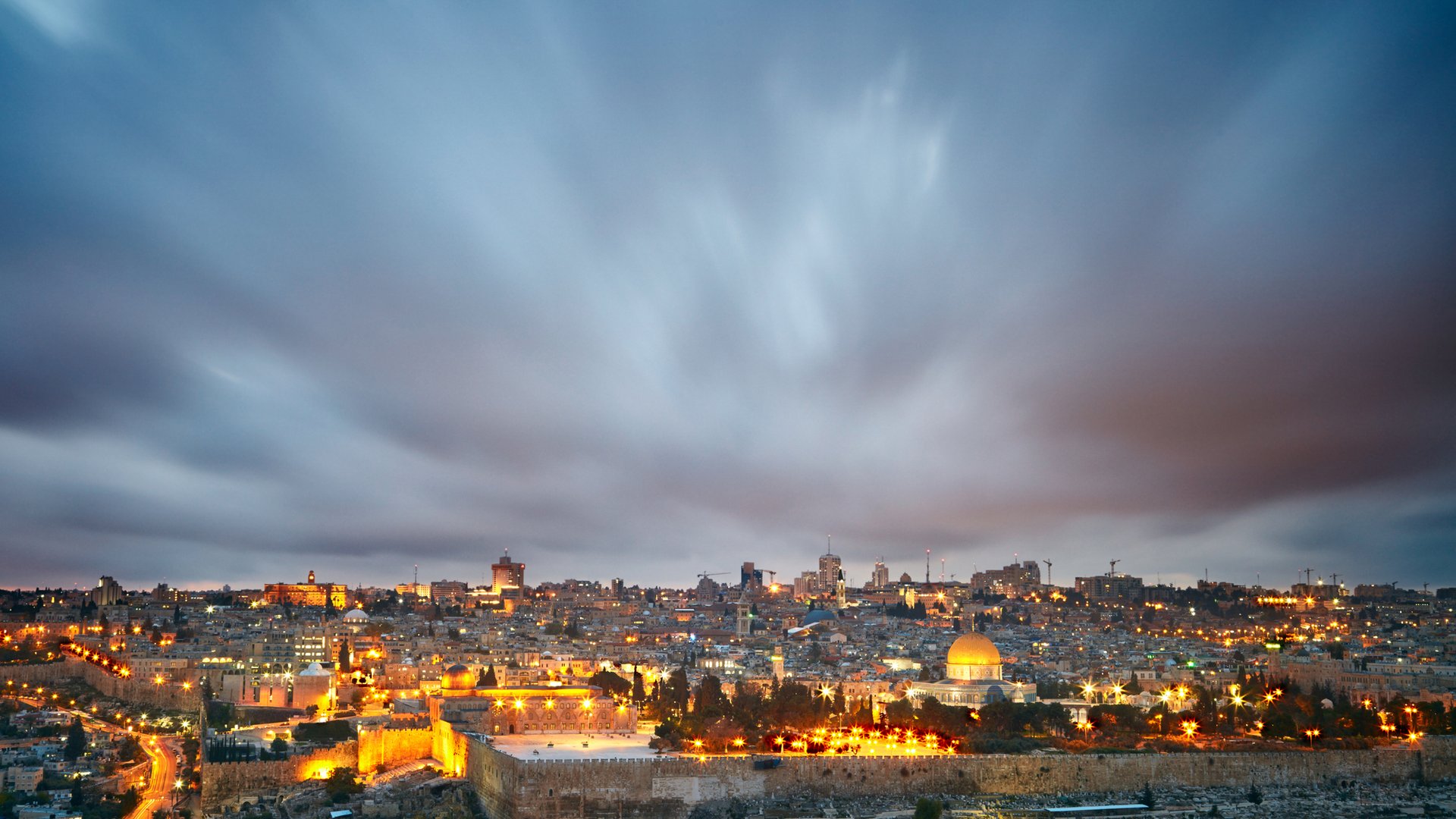
Silverjohn/iStock via Getty Images
For years, Israel employed a counterterrorism strategy often described as “mowing the lawn.” This meant conducting repeated military operations to degrade an adversary’s infrastructure and capabilities enough to reduce immediate threats, while acknowledging that fully eliminating them would be impractical if not impossible.
Of course, this strategy allowed those groups to eventually rebuild.
More recently, Israel appears to be attempting to more decisively eliminate threats. However, some Bible prophecies suggest that such efforts will not ultimately succeed and could contribute to this world’s increasing opposition toward Israel.
A growing number of people now view Israel as a source of conflict and instability in the Middle East. So now, in addition to its traditional detractors, some within the U.S. conservative movement have called for reducing or withdrawing American support for Israel and avoiding involvement in “forever wars.”
Increasing animosity against Israel
The wars in the Middle East are fueling growing animosity toward Israel. Consider the following statements:
- April 17, 2026: In an effort to help end the Middle East conflicts, Donald Trump urged Israel to stop bombing Lebanon, saying, “Enough is enough!”
- April 13, 2026: Turkey’s foreign ministry accused Israel of genocide, calling Israeli Prime Minister Benjamin Netanyahu “the Hitler of our time.”
- April 13, 2026: South Korean President Lee Jae Myung drew criticism from Israel after stating that Israel’s actions in Gaza were “no different” from the Holocaust.
- April 10, 2026: Pakistani Defense Minister Khawaja Asif accused Israel of “genocide” in Lebanon and described Israel as “evil” and “a curse for humanity.”
- April 9, 2026: Spain’s foreign minister described the United States and Israel’s war against Iran as “the greatest assault on the civilisation” and an “abuse of power” and said Israel’s attack on Lebanon was “violating international law.”
- March 31, 2026: Canada’s Mark Carney described Israel’s actions in Lebanon as an “illegal invasion” and “a violation of [Lebanon’s] territorial sovereignty.”
While there can be legitimate disagreements regarding Israel’s military and foreign policy decisions, some observers argue that Israel is often subjected to disproportionate scrutiny and criticism compared to other nations and actors in the region.
They contend that, despite differing motivations, certain criticisms may occasionally reflect deeper and long-standing patterns of hostility toward the Jewish people—patterns that have taken different forms throughout history while retaining similar underlying themes.
An ancient hatred
Animosity toward the Jewish people has resurfaced throughout history, for different reasons in different eras.
A religious hatred
The Roman Empire occupied Judea during the time of Jesus. In A.D. 70, following a Jewish revolt, Roman forces destroyed Jerusalem and the temple, leading to the dispersion of many Jews.
In later centuries, as the Roman Empire adopted an institutional form of Christianity, some Christians who sought to observe biblical laws—such as the Sabbath and annual holy days—were pejoratively labeled “Judaizers.” During this period, Jews were often dubbed “Christ-killers.” Jewish beliefs and practices were often portrayed in hostile or negative terms.
Early Catholic Church fathers used intensely hostile rhetoric against Jews. Consider the following examples.
Tertullian (c. 155 to after 220), An Answer to the Jews:
- Tertullian advanced the idea of collective Jewish guilt for Christ’s crucifixion, writing that “all the synagogue of Israel did slay Him.” He also portrayed the Jews as wicked and forsaken by God, claiming that “Israel has been divorced” from the grace of God.
John Chrysostom, Against the Jews (386-387):
- Homily 1: He referred to the synagogue as a “brothel,” a “den of robbers,” a place for “wild beasts” and a “dwelling of demons.” He said that “no Jew adores God,” and that they “slew the Son of your Lord” and were “unfit for work” and “fit for slaughter.” He also called Jews “demons” and said, “Do you see that demons dwell in their souls,” adding that they “sacrificed their own sons and daughters to demons.”
- Homily 6: He compared Jews to wild beasts who “spring upon their prey, taste human flesh and drink human blood.” He also described Jews as “Christ killers” who “slay Christ.”
A racial hatred
Religious hostility supplied the rationale for treating Jews as inherently wicked—evil and stubborn by nature and race.
Martin Luther, the Protestant reformer, grew frustrated with his efforts to convert Jews and stated that their “heart is as hard as a stick, a stone, as iron, as a devil.” In a treatise titled “The Jews and Their Lies,” he claimed that if Moses were alive he would set “fire to the Jew schools and houses” and argued that “protection for Jews on highways be revoked.” He also portrayed Jews as possessed—“the Devil has possessed these people with all his angels”—and as greedy, accusing them of “rob[bing] us of our money through usury.”
Adolf Hitler carried this same hatred forward in Mein Kampf, calling Jews the “personification of the devil” and “the symbol of all evil.” He described the Jewish people as a “parasite upon the nations.”
A conspiratorial hatred
Today, various conspiracy theories claim that Jews exert hidden control over such global institutions as banking, finance, media and entertainment. These narratives often recycle longstanding antisemitic stereotypes, portraying Jews as greedy or manipulative and, in extreme cases, accusing them of orchestrating catastrophic events for financial gain.
Holocaust denial or distortion continues to circulate in some circles, with claims that the scale or nature of the Holocaust has been exaggerated or misrepresented.
Elements of medieval antisemitic myths have also persisted in altered forms.
During the Black Death, Jews were falsely accused of poisoning wells, leading to widespread persecution.
Another enduring myth, known as the blood libel, alleged that Jews kidnapped and murdered Christian children to use their blood for rituals. While these claims have been thoroughly discredited, variations of them have resurfaced in different contexts over time.
In modern settings, such accusations sometimes appear in the form of conspiracy theories alleging that Jews are involved in secretive global networks.
Similarly, Holocaust denial or distortion continues to circulate in some circles, with claims that the scale or nature of the Holocaust has been exaggerated or misrepresented.
A nationalist hatred
After World War II, many Jews sought to return to their ancestral homeland and establish a secure national home, a movement known as Zionism.
In the decades that followed, perceptions of Israel began to shift. While Israel was initially viewed by many as a refuge for a persecuted minority, it has increasingly been criticized and demonized for its efforts to defend itself.
As decolonization reshaped the mid-20th century, some came to view the Israeli-Palestinian conflict through a colonial framework, portraying Israel as a colonial aggressor state and a source of regional instability.
The nations against Jerusalem
Bible prophecy shows that Jerusalem will be “surrounded by armies” and “trampled by Gentiles” until the “times of the Gentiles are fulfilled” (Luke 21:20-24). So, a non-Israelite power will invade and control the area of Jerusalem for a period of time.
Daniel provides further detail, describing this invading power as the “King of the North”—also known as the “beast” (Revelation 13; see “Who Is the Beast?”). This will be the 10th and final revival of the Roman Empire—a European confederation united under a single charismatic ruler.
Scripture indicates this bloc will be provoked by an attack from Middle Eastern nations, referred to as the “King of the South”—apparently a confederation of Muslim nations—which the European power will defeat with overwhelming force (Daniel 11:40-43).
He adds that the nations that involve themselves with Jerusalem will be “cut in pieces” (verse 3). He also describes how the leaders of the state of Israel, which is actually biblical Judah, will become like a fire that devours the surrounding nations, something we are seeing in our day (verse 6).
We are in the preliminary stages of Jerusalem becoming a “very heavy stone” for all peoples—though for various reasons.
Psalm 83 foretells that certain Middle Eastern nations will form a confederacy with the king of the North to “cut them off from being a nation, that the name of Israel may be remembered no more” (Psalm 83:4). Even Israel’s allies will turn against it. Isaiah indicates that Ephraim (the United Kingdom) and Manasseh (the United States) will oppose and betray Judah (Isaiah 9:21). (For detailed biblical and historical background for understanding the identities of these nations, see The United States, Britain & the Commonwealth in Prophecy.)
Yet the Bible warns that, even if “all nations of the earth are gathered against” Judah, God will defend it. The Lord will strike the aggressors with “confusion,” “madness” and “blindness” (Zechariah 12:2-4).
Scripture also indicates that Jerusalem will eventually be divided (Zechariah 14:2). In the final battle, when armies gather near the city to fight Him, the returning Jesus Christ will judge those who have “divided up My land” (Joel 3:2). Notably, many nations today endorse a return to the pre-1967 borders, when Jerusalem was divided. However, Zechariah 14:2 describes a violent seizure of the city—not a peaceful partition.
God will “gather all nations against Jerusalem,” and they will take half the city by force—until Jesus Christ returns and defends it (verses 1-4).
Jerusalem, the city of peace
Fortunately, Jesus will return to earth to prevent humanity from annihilating itself (Matthew 24:22). He will take “possession of Judah as His inheritance in the Holy Land” and “choose Jerusalem” as the capital of His Kingdom (Zechariah 2:12).
At that time, animosity toward the Jewish people will not merely diminish—it will be reversed. Instead of being targets of hatred and scorn, the Jews will be sought out, because people will recognize that “God is with” them (Zechariah 8:23).
Then all nations—not only the Jewish people—will seek to be “joined to the LORD” (Zechariah 2:11). They will come to Jerusalem to learn from Jesus the way of peace—and will learn war no more (Isaiah 2:1-4).
Jerusalem will finally live up to the meaning of its name:
The city of peace.
Date Posted: May 1, 2026
About the Author

Isaac Khalil
Isaac Khalil is husband to his lovely wife, Natasha, and father to son Eli and daughter Abigal. He loves to spend time with family and friends doing various things like watching movies, playing chess, playing board games and going out. He enjoys studying biblical topics and discussing the Bible with his friends. He is also a news junkie and is constantly reading and sharing news connected with Bible prophecy.