David’s prayer of repentance can help us understand how we can escape the chains of sin and restore our relationship with our merciful God.
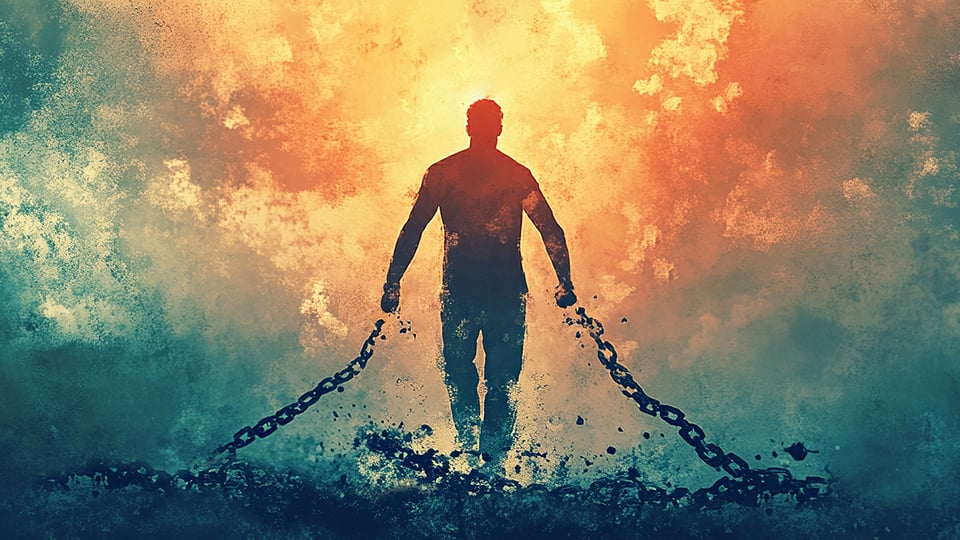
David was in deep trouble. It began with adultery and worsened as he plotted to cover up Bathsheba’s resulting pregnancy. In desperation, he sank to a horrible low, arranging to have her husband Uriah killed. Now, months later, he was reeling after God exposed his sins through His prophet Nathan.
Paul later described the reality David was facing: “Do you not know that to whom you present yourselves slaves to obey, you are that one’s slaves whom you obey, whether of sin leading to death, or of obedience leading to righteousness?” (Romans 6:16).
David was caught up in the worst kind of slavery, the bondage of sin, and every ploy he contrived to deal with it only twisted the chains tighter.
David’s story is our story
Have you ever found yourself there? If you are aware of what breaking God’s law means, the answer is yes. If you grasp the biblical truth that your mind is fundamentally “enmity against God; for it is not subject to the law of God, nor indeed can be” (Romans 8:7), the answer is yes.
No one, not even one as powerful as the king of Israel, is above God’s law or immune to his or her own human nature. We have all sinned (Romans 3:23), and sin’s chains drag us to pain and suffering, and eventually to death.
What happened to David? How did he break those chains and recover to the point that God could describe him as “a man after My own heart, who will do all My will” (Acts 13:22)? Most important, what can we learn from his story?
Many are familiar with the 2 Samuel 11 and 12 account of David’s sins. Far too many have missed, however, the most important part of the story, how he restored his relationship with God. That’s found in Psalm 51, David’s prayerful summary of his spiritual journey after God confronted him through Nathan.
God preserved David’s thoughts in this psalm, not to humiliate him, but to serve as a model to help us understand what deep repentance means. This is critically important, because repentance is the first strike of the hammer that begins to break the chains of sin.
Let’s consider four vital principles David’s prayer reveals about fervent, heartfelt repentance. Please open your Bible to Psalm 51 to read the verses referenced.
1. Own the sin!
Adam and Eve were the first to reveal a fatal flaw in human thinking. That is, our auto-response when sinning is to hide from God. We tend to avoid taking ownership of our sin and its impact.
Owning our sin means we acknowledge to God that we are pleading guilty for Christ having to die in our stead to pay the penalty for our sin!
Shame can do that. So can fear or the discouragement that comes from repeatedly stumbling and committing the same sin. Whatever the reason, we cannot escape a fundamental spiritual law at work in life: when “you have sinned against the LORD . . . be sure your sin will find you out” (Numbers 32:23). As David painfully learned, we cannot hide from or outrun the consequences of sin.
God loved David enough to give him one last chance to come out from hiding from himself and his sin. Finally, with brutal honesty, David owned up: “For I acknowledge my transgressions, and my sin is always before me. Against You, You only, have I sinned, and done this evil in Your sight—that You may be found just when You speak, and blameless when You judge” (Psalm 51:3-4).
We can begin overcoming only after we stop rationalizing, excusing and minimizing our sin! David did not soften his sin by calling it “a mistake” or “a problem.” He labeled it “this evil.”
It would be easier to focus on the hurt he caused Bathsheba, Uriah or even his baby who was going to die, but David didn’t mention them. Instead, he went straight to the heart of the matter—he had sinned against God.
What does that mean for us? Owning our sin means we acknowledge to God that we are pleading guilty for Christ having to die in our stead to pay the penalty for our sin!
This understanding deeply personalizes the impact of sin. Peter drove home this point in his Pentecost sermon when, explaining the life and death of Christ, he told the crowd, “Therefore let all the house of Israel know assuredly that God has made this Jesus, whom you crucified, both Lord and Christ” (Acts 2:36, emphasis added). They didn’t argue or say, “I wasn’t there, you can’t blame that on me!”
Rather, “when they heard this, they were cut to the heart, and said to Peter and the rest of the apostles, ‘Men and brethren, what shall we do?’” (verse 37). They took ownership! And Peter’s answer was simple—“Repent, and let every one of you be baptized in the name of Jesus Christ for the remission of sins; and you shall receive the gift of the Holy Spirit” (verse 38).
Yes, owning our sin is painful, but without it we cannot move on to break the chains of sin.
2. Run—not from God, but to God!
Once David stopped running from God and acknowledged his sin, he knew the way forward was to run to God. He remembered God’s nature and cast himself before God’s throne of mercy. His first statement in Psalm 51 was, “Have mercy upon me, O God, according to Your lovingkindness; according to the multitude of Your tender mercies, blot out my transgressions.”
Repentance is based and built upon hope and trust in God. David said in verse 9, “Hide Your face from my sins, and blot out all my iniquities.” He trusted God would do that.
He said in verse 12, “Restore to me the joy of Your salvation, and uphold me by Your generous Spirit.” He trusted God would do that.
He said in verse 14, “Deliver me from the guilt of bloodshed, O God, the God of my salvation, and my tongue shall sing aloud of Your righteousness.” He trusted God, the God of salvation and righteousness, would do that.
David knew God and believed in God’s mercy and love. He knew he did not deserve it, but he also knew God was open to redeeming him and giving him another chance. He was able to pray, “Make me hear joy and gladness, that the bones You have broken may rejoice” (verse 8), because He knew God disciplines to heal, not to harm; to save, not to destroy.
Please download our booklets Getting to Know the God of the Bible and God’s Gift of Grace. When you know God, as David did, you will have the confidence to run to Him, not from Him, even when you are struggling with sin!
3. It’s not just about pardon, it’s about change.
Why is it, do you think, that God is willing to work with and forgive sinners, even when we struggle with the same sins, sometimes for years?
The answer is, true repentance is about changing our lives, not just being pardoned. God doesn’t just want to pardon us. He wants to create a new person. But He also knows that He’s dealing with people who are weak in many ways, and that we need more than one chance if we are going to truly change our lives.
David knew this. “Create in me a clean heart, O God,” he prayed. He knew he needed a totally new heart, a spiritual heart. “And renew a steadfast spirit within me” (verse 10). He also knew he needed God’s intervention and help to make it happen.
We cannot make just a few tweaks or adjustments to human nature and be okay. It needs to be replaced because, contrary to modern philosophy, the human heart is not basically good (Jeremiah 17:9). Paul strongly worded it this way in Romans 8:7-9:
“Because the carnal mind is enmity against God; for it is not subject to the law of God, nor indeed can be. So then, those who are in the flesh cannot please God. But you are not in the flesh but in the Spirit, if indeed the Spirit of God dwells in you. Now if anyone does not have the Spirit of Christ, he is not His.”
Only by the help of God’s Spirit can we overcome the flesh and stop walking in sin.
David came to understand what God was really looking for in us. “For You do not desire sacrifice, or else I would give it; You do not delight in burnt offering. The sacrifices of God are a broken spirit, a broken and a contrite heart—these, O God, You will not despise” (Psalm 51:16-17).
Remember, God sacrificed His Son so that we might be pardoned. When God sees in us a humble, broken and contrite heart that is committed to changing, He will give us every chance possible. Rituals don’t break the chains of sin, but a broken spirit and heart will.
4. It’s about what you are, not just what you’ve done.
David made what may seem to be a strange statement when he observed, “Behold, I was brought forth in iniquity, and in sin my mother conceived me” (verse 5). Was he somehow dragging a sin of his mother into the narrative?
No. David’s statement was an expression of his discernment of sin’s impact on his life from the time it began. It seems that he was digging deeply into his own mind, pondering, “How did I even get to this state of sin? If I’ve known God’s law all my life and have had a strong relationship with Him, how could this have happened?” This introduces something important to understand in order to grasp our deep need for God’s help.
David was not excusing his behavior; rather, he was recognizing how deeply this world’s sinfulness had affected him. Like Adam and Eve, we all have eaten from the tree of the knowledge of good and evil, and a lot of evil is ingrained into our character before we are even old enough to understand it.
That’s why Paul wrote in Romans 7 that “evil is present with me, the one who wills to do good. For I delight in the law of God according to the inward man. But I see another law in my members, warring against the law of my mind, and bringing me into captivity to the law of sin which is in my members” (verses 21-23). All this, he recognized, was because, “I am carnal, sold under sin” (verse 14).
David saw that he needed to repent not only of his sinful deeds, but of his sinful nature! That’s why he prayed fervently, “Create in me a clean heart, O God, and renew a steadfast spirit within me,” and, “Behold, You desire truth in the inward parts, and in the hidden part You will make me to know wisdom” (Psalm 51:6). He needed God’s help to deeply know himself, and to change his nature.
As John put it, “If we confess our sins, He is faithful and just to forgive us our sins and to cleanse us from all unrighteousness” (1 John 1:9).
We take a huge step forward in breaking the chains of sin when we comprehend this truth: not only do I do carnal things (that is, act according to sinful, fleshly desires), I am carnal—that is my nature! That awareness should stir us to attack the root cause of sin. We begin to focus on asking God to help us change our complete nature, not just stop this or that particular sin.
You can be freed from sin!
There are certainly other factors involved in completely breaking the chains of sin. Our article “Seven Steps for Overcoming Sin” outlines some of these key elements. Thousands of people have also found our booklet Change Your Life! very helpful.
But deep, genuine repentance is the foundation and the necessary first step to turning your life around. Psalm 51 stands as a powerful testimony that no matter what chains of sin may bind us, nothing is too strong for God to break. He stands ready to respond to any sinner who cries out to Him in genuine repentance, as David did.
About the Author

Clyde Kilough
Clyde Kilough is the Media operation manager for the Church of God, a Worldwide Association, overseeing all of its media outreach programs including Life, Hope & Truth and Discern magazine.