America’s Debt Crisis: From Superpower to Servitude?
The U.S. national debt is accelerating at an alarming rate. Learn what the Bible has to say about debt and its long-term impact on the nation.

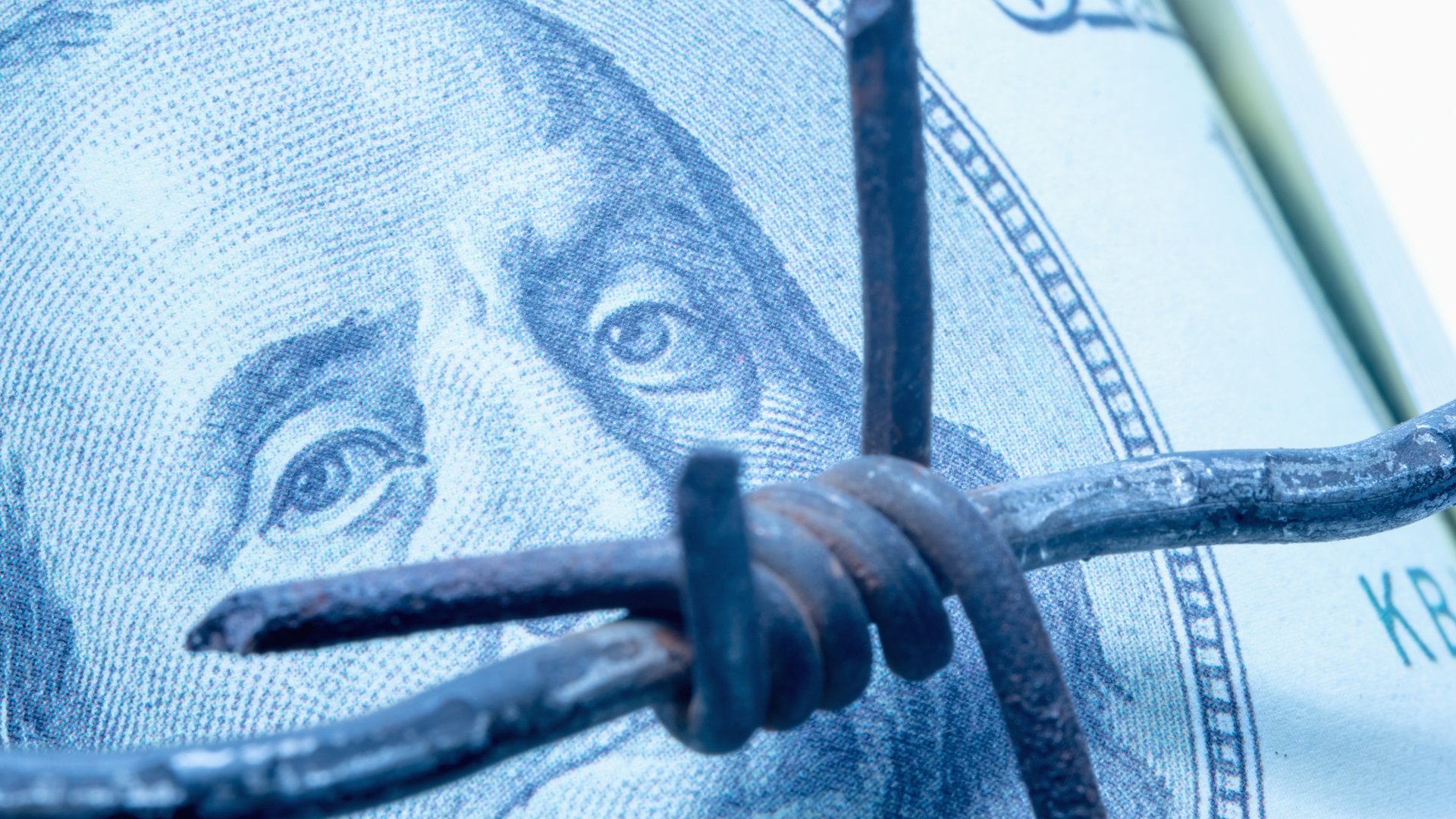
Lurii Kuzo/iStock via Getty Images
Donald Trump’s presidency has shaken the world order, asserting U.S. supremacy globally. His words and actions—including his arrest of Venezuela’s President Nicolás Maduro, his bold rhetoric about seizing Greenland by force and his war with Iran—have left nations wondering whether the old order has ended and a new era has begun.
In January Canadian Prime Minister Mark Carney addressed the Munich Security Conference, describing the current world situation as “the end of a nice story and the beginning of a brutal reality” where “the strong can do what they can, and the weak must suffer what they must.”
Mr. Carney advised Europe that it was time for nations to reject the current order, which he described as ruptured.
Is this truly the end of an era? If so, what does the future hold for America and the world?
Debt as a weapon
Mr. Carney went on to portray the United States as a bully, using its financial influence to pressure smaller nations into compliance. He cited tariffs as an example, noting that U.S. tariffs had prompted some countries to pursue greater independence from the United States.
He called for the world’s middle powers, such as Canada and Europe, to band together, warning that “if we’re not at the table, we’re on the menu.” In other words, nations must act with strength or risk being taken advantage of. He urged these countries to unite and use economic integration as a means of exerting influence and countering external pressure.
Many nations have begun pursuing “de-dollarization,” to reduce reliance on the U.S. dollar by shifting portions of trade and reserves into other currencies.
This line of thinking—that U.S. financial dominance, particularly its debt, could be used as leverage against the United States—has increasingly taken hold among some nations.
Europe, which holds some of the largest amounts of U.S. financial assets (around $8 trillion in U.S. bonds and equities, according to Fortune.com), has at times discussed how such holdings could factor into geopolitical tensions.
For example, debates surrounding Greenland have contributed to broader conversations about how economic tools might be used in response to potential U.S. actions.
At the same time, many nations have begun pursuing “de-dollarization,” to reduce reliance on the U.S. dollar by shifting portions of trade and reserves into other currencies.
This trend has been especially evident among the founding BRICS nations: Brazil, Russia, India, China and South Africa.
Debt as theft
The U.S. debt stands at $39 trillion, which is 124 percent of GDP. In just five months, nearly a trillion dollars was added to the U.S. debt. The Congressional Budget Office now projects that by 2036, the U.S. will pay $2 trillion in interest alone, which is 5 percent of the nation’s economy.
The debt is reaching unsustainable levels. It’s estimated that when the interest rate on government debt exceeds the rate of economic growth, the debt becomes unsustainable. Current projections suggest this could occur around 2031.
Many nations carry significant debt, but the United States, given its central role in the global economy, is particularly important.
There appears to be no clear effort to reduce the debt and cut spending. If your family was spending far more than you earn, the advice would be to live within your means, create a budget, reduce your expenses and pay down your debts. However, the U.S. government has not heeded such advice, despite the fact that many recognize the problem.
The United States is not alone in this issue. For 2026, World Population Review lists Japan’s debt at 237 percent of GDP, Sudan’s at 272 percent, Singapore’s at 173 percent, Lebanon’s at 164 percent, Italy’s at 135 percent, Greece’s at 154 percent and the United Kingdom’s at roughly 94 percent.
Many nations carry significant debt, but the United States, given its central role in the global economy, is particularly important. The familiar saying, “When America sneezes, the world catches a cold,” aptly illustrates how disruptions in the U.S. economy can ripple outward, affecting global financial markets and trade.
Continually refusing to make the difficult decisions that would allow debt to be paid down and instead passing it on to future generations has been described as intergenerational theft. In effect, we are borrowing today and expecting the next generation to repay it.
It is opposite of what God expects one generation to do for the next. Rather than leaving debt, the older generation should be leaving an inheritance—not only for the next generation but for the generation after that: “A good man leaves an inheritance to his children’s children” (Proverbs 13:22).
Debt as a curse
God outlines blessings for obedience and curses for disobedience, including those that affect a nation’s financial condition.
This extends even to national debt. Obedience to God’s way of life leads to prosperity and surplus, enabling a nation to lend to others: “You shall lend to many nations, but you shall not borrow” (Deuteronomy 28:12). In contrast, disobedience brings the opposite result, decline and dependence, where a nation is forced to borrow: “He shall lend to you, but you shall not lend to him” (Deuteronomy 28:44).
Debt as servitude
The book of Proverbs warns that “the borrower is servant to the lender” (Proverbs 22:7). This principle highlights a major vulnerability for the United States: dependence on foreign creditors who could withdraw support, stop financing the debt or demand repayment. Such a scenario would expose not only financial instability, but also a deeper moral failing—one that reflects the consequences of the sinful choices.
When we elevate comfort, excess and self-gratification above responsibility, we adopt lifestyles that are ultimately unsustainable and burdensome. In doing so, we shift the cost to future generations and, through our own choices, invite the very consequences we now fear.
God warned the people of Israel that prosperity can lead to pride and forgetfulness—that in times of abundance, they must be careful not to forget Him or ignore His laws. If they did, He would send correction and punishment (Deuteronomy 8:17-20). God’s commandments are not optional, and deliberate rejection of God’s law carries consequences.
Modern nations are not exempt from this cause-and-effect reality—we are not too big to fail.
If our debt is not corrected, it will lead to national servitude, particularly for nations like the United States and the United Kingdom, which have been richly blessed by God. Scripture shows that those who have received much are held to a higher level of accountability (Isaiah 40:2; compare Luke 12:48).
Yet even if our nations fail to change course, you can choose a different path in your own life. Diligently obeying God’s laws—both in your financial decisions and in your moral conduct—brings blessings and leads to the abundant life Christ promised to His followers (John 10:10).
Date Posted: April 15, 2026
About the Author

Isaac Khalil
Isaac Khalil is husband to his lovely wife, Natasha, and father to son Eli and daughter Abigal. He loves to spend time with family and friends doing various things like watching movies, playing chess, playing board games and going out. He enjoys studying biblical topics and discussing the Bible with his friends. He is also a news junkie and is constantly reading and sharing news connected with Bible prophecy.