What Is the Meaning of Isaiah 66:23? A Sabbath for All Flesh?
Isaiah speaks of a time when all people will observe God’s seventh-day Sabbath. Does this mean that the Sabbath is still vital for Christians today?


Alessandro Biascioli/iStock via Getty Images
The book of Isaiah, one of the longest books in the Bible, contains dark prophecies of punishment and judgment, but it also includes a promise of a brighter future ahead for Israel—and the entire world.
Isaiah 66:23 speaks of a time when humanity’s relationship with God will be restored, and “all flesh”—everyone on earth—will worship Him:
“‘And it shall come to pass that from one New Moon to another, and from one Sabbath to another, all flesh shall come to worship before Me,’ says the LORD.”
This verse points to a hope-filled future and highlights an often-overlooked element of worship today: the seventh-day Sabbath.
What does Isaiah 66:23 mean, and how should it impact the way we worship God today?
What future does Isaiah 66 speak of?
Isaiah 66:23 foretells a time when “all flesh” will assemble to worship God, something humanity has never done as a whole.
In the days of Isaiah, only the children of Israel knew the true God and had the knowledge of His Sabbaths and festivals.
After Christ’s death and resurrection, the truth was opened to all whom God would call, regardless of their nationality. Gentiles and Jews joined together to form the Church of God and worshipped together on the Sabbath (Acts 13:14, 42).
Today, while the worship of God is not limited to a single nationality, it cannot be said that “all flesh” follows Him. Although professing Christians make up about 29 percent of the world’s population, those who worship according to the Bible’s true standards—which include worshipping on the Sabbath—are far fewer.
Isaiah must be describing a time yet to come, when all people will understand how to worship and serve the true God as He intends.
This becomes clearer when the rest of the prophecy is considered.
In the verses preceding verse 23, Isaiah 66 speaks of many things that clearly have yet to take place on the world scene, the time when Jesus Christ will return to judge the earth (verses 14-16).
After His return, there will be a 1,000-year period, often referred to as the Millennium, when Satan will be put away, and people will have an opportunity to worship the true God (Revelation 20:1-3).
A bright and beautiful future awaits mankind in the Millennium, when “all flesh” will finally worship God together for the first time in human history.
And they will worship Him every week on the Sabbath.
A Sabbath for all flesh
If the encouraging prophecy of Isaiah 66:23 points to a future time, then its reference to the Sabbath cannot be overlooked: “‘And from one Sabbath to another, all flesh shall come to worship before Me,’ says the LORD” (emphasis added).
To Isaiah’s Jewish audience, the mention of the seventh-day Sabbath wouldn’t be surprising. However, his immediate Jewish audience may have been surprised by the mention of “all flesh” worshipping God. In those days, the idea of gentiles coming en masse to worship the true God would have been almost unthinkable.
Today, the perspective is flipped: modern religious audiences probably wouldn’t have a problem imagining a time when people from all corners of the earth will worship God, but for most of them, the idea of that occurring on the seventh-day Sabbath would be unthinkable.
Most mainstream Christian churches teach that Sunday is the correct day of worship or that the Sabbath should be kept “every day.” The seventh-day Sabbath is seen as Jewish and obsolete—abolished by Jesus on the cross.
However, none of these ideas makes sense in the context of Isaiah’s prophecy.
Isaiah 66:23 points to the Millennium, when Jesus Christ will rule on earth and establish proper worship. If the Sabbath will be kept during that time, it follows that it should be kept today.
Sabbath-keeping always has been—and always will be—one of the primary indicators of a true follower of God.
Outside of Isaiah, the Bible makes other references to the Sabbath as an everlasting command that cannot and will not be erased.
Hebrews 4:9 reminds us that “there remains therefore a rest for the people of God.” The Greek word used for “rest” here is sabbatismos, and literally means “keeping of the Sabbath.” Some translations, such as the English Standard Version, even render the word as “Sabbath rest.”
God also calls the Sabbath a sign between Himself and His people (Exodus 31:13; Ezekiel 20:12, 20).
Isaiah 66:23 is not alone in pointing to a future observance of the Sabbath. Scriptures such as Isaiah 56:6-7 and Revelation 22:14 confirm that God’s covenant and commandments—including the Sabbath—will be obeyed after Christ’s return.
Sabbath-keeping always has been—and always will be—one of the primary indicators of a true follower of God.
If the Sabbath is a sign between God and His people, it should not be surprising that all people will keep it under the rule of His Kingdom. At that time, all will belong to God and recognize the Sabbath’s holiness and importance.
When Christ rules the earth, each week will conclude with “all flesh” assembling together to worship Him on the seventh day—what today is called Saturday.
Just imagine the infrastructure that will have to be built worldwide to facilitate these weekly gatherings. It will be amazing to see!
What about new moons?
Isaiah 66:23 mentions new moons alongside the Sabbath, raising the question of whether new moons should be observed today.
Scripture says relatively little about new moons. There are a few brief references to them, such as during the time of King Saul (1 Samuel 20:18) and in Paul’s letter to the Colossian church (Colossians 2:16).
A new moon is the first phase of the lunar cycle, during which the moon is invisible from Earth. by-studio/iStock via Getty Images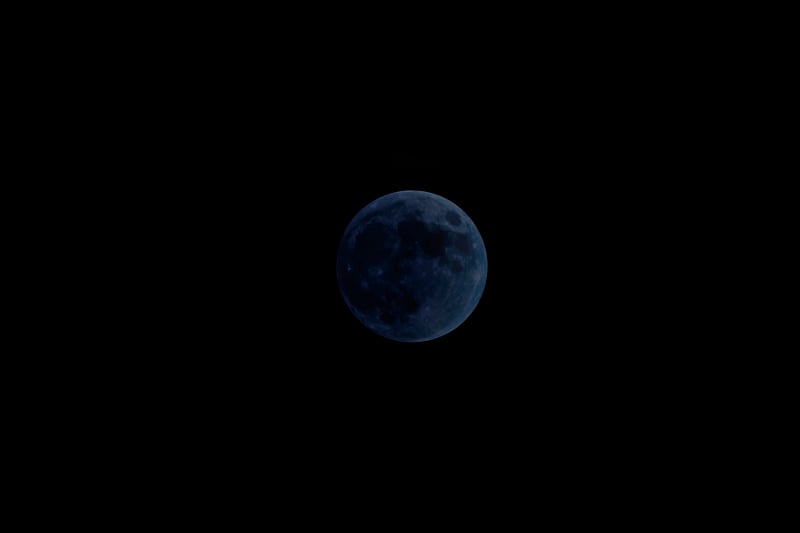
We do know that new moons are an important part of the Hebrew lunar-solar calendar. They mark the beginning of each month and are necessary for determining the correct dates of God’s annual holy days, which will be observed in the Millennium (Zechariah 14:16-19).
While Scripture indicates that new moons will have significance in the future, our understanding of their role is limited.
For a deeper explanation of the issue of new moons, read our article: “New Moons: Should Christians Observe Them?”
The Sabbath is still binding today
From beginning to end, the Bible consistently identifies the Sabbath as the only day of the week designated as holy time. This did not change with Christ’s first coming and will not change at His second.
Since “Jesus Christ is the same yesterday, today, and forever,” His commandments do not change (Hebrews 13:8 ). Worship on any day other than the seventh is a command of men, not of God, and Scripture instructs Christians to “obey God rather than men” (Acts 5:29).
Are you beginning to understand God’s Sabbath but struggling because of years of assuming that Sunday was the day to worship? If so, we encourage you to carefully examine the scriptures about this for yourself. Compare the evidence for Sabbath-keeping versus Sunday-keeping in the Bible and determine which has God’s blessing and which was devised by man.
Once you’ve reached a conclusion, act on it.
The Sabbath is eternally ordained as holy time.
Although most of the world does not presently observe the Sabbath as God commands, Isaiah prophesied of a future time when “all flesh” will observe and experience its blessing.
Join us in praying that this time—when all people will worship God each week on His Sabbath—comes soon.
To learn more about how to keep the Sabbath, read our article “How to Keep the Sabbath Holy.”
Date Posted: September 16, 2026
About the Author

Jordan Iacobucci
Jordan Iacobucci is a full-time writer at the Life, Hope & Truth offices in McKinney, Texas. He is primarily involved in writing articles for Discern magazine and blog posts for LifeHopeandTruth.com.