The United Nations at 80: Why Hasn’t It Brought World Peace?
The United Nations was founded to address conflicts and safeguard peace. After 80 years, has it delivered? Does the Bible reveal another path to world peace?

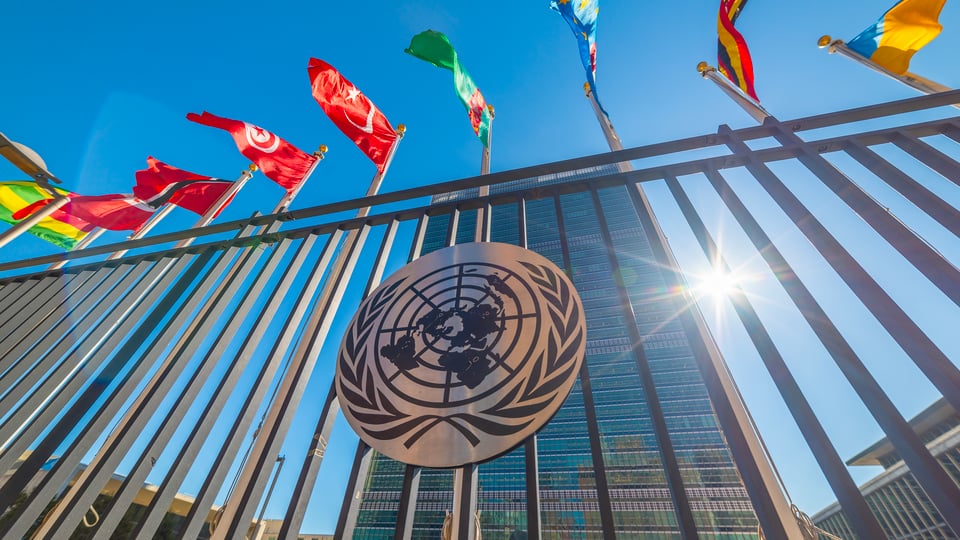
Gabriele Maltinti/iStock via Getty Images
After World War II, world leaders established an international organization designed to manage conflicts and prevent future wars. There was a widespread fear that when the next conflict arose, no one would survive.
This was driven by the advent of the nuclear age.
Although many look to the UN to help address some of our most urgent international issues, it has a history of continually failing to solve those challenges. While it has achieved some successes, many see it as a failure overall.
Why has the UN been so ineffective? Is there something that can replace it and succeed?
Values are not the same
The UN consists of 193 member states, each having its own unique history, animosities, priorities and values. Can nations with completely different value systems truly work together?
Nearly 2,800 years ago, God posed a thought-provoking question through the prophet Amos: “Can two walk together, unless they are agreed?” (Amos 3:3).
This highlights a vital truth: long-term stability in pursuing any shared goal—whether in a nation, corporation, marriage, family or community—hinges on mutual agreement.
Without agreement, unity cannot endure.
Even when there is overall agreement, disagreements will happen. Anyone who has been to school, has worked for an employer, is married or is part of a family knows that disagreements and differences occur. The point is that maintaining long-term relationships requires parties to reach and stick with mutual agreements.
Simply put, the nations that make up the UN do not walk in harmony of thought or purpose—and this has severely hindered its effectiveness.
Self-interests
The United Nations has shown its bias as a political entity, rendering it ineffective in dealing with global issues.
South African troops serving in MONUSCO, a UN peacekeeping mission in the Democratic Republic of the Congo. MONUSCO/Michael Ali, licensed under CC BY-SA 2.0 (via Wikimedia Commons).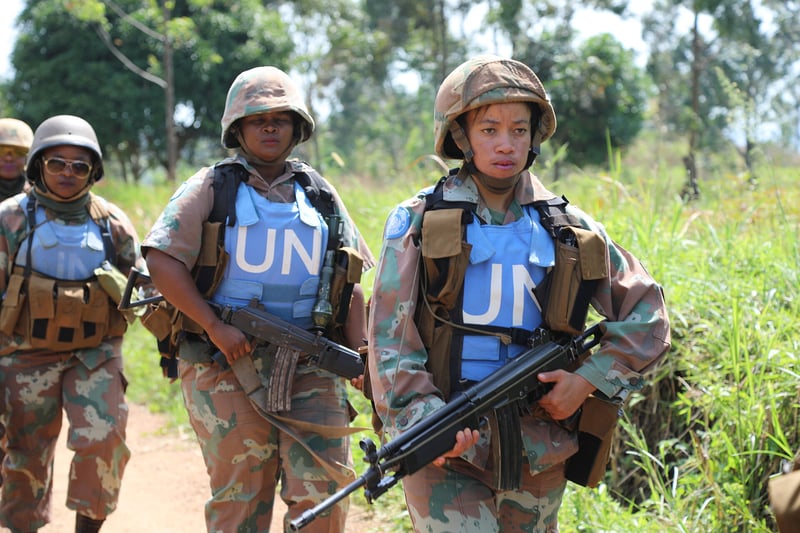
Smaller nations often feel their concerns are overshadowed by those of more powerful countries—particularly since the United States, as one of the largest financial contributors, tends to wield disproportionate influence over smaller nations.
Historically, the UN has been selective in the conflicts it chooses to address and where it deploys peacekeeping forces.
It has notably failed to effectively respond to several severe humanitarian crises, including the Rwandan genocide, the Darfur conflict in Sudan and the persecution of the Rohingya in Myanmar.
Bias against Israel
The United Nations Human Rights Council has been criticized for supporting authoritarian regimes and displaying a strong bias against Israel.
In 2024, it passed more resolutions condemning Israel than all other countries combined. This imbalance is evident in its agenda: each session includes 10 agenda items, nine of which rotate to address global concerns, while one—Item 7, focusing solely on Palestinians and Israel—remains a permanent fixture.
The United Nations Human Rights Council has been criticized for supporting authoritarian regimes and displaying a strong bias against Israel.
Meanwhile, the council often overlooks human rights abuses committed by groups like Hamas. It has also faced scrutiny for granting membership and a platform to known human rights violators, such as Pakistan, Syria, North Korea, Venezuela and Iran.
Former Secretary-General Ban Ki-moon recognized this anti-Israel bias. In his final address to the UN Security Council, he stated: “Decades of political maneuverings have created a disproportionate volume of resolutions, reports and conferences criticizing Israel. In many cases, rather than helping the Palestinian cause, this reality has hampered the ability of the UN to fulfill its role effectively” (Dec. 16, 2016).
According to the UN Watch Database, which tracks UN resolutions, at least 173 resolutions against Israel have been passed by the General Assembly since 2015.
In comparison, there have been 29 resolutions against Russia, 12 against Syria, 11 against the United States, 10 against North Korea and 9 against Iran. China has not received any resolutions, despite its severe treatment of the Uighurs and other abuses against its citizens, nor have any been passed against Cuba, Libya, Pakistan, Venezuela or Zimbabwe, despite their human rights abuses.
Since 2006, the United Nations Human Rights Council has passed 108 resolutions against Israel, and only 74 against Syria, Iran, Russia and Venezuela combined.
Scandals
The United Nations has no independent authority, military personnel or standing army to enforce peace. It depends entirely on the cooperation and contributions of its member nations to provide troops and fund its peacekeeping missions.
No matter what reforms are made, true peace can never be achieved without addressing a deeper issue: human nature.
Many of its operations have been plagued by scandal—including the Iraq Oil-for-Food corruption (in which UN staff accepted bribes), sexual abuse by peacekeepers, the Haiti cholera outbreak caused by a leaking sewage pipe at a UN base, and allegations of UNRWA employees’ involvement in the Oct. 7 terror attack against Israel.
These scandals reveal that despite its altruistic ideals, the UN has been susceptible to corruption and abuses, just like any other nation or organization.
Why has the United Nations not lived up to its charter and lofty goals and ideals?
A divided council
In September 2024, UN Secretary-General António Guterres addressed the assembly and stated, “Peace demands action. And peace demands leadership. Instead, we’re seeing deepening geopolitical divisions and mistrust.”
He went on to say peace can be established in Ukraine, Gaza and Sudan if “council members unite and follow the U.N. Charter and international law,” but not if there’s a “divided council.”
This echoes what Jesus Christ said nearly 2,000 years ago: “If a kingdom is divided against itself, that kingdom cannot stand” (Mark 3:24).
This has become especially evident today, as Russia—one of the five permanent members of the UN Security Council—has invaded Ukraine, yet retains the power to veto any resolutions condemning its own aggression. Both China and Russia have increasingly positioned themselves against Western powers, using their influence to evade accountability and block meaningful action.
Division will ultimately lead to the demise of any institution.
The limited potential of reform
Many people seek to reform the UN. Turkey’s President Erdoğan lamented the privileges of the five permanent members, stating, “The world is bigger than five.”
Some reforms may bring limited success—such as expanding or abolishing permanent memberships, limiting veto power, increasing transparency, reducing bureaucratic inefficiencies, holding nations and peacekeeping forces more accountable, enforcing stricter standards on the Human Rights Council and responding faster to crises.
Yet many overlook one of the most critical problems. No matter what reforms are made, true peace can never be achieved without addressing a much deeper issue.
The problem of human nature
The core of the problem is a fundamental misunderstanding of human nature. This issue is not limited to the UN—it extends to the entire world. All nations, leaders and institutions deal with this basic human problem.
The prophet Isaiah warned, “The way of peace they have not known,” and so “justice” has become elusive (Isaiah 59:8). He continued by describing humanity as those who “grope for the wall like the blind” and “stumble at noonday as at twilight” (verse 10). We are lost and unaware of the way we should go.
When God created the first human beings, He placed them in the Garden of Eden with two choices, represented by two trees: the tree of life and the tree of the knowledge of good and evil (Genesis 2:9). He commanded them not to eat from the tree of the knowledge of good and evil (verses 16-17). But instead of obeying, they ate the fruit (Genesis 3:6).
Consequently, they were expelled from the Garden of Eden, and their access to eternal life and the revealed knowledge of God was cut off (verses 22-24). From that point on, humanity determined for itself how to live.
Because we ate from the tree of the knowledge of good and evil, we are capable of both great good and great evil. The extent that our actions are good or evil depends on our upbringing, education, experiences, environment, knowledge, understanding, weaknesses and choices.
Even the most virtuous are described as corrupt, having done no good. “There is none who does good, no, not one” (Psalm 53:3; Romans 3:12). There is no complete moral compass within us to determine right from wrong. Jeremiah warned: “The way of man is not in himself; it is not in man who walks to direct his own steps” (Jeremiah 10:23), and “The heart is deceitful above all things” (Jeremiah 17:9).
But God will not leave us in this condition forever, because ultimately this nature would lead us to destroy ourselves. He will intervene, sending His Son, Jesus Christ, back to this earth to establish His Kingdom.
To learn more, read “Return of Christ: As the Days of Noah Were.”
What is needed—a new heart and mind
God desires that no one perish, but that all turn from their sins and change. If we do, He promises to give us “a new heart and a new spirit” that will help us live according to His laws (Ezekiel 18:30-32; 36:26-37).
An inspiring prophetic vision, described by Isaiah, reveals a time when all nations will gather in Jerusalem to seek Jesus Christ, who will teach them His laws and ways.
Jesus Christ, the Prince of Peace, will establish a new government capable of resolving all disputes and crises (Isaiah 2:2-4; Micah 4:1-5; Isaiah 9:6-7; Luke 1:31-33). Under His government, wars will cease and organizations like the UN will no longer be needed to try to prevent conflict.
Thankfully, you don’t have to wait till His return to experience personal peace. You can find peace in your life by embracing God and His way of life, which leads to true peace. You can find peace—which will thrive during Christ’s future rule—by seeking Him today.
Lasting peace and solutions to humanity’s problems will never come through institutions like the United Nations. They are found only in the foundational truths of God’s Word and the coming reign of Jesus Christ on this earth.
Date Posted: October 20, 2025
About the Author
Isaac Khalil
Isaac Khalil is husband to his lovely wife, Natasha, and father to son Eli and daughter Abigal. He loves to spend time with family and friends doing various things like watching movies, playing chess, playing board games and going out. He enjoys studying biblical topics and discussing the Bible with his friends. He is also a news junkie and is constantly reading and sharing news connected with Bible prophecy.