The U.K.’s Leadership Crisis: Symptoms of a Deeper Problem?
The United Kingdom has come through another frustrating leadership crisis. What caused this crisis? Can anything save the U.K. from its current financial and social quagmire?

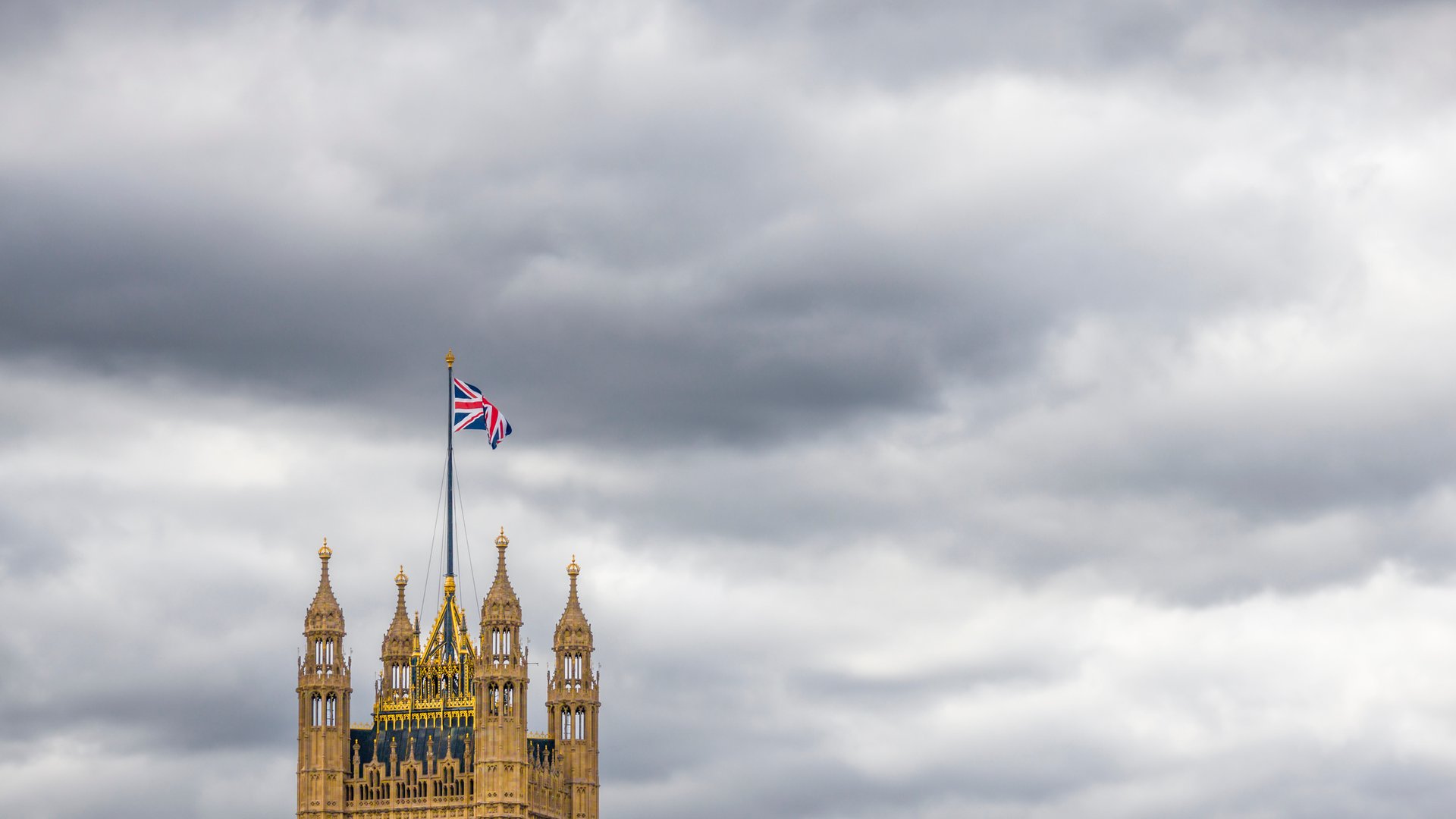
David Madison/iStock via Getty Images
The United Kingdom has a new prime minister . . . again.
In the decade since Brexit, the U.K. has gone through a whopping six prime ministers, and now has its seventh, Andy Burnham.
The nation’s current troubles began in 2016, when Prime Minister David Cameron resigned after championing the losing side of the Brexit vote. In the 10 years since, five additional leaders have come and gone. All resigned before completing their terms, with Liz Truss holding the shortest tenure at just 49 days.
The U.K.’s leadership instability illustrates the nation’s long-term decline, not only politically but economically, socially and morally.
What is the cause of the U.K.’s rapid decline, and can it be fixed?
Loss of identity
Great Britain once stood at the head of what was arguably the greatest empire the world had ever known. After many of its territories became independent countries, the empire became the Commonwealth of Nations, a voluntary association that retains many benefits of the nations’ past relationships with the empire—but no legal obligations.
So how did an empire on which “the sun never set” change so much from its glory days? Britain once ruled the seas with the world’s greatest navy. Recently, it has struggled to send a single warship to Cyprus to protect its own military assets during the war in Iran. Additionally, the nation finds itself increasingly unable to safeguard its borders from an influx of illegal immigrants arriving on boats.
The U.K. is a divided nation in deep debt and struggling to maintain its identity in an unstable world.
This has left the U.K. with a nagging question: What does it even mean to be British when the government of the day seems to be giving priority to relations with Europe and supporting several hundred thousand illegal “economic migrants” over its own citizens?
This is especially relevant when the country’s debt burden is so high and its own citizens are crying out for affordable housing and less reliance on food and energy from other countries.
Social cohesion is at an all-time low for the U.K., caused in part by surging illegal immigration. This has led to rising social problems, including increased crime rates and civil unrest, as well as increasing religious division.
Many immigrants naturally gravitate toward their own culture and religion, leading to the formation of ethnic enclaves within the U.K. Because these groups don’t always integrate into British culture, division is growing. In some extreme cases, this has led to troubling disturbances.
Consider the following sample of news stories:
- June 2026: Riots broke out in Belfast after a Sudanese asylum seeker allegedly attacked a man in broad daylight and attempted to behead him.
- December 2025: Video footage showed police initially accepting Vickrum Digwa’s claim of being racially abused and acting in self-defense after he stabbed 18-year-old university student Henry Nowak. Instead of immediately providing medical aid when Nowak said he had been stabbed and could not breathe, officers handcuffed and arrested him. After his death, the officers’ conduct became the subject of a gross misconduct investigation.
- August 2024: The son of Rwandan immigrants stabbed three young girls to death and injured 10 others at a dance class, sparking anti-immigrant riots. In response, a series of attacks unfolded as far-right rioters targeted hotels where asylum seekers were lodging and set them ablaze.
- November 2023: Israel-Gaza protests in London saw massive pro-Palestinian marches drawing hundreds of thousands of participants. Counterdemonstrations also took place, leading to violence from far-right groups.
- 2001 to present: Grooming gangs targeted vulnerable children in parts of the U.K. Multiple official inquiries found that in some areas authorities failed to act decisively and were at times reluctant to address the ethnicity of many offenders for fear of being accused of racism.
The U.K. is a divided nation in deep debt and struggling to maintain its identity in an unstable world. Many of its problems are so entrenched that there seems to be no solution.
A monarchy losing its way
Even the monarchy, Britain’s oldest institution, is no longer what it once was. King Charles recently renewed ties with the Catholic Church, the very organization that King Henry VIII broke away from 500 years ago.
More recently, King Charles has reinterpreted his role as “Defender of the Faith,” describing it as one of “protecting the space for Faith” within Britain’s increasingly multifaith society.
In doing so, he has moved away from emphasizing the monarch’s historic role as defender of the Christian faith and the Church of England. This shift reveals a loss of national identity, character and purpose. The monarchy—which once served as a foundation of stability and resilience, helping people navigate difficult times—now seems to be becoming but another symbol of instability.
Overrun by strangers
This loss of identity reaches far beyond recent events.
A careful study of the Bible and history shows that England predominantly descends from one of the lost tribes of Israel, Ephraim, whom the patriarch Jacob promised would become a “company of nations” (Genesis 35:11) and a “multitude of nations” (Genesis 48:19). This was fulfilled in Great Britain’s formation of the British Commonwealth. (For more information, read “Who Are the United States and Britain in Prophecy?”)
Resident strangers in Israel were to accept the God of Israel, not to incorporate their own beliefs (syncretism). Hosea explains that these influences had steadily drained Ephraim’s strength, yet Ephraim remained unaware of its own decline.
This parallels Moses’ warning that national disobedience would bring covenant curses, including that the foreigner within the nation would rise higher and higher while Israel declined (Deuteronomy 28:43).
Loss of leadership
The prophet Isaiah begins his book with a thought-provoking statement about Israel’s condition. He traces the nation’s sickness back to a people who have forsaken God.
Isaiah calls them a nation that does not know who founded them. He calls them sick, from head to toe, as corrupters who have turned away from God (Isaiah 1:2-6).
This passage is a sad commentary on a nation that has lost its way, forgotten its past and is now plagued with avoidable problems.
Who does God blame for this condition?
He blames the leaders: “Those who lead you cause you to err, and destroy the way of your paths” (Isaiah 3:12). He further blames these leaders for burdening the people instead of helping the poor and those in need (Isaiah 10:1-2).
Unfortunately, the U.K. is going the same way as its ancient ancestors, abandoning all semblance of following God.
When former Prime Minister Tony Blair tried to speak publicly about his faith, Alastair Campbell, his director of strategy and communications, famously interrupted him with the words, “We don’t do God.” That phrase has come to capture the attitude of much of Britain’s political class.
The U.K. is going the same way as its ancient ancestors, abandoning all semblance of following God.
The religious leadership has not fared any better. David Jenkins, a Church of England bishop, questioned the Bible, denying miracles such as the virgin birth and resurrection of Jesus.
After the 2004 Indian Ocean tsunami, then archbishop of Canterbury Rowan Williams admitted that his faith had been shaken, asking, “How can you believe in a God who permits suffering on this scale?”
Some of the U.K.’s most influential thinkers have advocated against faith in God, championing materialist and humanist worldviews. These include David Hume, Bertrand Russell, Christopher Hitchens, Charles Darwin and Richard Dawkins.
As a result, a generation has emerged that rejects God’s existence and places its confidence almost entirely in the natural world. Even among those who still believe in a higher power, that belief often has little practical influence over how they live. This echoes the prophet Hosea’s warning that Israel had “begotten pagan children” (Hosea 5:7), and the people are being “destroyed for lack of knowledge” because they have rejected God (Hosea 4:6).
A search for solutions
The Bible reveals that this leadership crisis will become so severe that no one will be willing to lead. Isaiah 3:6-7 describes a time when a man asked to lead refuses because he is already burdened by his own troubles and cannot bear the needs of others.
Many of the U.K.’s problems have worsened in recent years. Some associate the decline with Brexit, a vote many within the British establishment opposed.
Even now, some continue to look for ways to draw the country closer to the EU. Recently, Sir John Major called for Britain to rejoin the single market within the next five years, and polling suggests that increasing numbers of younger Britons favor rejoining the EU.
The only path that will fix the U.K.
The path to healing is repentance—acknowledging sin, turning back to God and allowing Him to restore what has been broken. Sadly, the modern nations descended from Israel will have to learn the hard way (Hosea 5:15; 6:1).
Even if our nations refuse to change now, you personally can begin the process. God can heal your life now and give you peace of mind, even amid the turmoil and chaos overtaking our nations.
Date Posted: July 29, 2026
About the Author

Isaac Khalil
Isaac Khalil is husband to his lovely wife, Natasha, and father to son Eli and daughter Abigal. He loves to spend time with family and friends doing various things like watching movies, playing chess, playing board games and going out. He enjoys studying biblical topics and discussing the Bible with his friends. He is also a news junkie and is constantly reading and sharing news connected with Bible prophecy.