The Historic and Prophetic Significance of the Strait of Hormuz
With sea traffic nearly halted, the Strait of Hormuz is effectively closed, shaking the global economy. How vital is this waterway? Does it relate to Bible prophecy?

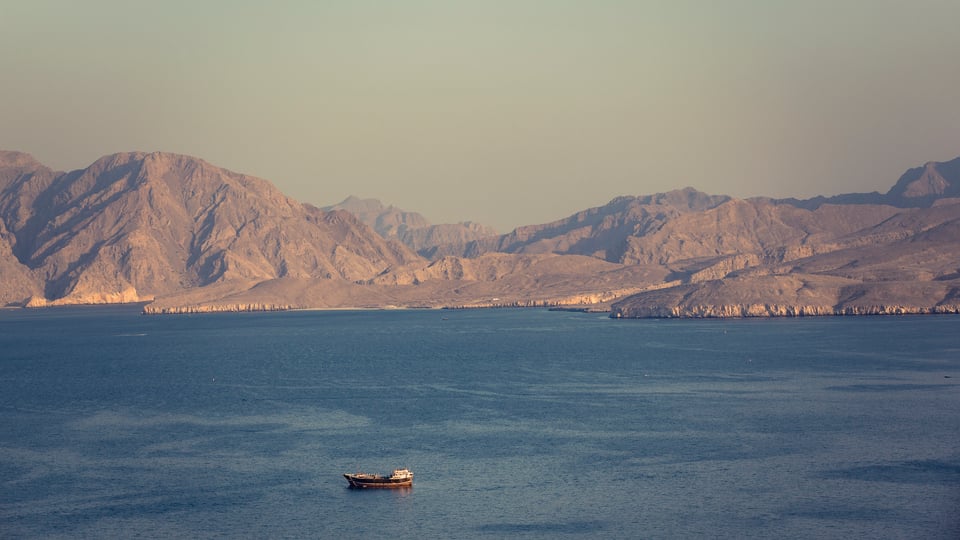
35007/E+ via Getty Images
After the United States and Israel carried out air strikes on Feb. 28, Iran retaliated with missile and drone strikes against U.S. and Israeli interests in the region.
Shortly thereafter, Iran escalated tensions further by threatening commercial shipping, launching drone attacks and deploying naval mines to disrupt traffic through the Strait of Hormuz.
As of this writing, hundreds of tanker ships are idled near the strait. The number of vessels passing through the strait (around 100 ships per day in February) has dropped over 90 percent.
For all practical purposes, the waterway is closed, with the exception of Iranian ships and a small number of others—mostly Chinese, Indian and Pakistani vessels—that Iran is permitting to pass through.
What is the Strait of Hormuz?
The Strait of Hormuz is a roughly 104-mile-long waterway that narrows to about 24 miles at its tightest point. It connects the Persian Gulf to the Gulf of Oman and serves as the only passage to the open seas. The strait is bordered by Iran to the north and the Musandam Peninsula—shared by Oman and the United Arab Emirates—to the south.
A choke point is a narrow, strategic passage that provides access from one area to another.
This map highlights the strategic location of the Strait of Hormuz. FrankRamspott/E+ via Getty Images 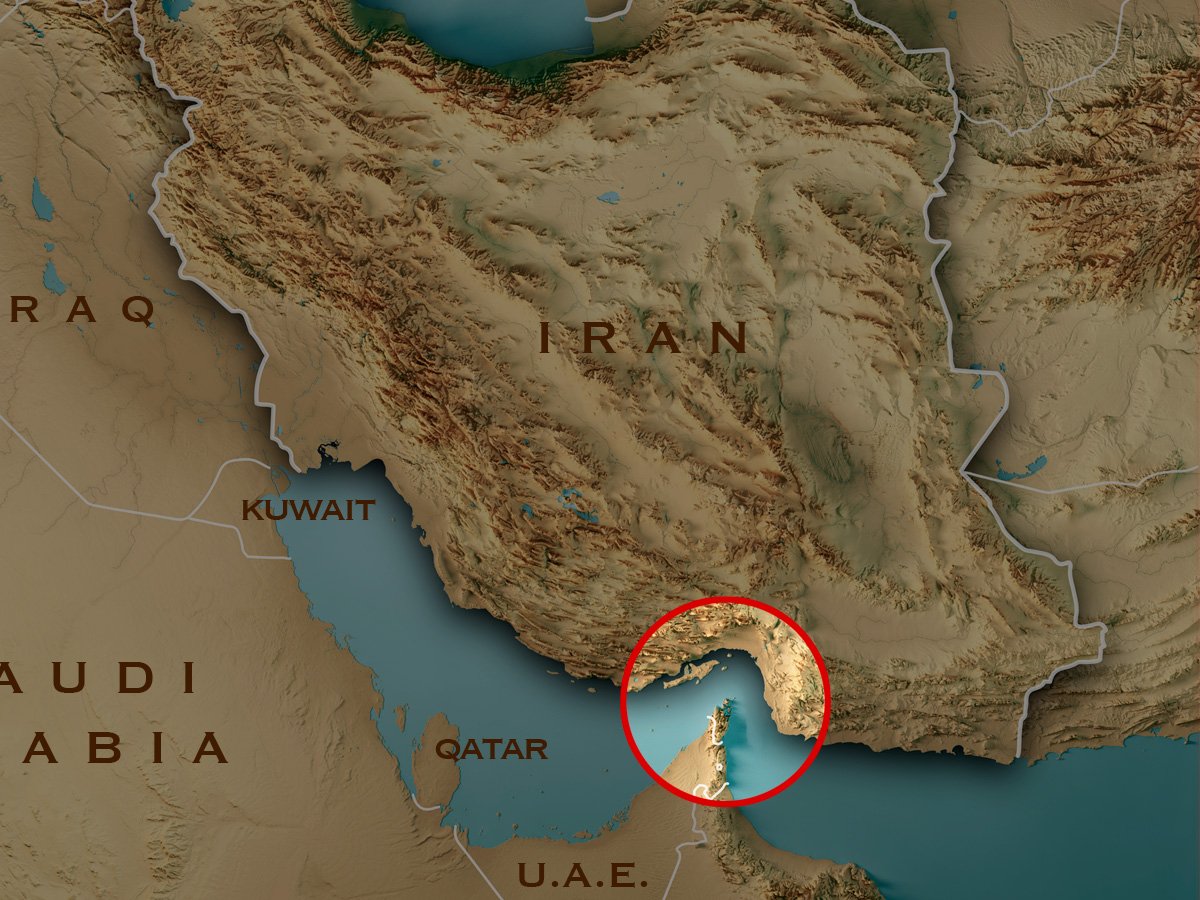
Roughly 20 percent of the world’s liquefied natural gas and global oil trade passes through this waterway each year.
Of the roughly 20 to 21 million barrels of oil that transited the strait daily in 2025, more than 80 percent goes to Asian markets, with China being the most dependent on it.
Unlike other choke points, there are few viable alternatives for exporting energy from the Persian Gulf, making the Strait of Hormuz essential for oil and gas shipments.
In 1959, Iran expanded its territorial waters to 12 nautical miles into the strait, and Oman followed in 1972. Because the strait is so narrow, their territorial waters now overlap, placing the entire waterway within their jurisdiction. However, under international law, ships retained the right of transit passage, so the strait remained open to global shipping.
Because Iran controls part of the strait through its territorial waters, it has the ability to influence and disrupt shipping, including targeting vessels it considers a threat.
The Strait of Hormuz in history
In 1507, the Portuguese seized the island of Hormuz, located just off the coast of present-day Iran. Over the next century, they controlled the strait and profited from the trade that passed through it.
The Persian rulers became increasingly resentful of Portuguese control, and in 1622 partnered with the British East India Company to expel the Portuguese, restoring Persian control of the island and opening trade to new partners.
The East India Company supplied the naval power in return for lucrative trading contracts.
But in 1820, when it forced the region’s rulers to sign the General Maritime Treaty, Britain actually took the leading role in securing the Strait of Hormuz for peaceful passage. For the next 150 years the British Empire used its naval superiority to control and benefit from this vital choke point.
The British suppressed piracy and policed shipping lanes through their established naval presence. This allowed Britain to safeguard trade routes to India and Asia.
Before oil and natural gas began dominating traffic through the Strait of Hormuz, the primary goods that passed through this narrow waterway were textiles, Arabian horses, spices and pearls.
By the late 1960s, Britain had grown weary of maintaining its presence in the region, and withdrew its last forces from the area by 1971.
In 1908, oil was discovered in Iran. This development magnified the strategic importance of the strait.
As oil exports grew, so did the profits of the British-controlled Anglo-Iranian Oil Company, which dominated Iran’s oil industry.
But in 1951, Iranian Prime Minister Mohammad Mossadegh tried to nationalize the country’s oil, arguing that Iran should have a greater share of the profits from its own natural resources.
Britain responded by imposing a naval-backed embargo, using the Royal Navy to prevent Iran from exporting its oil. Ultimately, Mossadegh was overthrown in 1953, and a new agreement was reached that divided oil profits between Iran and a consortium of Western oil companies.
By the late 1960s, Britain had grown weary of maintaining its presence in the region, and withdrew its last forces from the area by 1971. Iran moved quickly to expand its influence, seizing several strategic islands at the entrance to the Strait of Hormuz and strengthening its ability to monitor and control traffic moving through the strait.
A few years later, in 1980, the United States cut off diplomatic relations after the Iranian Revolution and the start of the Iran hostage crisis.
After the Soviet invasion of Afghanistan in 1979, President Jimmy Carter announced the “Carter Doctrine,” declaring that any attempt by an outside power to gain control of the Persian Gulf would be viewed as an attack on U.S. interests and would be met with military force if necessary.
During the 1980s “Tanker War,” Iraq targeted Iranian shipping, and Iran retaliated by attacking ships of nations supporting Iraq and by mining the two gulfs and the strait. The United States responded by deploying warships to escort tankers.
In 1988, after a U.S. vessel struck an Iranian mine, the U.S. launched Operation Praying Mantis, which crippled Iran’s navy.
Since then, Iran has repeatedly threatened to disrupt the Strait of Hormuz. Today those tensions have escalated into direct conflict, with military strikes and attacks on shipping severely disrupting traffic through the strait.
With oil prices surging worldwide, the global economy is feeling the impact as the conflict between Iran, the United States and Israel continues to escalate.
The world now waits to see how this crisis will unfold.
The Strait of Hormuz in Bible prophecy
Although the Bible does not specifically mention the Strait of Hormuz, it does address the importance of such choke points and their association with the modern descendants of Israel.
One of the birthright blessings God promised to Abraham’s descendants was “possess[ing] the gate of their enemies” (Genesis 22:17; 24:60). A gate represents a strategic passage point.
In modern geopolitical terms, gates are often referred to as choke points. There are over 20 recognized maritime choke points in the world, including the Strait of Hormuz, Strait of Malacca, Suez Canal, Panama Canal and Strait of Gibraltar.
At the peak of their power, the British Empire and the United States controlled virtually all of them—just as God had promised thousands of years earlier. (For a historical and prophetic study of this connection, see our detailed booklet The United States, Britain and the Commonwealth in Prophecy.)
As mentioned earlier, Britain controlled the Strait of Hormuz for 150 years, but then relinquished it.
Why?
Promises to Abraham were conditional
As we explain in our booklet on the topic and in other articles on our website, the birthright promises made to Abraham were conditional, dependent upon obedience to God’s laws. Disobedience to His laws would result in the removal of these blessings.
Both Great Britain and the United States, the chief recipients of those birthright blessings, have gradually strayed from the basic morality found in God’s law.
Britain and the U.S. are increasingly finding themselves at the mercy of their adversaries rather than possessing the gates of their geopolitical enemies.
The consequence of their descent into immorality has been a gradual weakening of their power and a removal of God’s blessings.
So, it’s not a surprise that some of the leaders of these two nations have essentially given up and given away the “gate of their enemies.”
Britain gave up control of the Suez Canal in 1956, the Strait of Malacca in 1957 and the Strait of Hormuz in 1971. The United States relinquished control of the Panama Canal in 1999.
Today, Britain and the U.S. are increasingly finding themselves at the mercy of their adversaries rather than possessing the gates of their geopolitical enemies.
To learn more about this national decline, read “America’s Decline” and “The Spiritual Decline of the English-Speaking Nations.”
The future of the Middle East according to prophecy
Bible prophecy tells us that a geopolitical force known as the king of the South will arise over the predominantly Muslim countries of the Middle East and North Africa. This king will attack the king of the North (a European power), but will be swiftly defeated.
How could the Strait of Hormuz fit into this battle?
As mentioned previously, over 80 percent of the oil that leaves the Persian Gulf goes to Asia, primarily China. Even now, China is concerned about how the closure of the Strait of Hormuz will impact its economy.
It is possible that after the king of the North defeats the king of the South, he will shut off the flow of oil to the east—possibly by closing the Strait of Hormuz himself.
Of course, the Bible doesn’t provide this detail specifically, but it is a reasonable possibility that may partially explain why the eastern nations will move against this future European power.
Continue to watch the Middle East
As we continue to watch developments in the Middle East, we can expect Iran’s regional influence to decline and a Muslim bloc to coalesce into the prophesied “king of the South.” Biblical prophecy suggests this power will be dominated and led by Egypt.
For now, the United States continues, with limited success, to protect its interests in the Persian Gulf. But that success will not last indefinitely. Tensions in the Middle East, and around the world, will continue to intensify, as U.S. power continues to decline.
Yes, we are living in unsettling times, but the ultimate outcome will be the return of Jesus Christ—to save humanity from itself and usher in the Kingdom of God.
Date Posted: March 23, 2026
About the Author

Tim Groves
Tim Groves attends the Gainesville, Georgia, congregation of the Church of God, a Worldwide Association, where he serves as a deacon.
He has been married to his wife, Teresa, for over 35 years. Together, they have two daughters and two sons and live in South Carolina. They moved there from Ohio in 1997 to flee the cold northern winters and allow him to do the things he really enjoys, like roaming though automobile junkyards looking for hidden treasures from times long past.