The Breaking Brotherhood: America, Britain and Judah in Prophecy
The longstanding relationships between the U.S. and its closest allies are reaching a critical juncture. Was this rupture prophesied in the Bible?

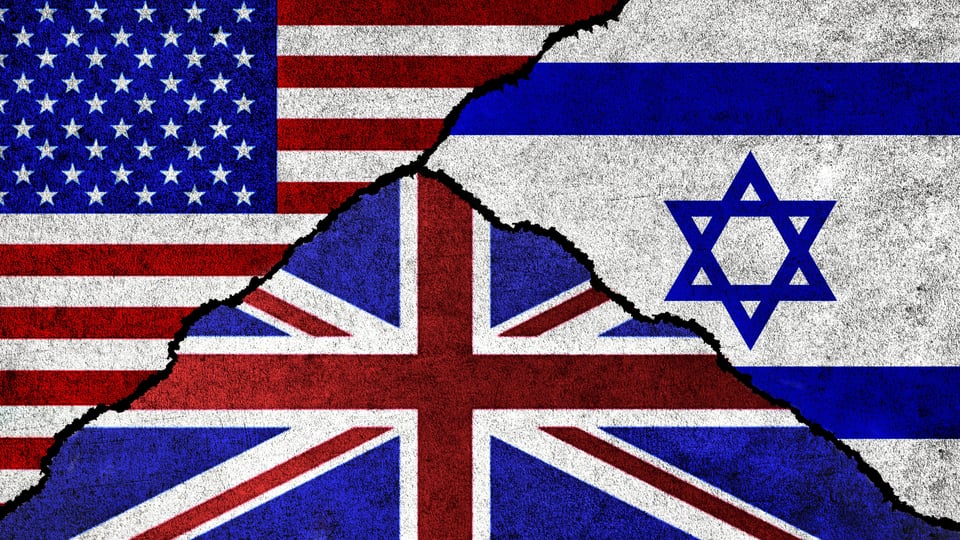
Ruma Aktar/iStock via Getty Images
During the current U.S. administration, longstanding friendships, particularly with Canada and Great Britain, have been strained to a breaking point. These relationships, tested through two world wars and dating back to the British Empire, are facing significant challenges.
The relationship between the United States and Great Britain has long been dubbed the “special relationship.” But in recent years, that relationship has been pushed to the limits.
What does prophecy say about these relationships?
Relationships under strain
When President Donald Trump returned to office, he quickly set out to address what he perceived as the nation’s trade imbalances. A key tool he employed was tariffs, which sparked trade disputes with some of the United States’ closest traditional allies, particularly Canada, members of the European Union and Great Britain.
In retaliation, Canada implemented reciprocal tariffs and is shifting its economy toward new partners in the East, including China, India and the Middle East.
After the Supreme Court struck down his tariffs, President Trump claimed the nations “have been ‘ripping’ the U.S. off for decades” and added a blanket 15 percent tariff on everything, causing the situation to worsen. This has caused formerly close allies to reassess their diplomatic and economic relations with the U.S.
President Donald Trump and Prime Minister Keir Starmer take questions at a press conference during Mr. Trump’s state visit to the United Kingdom, Sept. 18, 2025. Number 10 Downing Street / Flickr. Crown copyright. Licensed under the Open Government Licence v3.0.
Britain suffered the second-highest number of casualties among coalition forces in Afghanistan, prompting Prime Minister Keir Starmer to describe the comments as “insulting and frankly appalling.”
Though not a NATO member, Australia also assisted in the American war effort in Afghanistan. Australian Prime Minister Anthony Albanese likewise criticized the remarks as “completely unacceptable.”
Further straining relations, the United Kingdom condemned the use of military force against drug trafficking, a dispute that has reportedly led to the suspension of some intelligence sharing. Tensions were also heightened by the U.K.’s agreement to transfer sovereignty of the Chagos Islands to Mauritius while leasing back the Diego Garcia base, a move President Trump eventually criticized as an “act of GREAT STUPIDITY.”
The relationship between the United States and its closest allies has reached an all‑time low.
Have these relationships reached their breaking point, or will they eventually return to a state of normalcy? To answer that question, we must first establish the biblical identity of these nations.
Who are we?
U.S. Secretary of State Marco Rubio, at the Feb. 14, 2026, Munich Security Conference, spoke of some of the differences between the United States and Europe, but said despite those differences, “we will always be a child of Europe.”
But is that true?
Is the United States a child of Europe? The truth is far more profound.
Is it reasonable to believe that the God who “removes kings and raises up kings” and “rules in the kingdom of men” had no hand in the emergence and development of these two nations?
In modern historical terms, the United States emerged from the British Empire in the late 18th century. The British Empire was the largest empire the world has ever known.
In contrast to the world’s most expansive empire, the United States emerged in the 20th century as the world’s most powerful single nation, boasting unmatched military and economic power.
Is it reasonable to believe that the God who “removes kings and raises up kings” and “rules in the kingdom of men” (Daniel 2:21; 4:17) had no hand in the emergence and development of these two nations? God makes it clear He sets the boundaries of the nations (Acts 17:26; compare Deuteronomy 32:8).
God ordained the emergence of these nations long before these events entered human consciousness. He declares the end from the beginning and foretells things that are yet to come (Isaiah 46:10). He also reveals His plans through prophecy (Amos 3:7).
It is therefore logical to conclude that the greatest empire and the greatest single nation in modern history would be foretold in Bible prophecy—and would thus be the work of God Himself.
So, what is their biblical identity?
A hidden identity
In the book of Genesis, we read of promises God made to the patriarchs Abraham, Isaac and Jacob. Consider the following:
- God told Abraham he would be a “father of many nations” and “kings shall come from you” (Genesis 17:4-6). He further promised that his descendants would be so powerful they would “possess the gate of their enemies” (Genesis 22:17).
- God reiterated this oath to Isaac, affirming the promises made to Abraham (Psalm 105:9).
- God then elaborated on this promise to Jacob, Abraham’s grandson, promising, “a nation and a company of nations shall proceed from you” (Genesis 35:11).
Despite these tremendous promises, many Christians see the tiny modern state of Israel as the nation God promised. However, when they’re properly understood, it’s clear what was promised to the patriarchs was much larger than just that modern nation in the Middle East.
So, who are these nations today? To learn this, we need to go back in history.
Israel, the united kingdom
Under King Saul and King David, the 12 tribes of Israel were united. Following David’s death, his wise son Solomon ruled.
Despite his wisdom, King Solomon made significant mistakes by allowing his heart to stray from God and worshipping the gods of his numerous wives (1 Kings 11:3-4; compare Deuteronomy 17:17). Consequently, God declared that after Solomon’s death, the kingdom would be divided and a part given to one of his servants (1 Kings 11:9-12).
That servant was a man named Jeroboam.
In an encounter with Jeroboam, a prophet took his new cloak and tore it into 12 pieces to symbolize the 12 tribes of Israel. The prophet gave Jeroboam 10 pieces and reserved the others for Solomon’s descendants (1 Kings 11:28-38).
After Solomon’s death, his son Rehoboam ascended to the throne, but refused to relieve the heavy tax burden his father had imposed on the people. This led the northern 10 tribes to secede, choosing Jeroboam as their king (1 Kings 12:1-24).
Israel, a divided kingdom
Israel split into two nations: Judah in the south and Israel in the north. The people of Judah took the name of their tribe and became known as the Jews, meaning “descendants of Judah” (yehûdı̂, Strong’s #H3064).
The northern kingdom retained the name Israel.
There was an important reason the northern tribes retained the name Israel. After Jacob was reunited with his son Joseph in Egypt, Jacob blessed Joseph and his sons, saying, “Let my name [Israel] be named upon them” (Genesis 48:14-16). The name of Israel was specifically passed down to Joseph’s two sons, Ephraim and Manasseh.
Thus, where Ephraim and Manasseh went, so too did the name of Israel. Jeroboam, the first king of Israel after the division, was from the tribe of Ephraim (1 Kings 11:26).
Israel, the lost tribes
Unfortunately, starting with its first king, the northern nation of Israel strayed far from God. Jeroboam established a new religious system, setting up golden calves to prevent Israel from staying connected to Jerusalem for worship. Jeroboam also set up his own feasts and priestly system (1 Kings 12:25-33).
The northern kingdom never recovered spiritually from this establishment of a false system of worship.
As a result, some 200 years later, God sent Israel into captivity under the Assyrian Empire, and to this day, the descendants of the northern tribes of Israel have never returned. They actually lost their identity as Israel, becoming spiritually and culturally indistinguishable from other pagan nations.
(In contrast, the people of the southern kingdom—though not fully faithful—retained their identity even through their captivity in Babylon.)
However, God never forgot the northern 10 tribes.
So, where did they go?
Israel, a company of nations and a great nation
God promises blessings for obedience and curses for disobedience (Leviticus 26; Deuteronomy 28). However, ancient Israel was warned that persistent disobedience would bring “seven times” more punishment (Leviticus 26:18, 21, 24, 28). This “seven times” refers to both the intensity and the duration of the punishment, with a “time” equaling one year.
A prophetic year is 360 days, so seven times would total 2,520 days. And since God sometimes uses the principle of a day for a year (see Numbers 14:34 and Ezekiel 4:6), this punishment actually extended 2,520 years.
Jacob placed “Ephraim before Manasseh,” indicating that the “company of nations” would rise to prominence before the great nation.
After that, the descendants of the lost 10 tribes, particularly Ephraim and Manasseh, would begin fulfilling the promises of becoming “a nation and a company of nations” (Genesis 35:11). Ephraim’s descendants would become a “multitude of nations,” while his brother Manasseh would become a “great” nation (Genesis 48:19).
Interestingly, Jacob also placed “Ephraim before Manasseh,” indicating that the “company of nations” would rise to prominence before the great nation.
The blessings began to be fulfilled roughly 2,520 years after the northern kingdom of Israel was captured by Assyria in 721 B.C. This brings us to the early 1800s—the era when the British Empire was rising to global dominance and the United States, having separated from Britain, began expanding and acquiring significant territories, including the Louisiana Purchase in 1803.
Here is the profound truth that has remained largely hidden.
A profound truth
What underlies the special relationship between Britain—and related nations such as Canada, Australia and New Zealand—and the United States is that, according to their biblical identity, they are brother nations descended from the two sons of Joseph.
For this reason, Marco Rubio’s assertion at the Munich Security Conference that the United States is a “child of Europe” is incomplete.
Through the prophet Jeremiah, God describes a future time of punishment and captivity for Israel, a period known as “Jacob’s trouble” (Jeremiah 30:5-6). Ultimately, a group of European nations will turn against the descendants of Joseph and become their greatest end-time adversary. (To learn more, read “The Changing Face of Europe.”)
But God also promises to bring them back from their captivity in the “north country” (Jeremiah 16:14-15; 30:12-17; 31:8; compare Jeremiah 3:18; 23:8; Zechariah 2:6). After this ordeal, God will remember Ephraim—His “firstborn” (Jeremiah 31:9), the leading tribe of Israel.
In Israel’s suffering, God will reflect tenderly, asking, “Is Ephraim My dear son?” and will show mercy to him (verse 20).
Israel, a forgetful nation
God warned ancient Israel not to forget His covenant or the goodness He had shown them. He cautioned that once they entered the Promised Land—“a good land” where they would “lack nothing”—they would need to remember and obey Him (Deuteronomy 8:1-10).
Yet today we, too, have forgotten God. Our hearts have been “lifted up,” losing sight of the One who is the source of our blessings (verses 11-17).
Israel was set apart by God for a special purpose—to be an example nation (Deuteronomy 4:6-8).
To learn more, read “The Spiritual Decline of the English-Speaking Nations.”
Sadly, the United States has lived up to the meaning of its ancient tribal name, Manasseh—“causing to forget.” Joseph explained the name when he said, “For God has made me forget all my toil and all my father’s house” (Genesis 41:51).
Americans would do well to read and consider President Abraham Lincoln’s admonition to remember the source of their blessings:
“We have forgotten the gracious hand which preserved us in peace, and multiplied and enriched and strengthened us; and we have vainly imagined, in the deceitfulness of our hearts, that all these blessings were produced by some superior wisdom and virtue of our own. Intoxicated with unbroken success, we have become too self-sufficient to feel the necessity of redeeming and preserving grace, too proud to pray to the God that made us!” (“Proclamation Appointing a National Fast Day,” March 30, 1863).
Israel to be further separated
God prophesied that He would remove strong leadership from the Israelite nations because of their sins, instead giving them childish leaders (Isaiah 3:1-4). This immaturity in leadership, combined with national sin, is producing the divisions among the Israelite nations that God foretold.
He also prophesied that the United States (Manasseh) and Britain (Ephraim) would turn against one another and that both would ultimately turn against Judah, the modern nation of Israel (Isaiah 9:21).
We are witnessing the early stages of this today, and it will intensify.
Antisemitism appears to be increasing in both wings of the political spectrum in the nations of Joseph.
Even now, a significant portion of America’s conservative movement is becoming increasingly hostile toward the Jewish people, which may be the beginning of this prophecy’s fulfillment. Antisemitism appears to be increasing in both wings of the political spectrum in the nations of Joseph.
The prophet Zechariah provides additional insight. Writing during the building of the second temple, many years after Israel’s fall, he recorded a prophecy involving a broken staff, symbolizing the breaking of the “brotherhood between Judah and Israel” (Zechariah 11:14). For this brotherhood to be broken, it first had to be restored.
This restoration began in 1917, when Britain (Ephraim) issued the Balfour Declaration, opening the way for a homeland for the Jews (Judah). Remarkably, this occurred just after the conclusion of the 2,520 years (“seven times”) of punishment following Judah’s Babylonian captivity, which started with the first deportation of the Jews in 605 B.C.
To learn more, read “Daniel 9: The 70-Year Prophecy of Jeremiah.”
Israel to be reunited and healed
Since the establishment of the Jewish state, the United States has played a decisive role in helping the modern nation called Israel (Judah) survive repeated attacks by neighboring nations determined to see it destroyed.
Yet this coming rupture in the relationship between Ephraim, Manasseh and Judah will be healed. They will be reunited, and the broken staff will be restored.
The prophet Ezekiel was instructed to take one stick and write “Judah” on it, and another stick and write “Joseph, the stick of Ephraim,” and then join them together so that they become “one stick” (Ezekiel 37:16-17).
God explains that He will gather all the peoples of Israel who were scattered—commonly referred to as the lost tribes of Israel—and bring them back to the land of Israel (Isaiah 11:11-12). There He will unite them with Judah so that they will no longer be “two nations” or “two kingdoms” (Ezekiel 37:22).
This will finally heal the division that began during the reign of King Rehoboam.
To learn more about this future reuniting of Israel and Judah, read “When Will Israel and Judah Be Reunited?”
Date Posted: March 19, 2026
About the Author

Isaac Khalil
Isaac Khalil is husband to his lovely wife, Natasha, and father to son Eli and daughter Abigal. He loves to spend time with family and friends doing various things like watching movies, playing chess, playing board games and going out. He enjoys studying biblical topics and discussing the Bible with his friends. He is also a news junkie and is constantly reading and sharing news connected with Bible prophecy.