Just What Do You Mean … Israel?
Who is Israel in the Bible—the Jews, the country, the Church or another group? What does Scripture reveal about the identity of Israel?

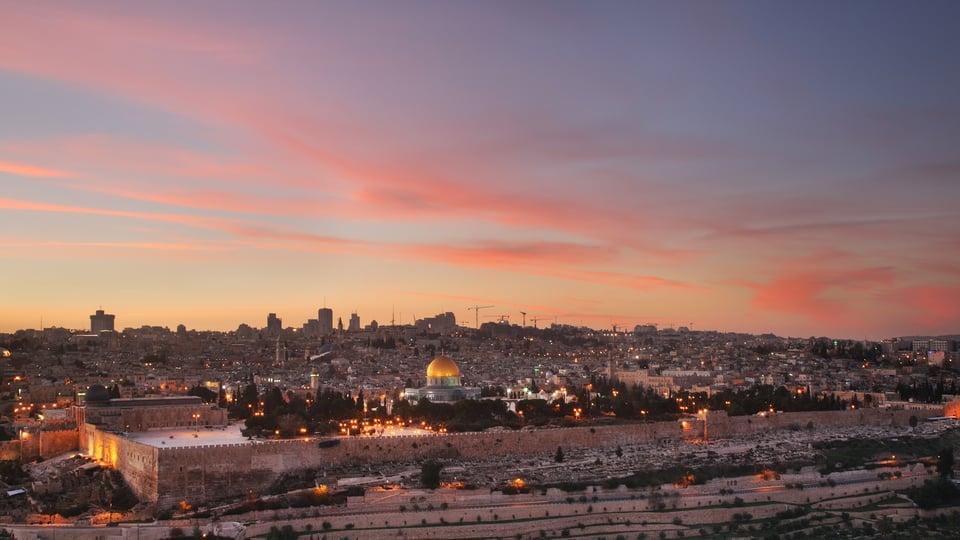
An image of the old city of Jerusalem, capital of the modern state of Israel. But does today’s nation of Israel represent all of Israel in modern times?
Image Credit:ShevchenkoAndrey/iStock via Getty Images
A recent debate between Ted Cruz and Tucker Carlson turned heated when they discussed the definition of Israel.
The debate began with Ted Cruz’s support for the Israeli government. He justified this support by citing Genesis 12:3, which states, “I will bless those who bless you, and I will curse him who curses you.” Senator Cruz believed that those who bless the nation of Israel will be blessed, while those who curse it will be cursed.
Tucker Carlson disagreed and asked Senator Cruz to “define Israel.” Senator Cruz responded: “Do you not know what Israel is?”
Interestingly, this simple question is a mystery to many people. You might be surprised to learn that the Bible refers to Israel in different ways, and the interpretation of these references depends on the context.
What are the different ways we should understand the term Israel as it is used in the Bible?
Israel as a nation
Israel is first mentioned in Genesis 32:28, when God changed Jacob’s name to Israel. Jacob’s 12 sons became the “twelve tribes of Israel” (Genesis 49:28).
During a famine, these sons went to Egypt, where their earlier sin of selling their brother Joseph into slavery was brought to light. Joseph forgave them and arranged for his family to settle in the land of Goshen (Genesis 37:28; 41:57; 42:5; 45:1-11).
After Joseph’s death, a new pharaoh arose and enslaved the descendants of Israel (Exodus 1:8-11), until God delivered them under the leadership of Moses.
God eventually gave them the Promised Land, where they had to drive out the Canaanites. During this time, God was their King (1 Samuel 8:7). He sent a series of judges to deliver Israel from their enemies when Israel cried out to Him for help.
After this period, God established them as a united nation under a human king, first King Saul and then King David, followed by his son, King Solomon.
These kings ruled over the united nation of Israel, a collection of the 12 tribes descended from Jacob. However, things later took a tragic turn.
Israel as a divided kingdom
Here’s a fact that many do not know: the nation eventually split into two separate nations. This rupture modified the definition of Israel.
What is the backstory for this dramatic change?
While Solomon started out well (1 Kings 3:3), over time he turned from following God’s ways. Solomon’s disobedience began with setting up places of worship for his pagan wives and gradually escalated into following their religious practices (1 Kings 11:4-8).
As a result, God allowed the nation to be torn apart after Solomon’s death and divided it into two kingdoms (11-13, 28-37).
The modern nation called Israel is, in fact, Judah in God’s eyes, since it is made up mainly of the descendants of the tribe of Judah.
The northern kingdom became known as the house of Israel, or simply Israel. It consisted of 10 tribes and was first ruled by King Jeroboam.
The southern kingdom, known as the house of Judah, or Judah, was ruled by Solomon’s son Rehoboam and comprised the tribes of Judah, Benjamin and some of Levi. When Rehoboam prepared to go to war against the northern tribes, God sent a prophet to tell him, “This thing [the split into two kingdoms] is from Me” (1 Kings 12:1-24).
The two kingdoms sometimes coexisted peacefully and at other times went to war with each other. The first use of the word Jews in the King James Bible is in 2 Kings 16:6, where the king of Syria fought against the Jews. The New King James Version renders it as “men of Judah,” which is synonymous with the Jews. The preceding verse notes that the king of Israel was allied with the king of Syria against Judah (verse 5).
Yes, Israel was at war with the Jews!
This challenges the common assumption that “Israel” and “the Jews” are always synonymous. In reality, the term Jews refers to the tribes of Judah, Benjamin and a part of Levi. They are only a portion of the 12 tribes of Israel. The people of the northern kingdom would never have been called Jews.
When Christ returns, He will set His feet in Jerusalem, which was the capital of ancient Judah (Zechariah 14:4; compare 12:2, 5-7; 14:14). The modern nation called Israel is, in fact, Judah in God’s eyes, since it is made up mainly of the descendants of the tribe of Judah. This misnomer contributes significantly to the present confusion.
Calling Jews “Israelites”—like calling Californians “Americans”—is not wrong. However, equating Israel entirely with present-day Jews is inaccurate because it overlooks the 10 northern tribes that also bore the name Israel. It would be like saying “America is California,” while ignoring the other 49 states. Biblically, Israel is made up of 12 tribes, and the Jews represent only one of them.
So, what happened to the nation of Israel? Where did the northern 10 tribes go?
Israel as the lost 10 tribes
The name Israel was first given to the patriarch Jacob after he wrestled with God (Genesis 32:24). Jacob later placed it on Joseph’s sons, Manasseh and Ephraim, saying, “Let my name [Israel] be named upon them” (Genesis 48:16). By adopting them as his own sons, the name Israel applies to them in a unique way (verse 5).
Due to their continuous disobedience, God allowed Israel to go into captivity. But where did these tribes go when Israel was sent into captivity?
Wherever Manasseh and Ephraim went, the name Israel followed—this is why the 10 northern tribes carried the name Israel. Their first king was Jeroboam of the tribe of Ephraim (1 Kings 11:26).
Due to their continuous disobedience, God allowed Israel to go into captivity. But where did these tribes go when Israel was sent into captivity? After their captivity by Assyria, they never returned to their homeland. Not only that, but they lost their identity completely due to their rejection of God’s law, particularly the Sabbath.
The Sabbath was to be an everlasting sign identifying God’s people (Exodus 31:13; Ezekiel 20:12). The Jews have retained their identity as Judah precisely because they have preserved the Sabbath.
In the New Testament, the lost tribes of Israel were not forgotten.
Jesus told His disciples to go to “the lost sheep of the house of Israel” (Matthew 10:6). Paul explained that “blindness in part has happened to Israel until the fullness of the Gentiles has come in,” and he affirmed that “all Israel will be saved” in the future, as God remembers His covenant to forgive their sins (Romans 11:25-27; see also Hebrews 8:10-12). Likewise, James addressed his letter to “the twelve tribes which are scattered abroad” (James 1:1).
Israel as a restored people
We know where Judah’s descendents are today because they are still identified as Jews. But where are the other tribes today? To answer that question, it helps to go back to Genesis.
God promised Abraham that he would become the “father of many nations” (Genesis 17:4-5) and later promised Jacob that a portion of his descendants would form “a nation and a company of nations” (Genesis 35:11). At the end of his life, Jacob received a prophecy from God about his sons, the 12 tribes of Israel, existing in the “last days” (And Jacob called his sons and said, “Gather together, that I may tell you what shall befall you in the last days:
New King James Version (NKJV) The Holy Bible, New King James Version ©1982 by Thomas Nelson">Genesis 49:1).
Before Jacob died, he prophesied that his grandson Ephraim’s descendants would become a multitude, or a group, of nations. In contrast, Manasseh’s descendants would become a single great nation (Genesis 48:19).
Ancient Israel fell in 722 B.C. when Assyria conquered the 10 tribes, including Manasseh and Ephraim.
The modern descendants of the tribes of Ephraim and Manasseh still bear the name of Israel today, as God sees things.
Where did they go next?
Putting together the prophecies above with other historical clues, we believe the tribes of Ephraim and Manasseh eventually became the modern nations of Great Britain (and the British Empire, which became the Commonwealth) and the United States of America. (To learn more, study our infographic “Abraham’s Descendants” and our article “The 12 Tribes of Israel in History and Prophecy.”)
Great Britain eventually ascended to global prominence, establishing an empire and then a commonwealth of nations, fulfilling the blessing promised to Ephraim. Later the United States, having achieved independence from Britain, rose as a great nation, fulfilling the blessing promised to Manasseh. This aligns with verse 20, which indicates Ephraim would receive his blessings first.
The modern descendants of the tribes of Ephraim and Manasseh still bear the name of Israel today, as God sees things (verse 5). Nations like the United States, the United Kingdom, Canada, Australia and New Zealand can all be identified as Israel.
The modern nation called Israel, on the other hand, primarily consists of Jews, descendants of the tribe of Judah.
The prophet Ezekiel held two sticks—one labeled “for Joseph, the stick of Ephraim, and for all the house of Israel,” and the other labeled “for Judah.” God told him to join them together, symbolizing that the two divided kingdoms will one day be reunited. This prophecy will be fulfilled at Christ’s return, after their repentance, when King David will again reign over them (Ezekiel 37:15-24).
Despite God providing physical blessings to the United States, Britain and the Commonwealth nations—the lost tribes of Israel—they have largely forgotten their identity as a part of Israel. In these last days, their sins will lead to their decline, and they will face captivity once more. But afterward, God will bring them to repentance and ultimately restore them to their ancient homeland (Hosea 1:10-11).
To learn more, read “What Is Jacob’s Trouble in End-Time Prophecy?”
Israel as a spiritual body
Many Jews in Jesus’ time misunderstood the promises given to Abraham, believing their righteousness was secured solely by being a descendant of Abraham (Matthew 3:9; John 8:33). They thought they alone were God’s chosen people and failed to understand that the promises of Abraham are not limited to the physical descendants of Abraham.
God’s promise to Abraham was fulfilled through Isaac, a child born by promise, showing that one becomes a child of Abraham through faith and by a promise (Galatians 4:28). By sharing Abraham’s faith, each one of us can become an inheritor of the promise (Romans 4:16-22).
Some mistakenly believe that spiritual Israel—the Church—has completely replaced physical Israel, a view known as Replacement Theology. This idea is incorrect. God is working with both physical Israel, whom He intends to save, and spiritual Israel, the called-out ones who will assist Jesus Christ in the world to come. This dual plan reflects God’s desire that “all should come to repentance”—a promise that will ultimately extend to the whole world (2 Peter 3:9).
If you respond to God’s calling, you can be a part of spiritual Israel.
As we’ve seen, the term Israel is broad and doesn’t refer to just the Church, the Jews or the modern-day nation in the Middle East. It is used in various ways.
To learn more about the use of the name Israel, read our article “Is There More to Israel Than the State of Israel” and download our free booklet The United States, Britain and the Commonwealth in Prophecy.
Date Posted: November 7, 2025
About the Author

Isaac Khalil
Isaac Khalil is husband to his lovely wife, Natasha, and father to son Eli and daughter Abigal. He loves to spend time with family and friends doing various things like watching movies, playing chess, playing board games and going out. He enjoys studying biblical topics and discussing the Bible with his friends. He is also a news junkie and is constantly reading and sharing news connected with Bible prophecy.