France’s Identity Crisis and Europe’s Prophetic Future
France is in turmoil, pulled in many directions. Yet the Bible reveals that Europe will return to its roots. How does the current turmoil fit into Bible prophecy?

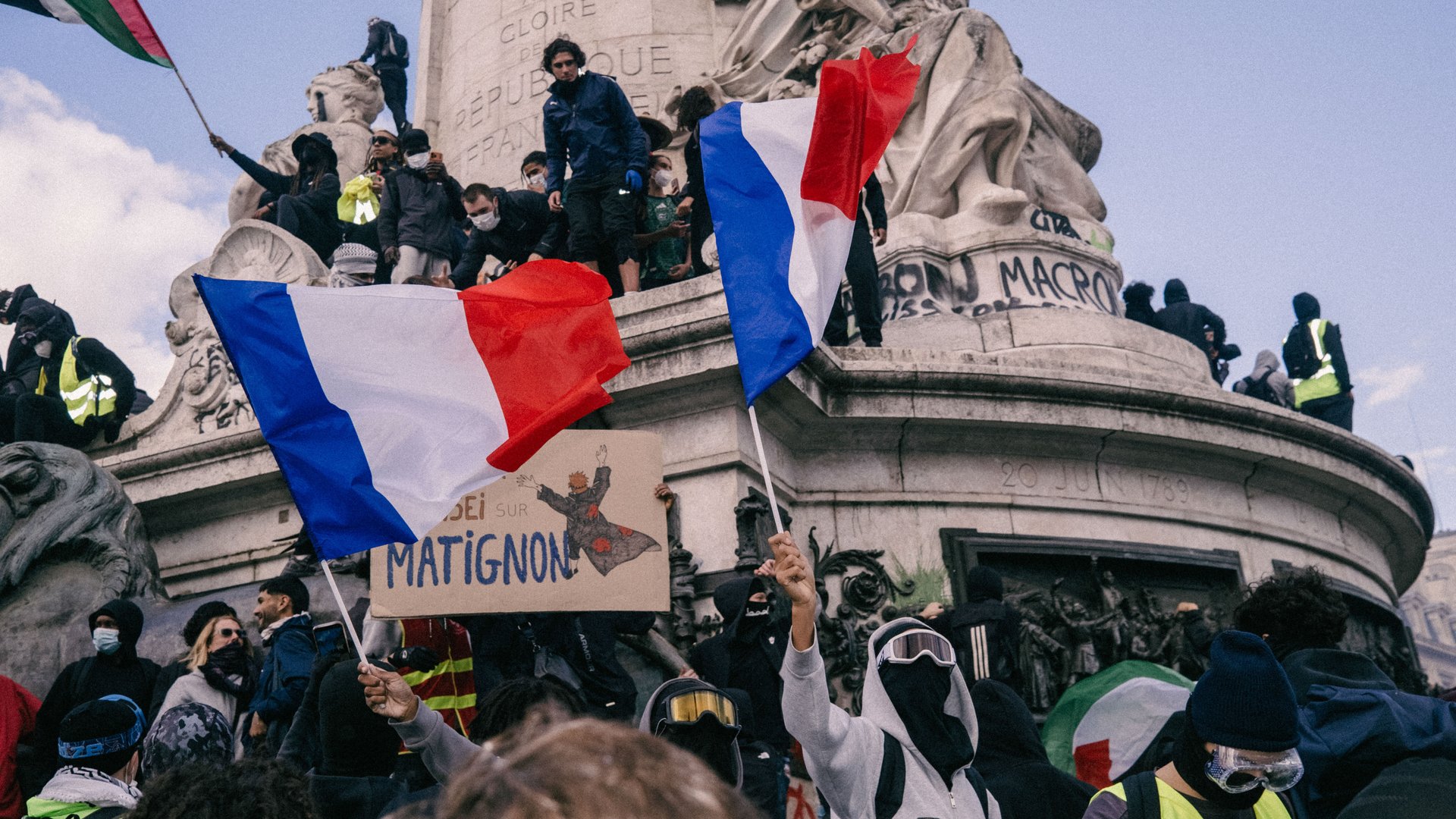
Protesters gathered at the Place de la République monument in Paris, France (Oct. 17, 2026).
Image Credit:Davood Maeili/MEI/SIPA/2610182154 (Sipa via AP Images)
The pope’s visit to France in September 2026 came just before the country descended into turmoil. What began as student protests over poor school conditions became broader demonstrations, with the involvement of leftist and Islamist organizations, on the rising cost of living and have now escalated into widespread unrest—with schools set ablaze, infrastructure damaged and demonstrations spreading across Europe.
France’s current political leadership appears incapable of bringing the crisis under control. Financial pressures and deep political divisions have paralyzed efforts to address the nation’s problems.
Various political parties are exploiting the unrest, further polarizing the public, with the far-right movements seeking to capitalize on the disorder for electoral gain.
What does all this mean? And where is it leading?
A nation struggling for identity
France’s identity crisis can be understood through three competing flags.
The first is the flag of the European Union, embraced by those who identify strongly with Europe and favor deeper European integration. They view France and other European nations as more prosperous, strong and competitive when they work together in a common European market.
France is home to sizable Muslim communities with roots in the Middle East and North Africa. Michael Derrer Fuchs/iStock via Getty Images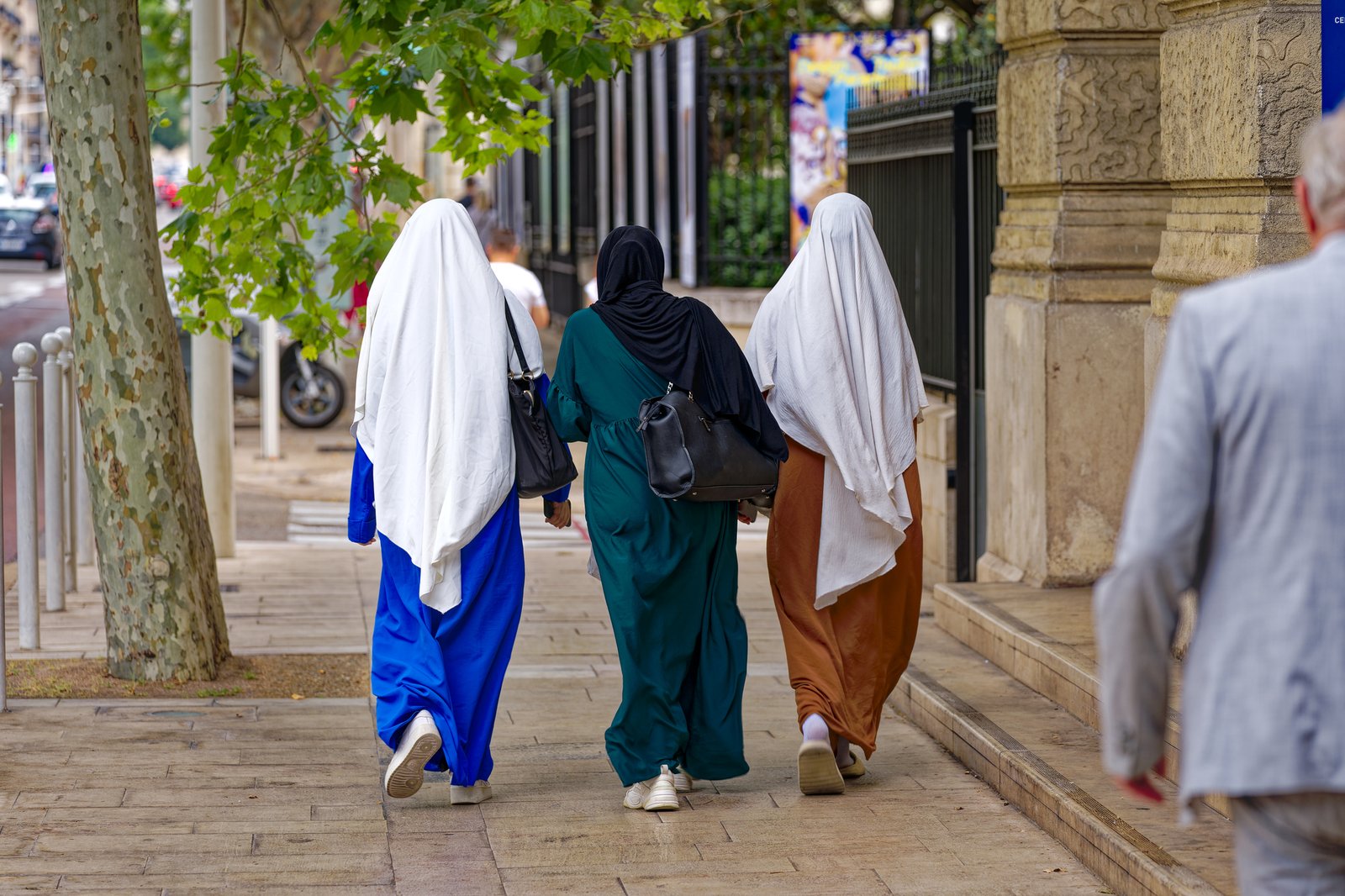
Unbridled immigration has become a contentious issue in France, as it has in the United Kingdom and across much of Europe. This has helped drive support for far-right movements. For some voters, nationalism offers an alternative to both European integration and multiculturalism.
The third is the Palestinian flag, which has featured prominently in recent demonstrations in France. Like the United Kingdom, France is home to sizable Muslim communities with roots in the Middle East and North Africa. Questions of integration and national identity have become increasingly contentious. While some demonstrators display the Palestinian flag to express solidarity with Palestinians, others have embraced it as a broader symbol of dissatisfaction with the French political establishment.
These competing loyalties reveal a nation deeply divided over its identity. At the heart of these tensions lies a fundamental question: What does it mean to be French?
An unstable France
France is no stranger to political instability. Its history has been marked by protests, riots, strikes and revolutions. Over the past 234 years, since the overthrow of the Bourbon monarchy in 1792 during the French Revolution, France has established five republics, interrupted by periods of monarchy and empire.
The French Revolution. Since the overthrow of the Bourbon monarchy during the French Revolution, France has established five republics, interrupted by periods of monarchy and empire. 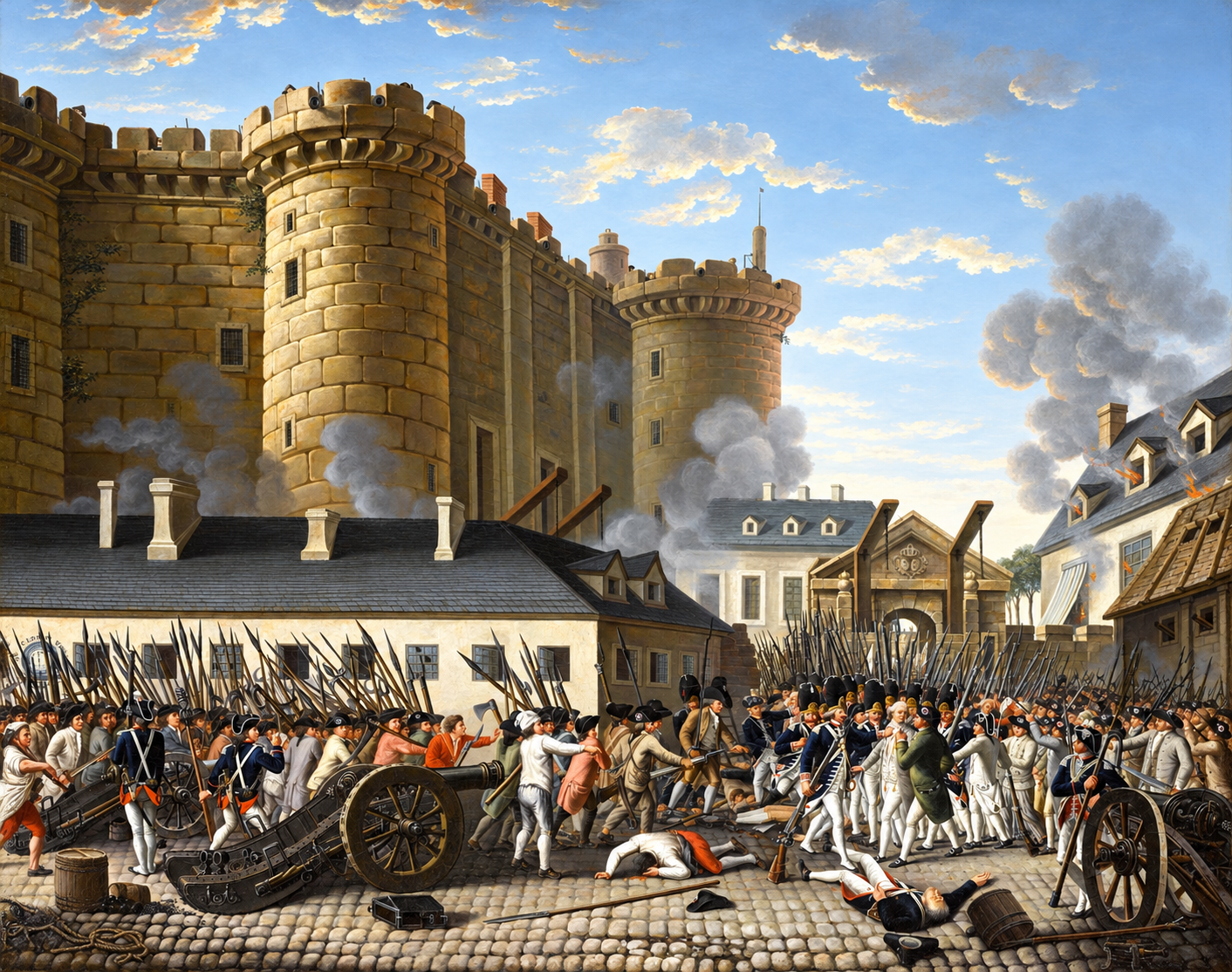
Careful study of prophecy and history has led some students of prophecy to connect France with the descendants of Reuben, Jacob’s firstborn and birthright son (Genesis 29:32). Reuben forfeited his birthright through sexual immorality with his father’s concubine (Genesis 35:22), causing the birthright blessings to pass to his younger brother Joseph (1 Chronicles 5:1).
In a prophecy concerning his descendants “in the last days” (Genesis 49:1), Jacob described Reuben as possessing “the excellency of dignity and the excellency of power,” yet being “unstable as water” and destined not to excel (verses 3-4). These words present a striking parallel with France—a nation of great power and prestige, yet also marked by centuries of political instability.
A Christian France?
Despite France’s deeply secular culture, Pope Leo received a surprisingly enthusiastic reception. As the nation grapples with questions of identity, the pope offers an alternative vision—one rooted in France’s Catholic heritage.
From the beginning of his pontificate, Pope Leo has emphasized Christian unity, choosing the motto “In the One, we are one.”
Pope Leo visited France from Sept. 25-28. As his popemobile traveled along the Avenue des Champs-Élysées, 700,000 people gathered to catch a glimpse of him. They chanted his name and cried, “Long live the pope!” It was a remarkable public display of religious faith for a very secular nation.
Later, he drew a capacity crowd of 80,000 young people to the Stade de France. The event featured singing, a live orchestra and artistic performances presenting France’s history through the lens of the Roman Catholic Church. It concluded with fireworks and words of encouragement from the pope.
The news agency Rome Reports observed a striking contrast surrounding Pope Leo’s visit. While the papal events projected an image of peace and unity, elsewhere France was experiencing young people protesting, looting and setting historic buildings ablaze.
Against this secular backdrop, the Roman Catholic Church offers an alternative vision of French identity—one rooted in the Christian heritage the pope hopes the nation will embrace once again.
France, the eldest daughter of the Catholic Church
Pope Leo’s purpose was to remind the French people of their nation’s rich Catholic history and to rekindle an awareness of their Christian roots.
Upon arriving in France, the pope traveled to the Élysée Palace, where President Emmanuel Macron welcomed him with military honors. In an address to political, religious and business leaders, Leo stated, “France is a land with deep Christian roots,” recalling the nation’s Christian heritage.
The Roman Catholic Church offers an alternative vision of French identity—one rooted in the Christian heritage the pope hopes the nation will embrace once again.
That message was reinforced later at the Stade de France, where a series of scenes portrayed French history through its relationship with the Catholic Church. One of the opening scenes reenacted the baptism of Clovis, an event widely regarded as marking the beginning of Catholic Christianity in France.
The following day, Pope Leo visited a shrine dedicated to Mary and invoked France’s traditional title, “eldest daughter of the Church.” The title recalls France’s formative role in the early development of the Holy Roman Empire, when European kings submitted to the authority of the Catholic Church. It also evokes a powerful image: France as the daughter and the Roman Catholic Church as the mother.
The Bible contains a striking parallel of that imagery.
The Catholic Church as “mother”
On Sept. 28, the pope traveled to Metz, France. Speaking at the Robert Schuman Conference Center, he turned his attention to Europe in a speech titled “To the Roots of Europe, for Peace and Unity.” He explained that Europe has changed throughout its history and cannot be defined solely by geographical boundaries. Instead, it should be seen as a “cultural and historical reality.”
Drawing on the example of Robert Schuman, one of the founders of modern Europe, he declared, “We cannot speak of Europe, then, without mentioning Christianity.”
After World War II, European nations remained deeply distrustful of Germany. France sought joint control over coal and steel production to prevent Germany from using those resources to rearm and launch another war. Robert Schuman played a central role in bringing the former adversaries together through the European Coal and Steel Community. This began an era of greater cooperation among European nations.
What began as a union of six countries became the foundation of today’s 27-member European Union.
The Bible describes four successive ruling empires—Babylonian, Medo-Persian, Greco-Macedonian and Roman—as four fearsome beasts (Daniel 7). Rome, however, was “different from all the beasts that were before it” (verses 7, 19). It would experience 10 successive revivals, while from it would emerge “another horn, a little one” (verses 8, 20)—a religious power depicted as “making war against the saints, and prevailing against them” (verse 21).
History and prophecy help identify this religious power as the Roman Catholic Church, which teaches a counterfeit form of Christianity shaped by syncretism and the assimilation of pagan practices and which has a history of persecuting those with different religious beliefs, including the true people of God.
The same church is depicted in the book of Revelation as a mother—“THE MOTHER OF HARLOTS” (Revelation 17:5)—an unfaithful woman whose daughters represent other churches that teach similar false doctrines. She is also described as “that great city which reigns over the kings of the earth” (verse 18), a clear reference to Rome.
In this maternal role, for many years the Roman Catholic Church has been calling her estranged daughters back to Rome. This appeal extends beyond an increasingly secular Europe to churches long separated from Rome—including the Eastern Orthodox Church, whose division with Rome is traditionally dated to the Great Schism of 1054, and the Protestant churches that emerged from the 16th-century Reformation and later further divided into numerous denominations.
Calling her daughters home
From the beginning of his pontificate, Pope Leo has emphasized Christian unity, choosing the motto “In the One, we are one.” In pursuing this goal, he has focused on beliefs shared among Christian traditions, particularly the traditional doctrine of the Trinity. (For a deeper analysis of this trend, read “Is Pope Leo’s Push for Unity Positive—or Dangerous?”)
As part of this mission, he has expressed a vision of Christians from different traditions praying together in Jerusalem in 2033. The year would mark 2,000 years, according to Roman Catholic chronology, since the crucifixion of Christ and the first Pentecost of the Christian era.
Consider these examples of his efforts:
- May 20, 2025: Speaking with Orthodox leaders and bishops, Pope Leo stated his desire to “strengthen the bonds of unity that already exist between us, as we move towards full communion between our Churches.”
- Oct. 23, 2025: King Charles and Pope Leo made history by praying together in the Sistine Chapel—the first such joint prayer since the Church of England separated from the Roman Catholic Church in the 16th century.
- Nov. 29, 2025: Pope Leo expressed his desire to find a way for the Roman Catholic and Eastern Orthodox churches to celebrate Easter on a common date.
- Dec. 2, 2025: Pope Leo stood beside Ecumenical Patriarch Bartholomew (the highest-ranking leader of the Eastern Orthodox Church) at the site of the Council of Nicaea, a landmark event in the development of the doctrine of the Trinity. There he expressed his desire for “full communion among all believers in Jesus Christ.”
- Jan. 25, 2026: During the Week of Prayer for Christian Unity, Pope Leo declared, “We are one! We already are! Let us recognize it, experience it and make it visible!”
- Oct. 1, 2026: Meeting with the Lutheran World Federation, Pope Leo called for greater unity in order “to share our common missionary task of preaching the Gospel.”
Pope Leo, following in the footsteps of his recent predecessors, is calling the Catholic Church’s estranged daughters back to Rome. As the Catholic Church gains prominence, Bible prophecy indicates that it will exercise influence over a revived Roman Empire. This is symbolized by the woman riding the beast in Revelation 17:3.
Continue watching
Jean Monnet, one of the founders of modern Europe, observed that “Europe will be forged in crises, and will be the sum of the solutions adopted for those crises.”
As the crisis in France spreads across Europe, watch how both the Roman Catholic Church and Europe respond. Bible prophecy indicates that their proposed solutions will help draw them into their final roles—and ultimately plunge the world into war.
A major aspect of this future conflict will be escalating tensions between the beast-led European power and nations in North Africa and the Middle East, ultimately leading to a European invasion of the region. How Europe’s current tensions over Muslim immigration and integration might factor into this future conflict remains to be seen.
Keep watching Europe and the Middle East!
Date Posted: November 2, 2026
About the Author

Isaac Khalil
Isaac Khalil is husband to his lovely wife, Natasha, and father to son Eli and daughter Abigal. He loves to spend time with family and friends doing various things like watching movies, playing chess, playing board games and going out. He enjoys studying biblical topics and discussing the Bible with his friends. He is also a news junkie and is constantly reading and sharing news connected with Bible prophecy.