No longer living in an agrarian society means we can miss important metaphors. “Firstfruits” is one of them. What do firstfruits picture in God’s plan?
wundervisuals via Getty Images
Long before Pentecost became associated with miracles, the gift of God’s Spirit and a historic sermon that led to 3,000 people being baptized, it was a day centered on thanking God for His provision.
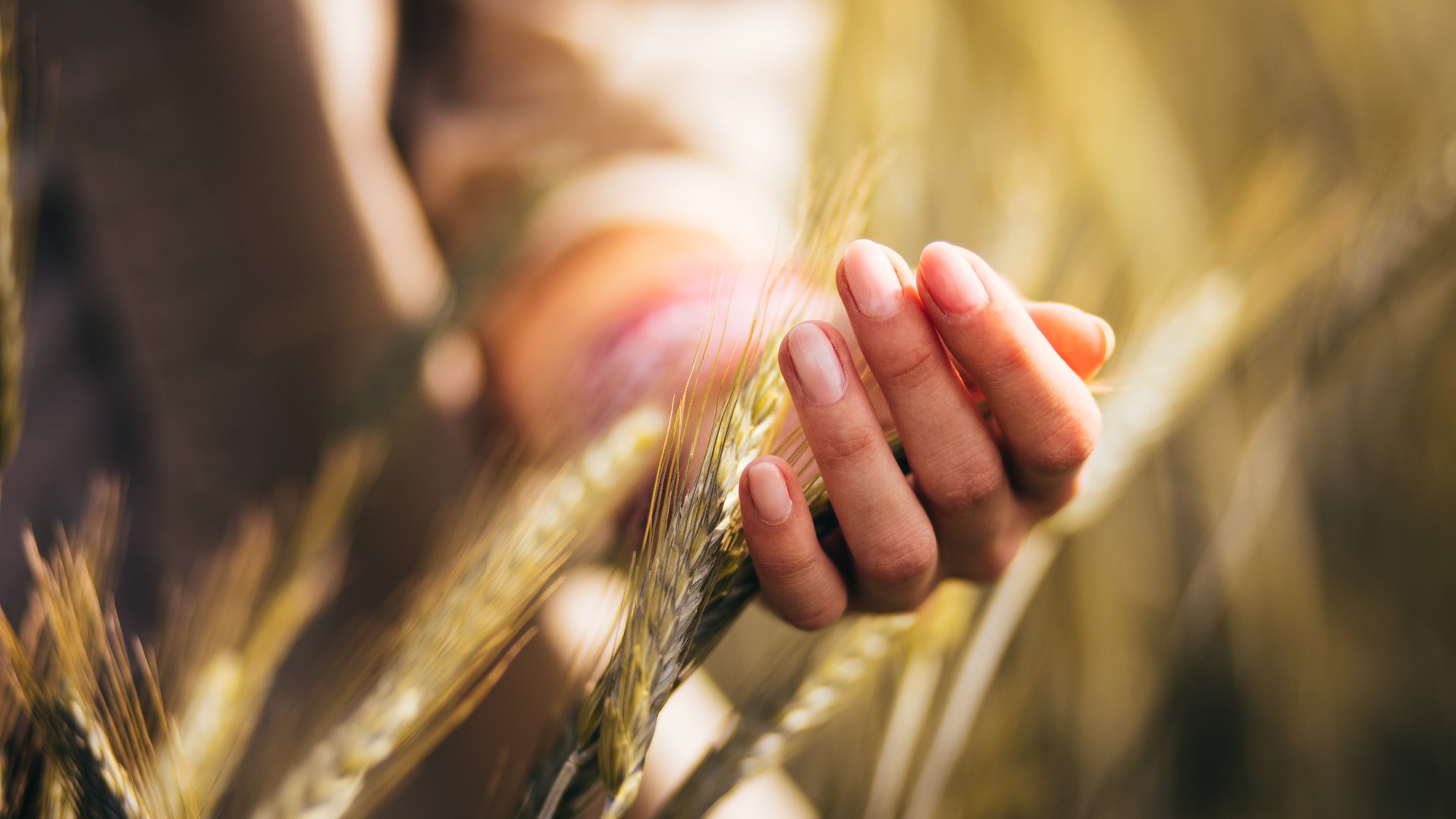
For Israel, the locus of the festival was the tabernacle and later the temple where a unique ceremony took place. Each year, newly harvested grain was baked into two loaves and presented to God. These loaves were called “firstfruits to the LORD” (Leviticus 23:17).
Hence, Pentecost is also called “the day of the firstfruits” (Numbers 28:26).
But what are firstfruits?
How much significance does this old agricultural concept hold for God’s people today?
When we look at the relevant scriptures, the answer is: quite a lot.
Here are three facts about firstfruits you may not have considered.
1. Firstfruits represent a special group of people.
In ancient Israel, Pentecost coincided with the end of the grain harvest during spring. It was recognized as the harvest of firstfruits—the initial yield of produce in the agricultural year.
When we view “firstfruits” in the context of what God is doing with humanity, its spiritual symbolism is clear.
Jesus referred to the Father as “the Lord of the harvest” (Matthew 9:38). He compared one who took the gospel message to a “sower,” who plants and hopes for a crop (Matthew 13:3). The world is a “field,” and the people of God are the “good seeds” (verse 38).
In Revelation, we read of a special command that goes out when the faithful are ready to receive eternal life: “Thrust in Your sickle and reap, for the time has come for You to reap, for the harvest of the earth is ripe” (Revelation 14:15).
When we put these scriptures together, a picture forms: God is conducting a harvest.
Not of crops, but of people.
“Firstfruits,” then, are the ones who come first in the process. Like crops, these are people who are ready sooner. That is, they internalize the gospel and become children of God before the rest.
James gets more specific: “Of His own will [God] brought us forth by the word of truth, that we might be a kind of firstfruits of His creatures” (James 1:18, emphasis added throughout).
“That we might be a kind of firstfruits.”
He was talking to fellow Christians—members who weren’t there by some kind of accident. They were handpicked by God. As Jesus said, “No one can come to Me unless the Father who sent Me draws him” (John 6:44).
It takes an invitation to be part of what God is doing. That’s why we’re called “chosen” and “special people” (1 Peter 2:9). Members of the Church since the first century—all who have responded to God’s invitation by turning to Him and aiming for the “stature of the fullness of Christ” (Ephesians 4:13)—are God’s spiritual firstfruits.
Pentecost is about us—and the unique part we fulfill in God’s plan.
2. The firstfruits are the first to receive eternal life.
The privilege of being in the first group of people who have their sins washed away and experience the fulfillment of a changed life is just a small part of what awaits us.
The firstfruits will be the first to taste a gift God has wanted to give since before time began:
Immortality.
John acknowledged, “Beloved, now we are children of God; and it has not yet been revealed what we shall be, but we know that when He is revealed, we shall be like Him” (1 John 3:2). Humanity has always been in the “image of God,” but currently our similarities to Him are limited to something like appearance and form (Genesis 1:27).
This promise looks ahead to a time when we will be like God!
Imagine never dying, becoming sick or getting injured. Imagine never needing to sleep or rely on food. Imagine having immense power and vast knowledge and understanding.
When Paul told the Ephesians that God would “demonstrate in the coming ages the surpassing wealth of his grace,” this is the future He was talking about (Ephesians 2:7; NET Bible).
God is going to change us.
And one of the beautiful things about this transformation is that it will happen to all the firstfruits at the same time.
The author of Hebrews encouraged the first-century Church by pointing to Old Testament examples of faithful men and women. But he made it clear that their change had not come—because God plans to glorify all of us together.
“And all these, having obtained a good testimony through faith, did not receive the promise, God having provided something better for us, that they should not be made perfect apart from us” (Hebrews 11:39-40).
We know when this will finally take place: “For the Lord Himself will descend from heaven with a shout, with the voice of an archangel, and with the trumpet of God. And the dead in Christ will rise first. Then we who are alive and remain shall be caught up together with them in the clouds to meet the Lord in the air.
“And thus we shall always be with the Lord” (1 Thessalonians 4:16-17).
At the return of Christ, the firstfruits will receive the full measure of the gift God has in store for His people.
3. Firstfruits are only a fraction of humanity.
Another thing to understand about firstfruits is what they foreshadow:
When Jesus referred to His fledgling Church as a “little flock,” He never said it would stay that way (Luke 12:32). The firstfruits are a small fraction of humanity, but their very existence points to an even greater harvest ahead.
An even greater harvest to come.
The firstfruits are crucial, but they’re not the be-all and end-all. The number of those God will work with until the second coming of Christ is peanuts compared to how many people His plan ultimately calls for.
God wants to redeem the entire human race (1 Timothy 2:3-4).
When Peter gave his Pentecost sermon, he quoted a prophecy from Joel that alludes to this wonderful fact: “And it shall come to pass in the last days, says God, that I will pour out of My Spirit on all flesh” (Acts 2:17).
The Spirit of God has been active throughout history and into the modern era of the Church, yet only in the lives of a relative few. But in the future, that will change. We’re looking forward to the complete fulfillment of Joel’s prophecy, when the Spirit of God is poured out on everyone.
God promises that “the earth will be filled with the knowledge of the glory of the LORD, as the waters cover the sea” (Habakkuk 2:14). A time when “all the ends of the world shall remember and turn to the LORD” (Psalm 22:27).
No longer will God be working with a group here and there while the majority of humanity does its own thing. This will be when the spiritual harvest commences on a global scale. God will see to it that every human being is given an opportunity for salvation (1 Timothy 2:4).
When Jesus referred to His fledgling Church as a “little flock,” He never said it would stay that way (Luke 12:32). The firstfruits are a small fraction of humanity, but their very existence points to an even greater harvest ahead.
A more complete picture of firstfruits
It’s hard to say how much ancient Israel understood about what the firstfruits pictured in God’s plan of salvation. But the fact that God commanded His people, both then and now, to observe a day centered on firstfruits shows its importance to Him.
And these truths should be important to us.
The firstfruits:
- Are a unique group of people—the few who receive and yield to God’s Spirit and have a personal relationship with Him during the first 6,000 years of human existence.
- Will be the first to be resurrected to eternal life.
- Are just a sample of the much greater harvest to follow.
Pentecost is about firstfruits—and hopefully, now that we’ve seen what they symbolize, we can reflect on these facts and be inspired to go forward with assurance and zeal.
About the Author

Kendrick Diaz
Kendrick Diaz is a full-time writer at the Life, Hope & Truth offices in McKinney, Texas. He spends his workdays writing blog posts and articles for Discern magazine and LifeHopeandTruth.com.