Witchcraft’s Modern Makeover: Is It Really Harmless?
Once widely regarded with suspicion, witchcraft is increasingly viewed positively. What has changed, and should the practice now be considered acceptable?
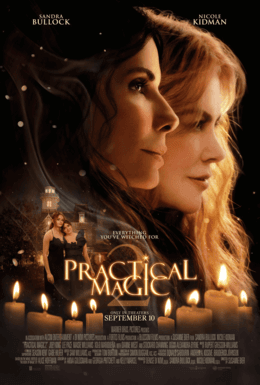
A new “witch movie” was released recently: Practical Magic 2, a sequel to the original Practical Magic that was released nearly 30 years ago.
In an interview about the new movie, one of the actors opined, “A witch has always [had] a negative connotation. It was presented that way. The word is being taken back, and there’s ownership of it from the community saying, ‘I’m a witch and I’m proud [of it].”
Is her perception accurate? Does the world view witches differently today than it did in the past? Do people today practice witchcraft more openly, even with pride?
Image Credit:
Warner Bros. Pictures
Changes in how people view witchcraft
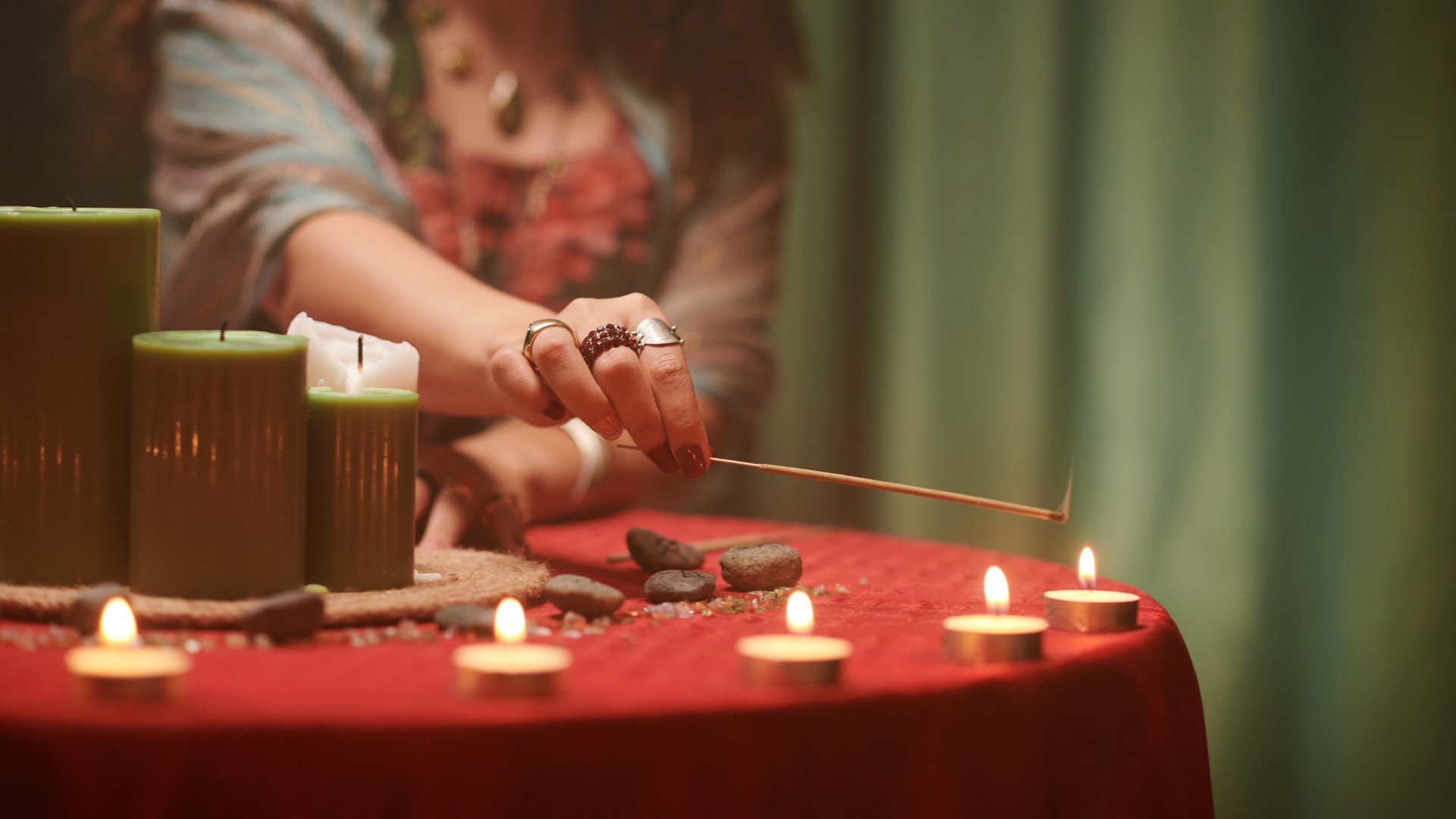
The answer to these questions is a qualified yes. At least in the Western world, attitudes toward witchcraft have changed significantly. Today, some openly practice witchcraft and proudly identify as witches.
Entertainment media has perhaps played the greatest role in reshaping public perceptions, increasingly portraying witches in a positive light through romances, family stories and children’s fantasies.
While some men identify as witches, the term is more commonly embraced by women. Books, movies and television programs increasingly portray female witches as strong, independent women who practice “good magic,” offer healing, pursue spiritual enlightenment—even advocate for environmental causes!
Laws have changed too. In the premodern world, it was frighteningly easy to accuse someone of practicing black magic and, worse, for communities to punish the accused severely.
In a largely patriarchal world, single women, especially older widows, were common targets of persecution. The law offered no protection for a woman who had no man to defend her. The philosophy of “innocent until proven guilty” was not part of the legal or moral fabric of society.
“Confessions” were often extracted through torture. Those who were socially isolated, unpopular or viewed with suspicion were especially vulnerable to false accusations of witchcraft. Accusations could arise from personal disputes, misfortunes or simply behavior that others considered unusual.
The Salem witch trials likely come to mind, as the term witch hunt has come to mean the unfair harassment of opponents. In Salem, 20 people were executed during those trials, most of them women.
The scale of the witch hunts in Europe, however, was far greater. Between the 15th and 18th centuries, an estimated 40,000 to 60,000 people were executed for alleged witchcraft, the majority of them women. The persecutions were particularly intense during the 16th and 17th centuries.
Driven by superstition
Superstition played a strong part. Any negative event, such as a crop failure, warfare, a disease epidemic or the death of a child could trigger suspicion that a sorceress caused the trouble by “casting a spell.”
The advancement of science, by which these tragedies could be explained, lessened the inclination to attribute them to witchcraft.
National, state and community justice systems began to reflect this truer understanding of life, requiring actual proof of wrongdoing over simple accusations.
Is Christianity making another error?
Attitudes within many Christian denominations have also changed, influenced by advances in science and changes in the law. Some of these changes were necessary. Like society at large, many Christian institutions moved away from the harsh judgments and persecutions of the past.
Historically, some had embraced prejudices, presumed guilt without evidence and acted on rumors rather than facts. Theological views shaped by superstition, which too readily labeled individuals as agents of demonic forces, have also been challenged and reconsidered.
But this raises an important question: In rightly rejecting the historical mistreatment of innocent women, has Western culture also lost sight of the reality of an evil spirit world? Has Christianity made a similar mistake? Do Christians today still recognize spiritual evil for what it is?
Have we forgotten what Scripture reveals about witchcraft and its various manifestations? Consider what the Bible has to say about these practices.
God’s warnings against witchcraft
The Old Testament repeatedly condemns witchcraft, sorcery, divination and attempts to communicate with the dead. God explicitly forbade Israel from consulting mediums and spiritists (Leviticus 19:31; 20:6) and commanded His people to reject divination, sorcery and other occult practices (Deuteronomy 18:10-12).
Our free booklet The Spirit World: Facts and Fallacies provides much additional insight. A section titled “Forbidden practices in Deuteronomy 18:9-14” (pages 42-44) explains the various practices condemned in this passage, including child sacrifice, divination, soothsaying, interpreting omens, sorcery, casting spells, consulting spirits (mediums) and attempting to call up or communicate with the dead.
In the New Testament, Simon the sorcerer was sharply rebuked (Acts 8:9-24). Elymas, another sorcerer, was struck blind after opposing the preaching of the gospel (Acts 13:6-12).
New Testament warnings against witchcraft
The New Testament continues to condemn occult practices. When people in Ephesus converted to Christianity, those who had practiced magic publicly burned their books on the subject (Acts 19:19).
There is nothing positive about witchcraft—God commands us to avoid it.
Paul included sorcery among the works of the flesh (Galatians 5:19-21). The book of Revelation likewise warns that those who practice sorcery will be excluded from God’s Kingdom (Revelation 21:8; 22:15).
These biblical statements and examples span many cultures and generations. But their message is consistent. There is nothing positive about witchcraft—God commands us to avoid it.
Good witches and Wicca?
Is there such a thing as a “good witch”? From a biblical perspective, no. But does that mean everyone who identifies as a witch is knowingly involved with demonic forces? Not necessarily. Some may be unwisely dabbling along the periphery of the spirit world, unaware or dismissive of the spiritual dangers the Bible warns against.
Wicca perhaps best embodies the cultural shift away from viewing witchcraft as something dark and evil, instead presenting it as a positive spiritual practice.
Many Wiccans openly identify as witches, but reject any association with Satanism or demonic forces. They maintain that their beliefs and practices are rooted in nature, spirituality and the use of magic for positive purposes—not the worship of Satan or the pursuit of demonic power.
Reflecting the broader cultural trend toward presenting witchcraft in a more positive light, Wicca emphasizes a strong connection with nature, personal growth, caring for oneself and others and doing good rather than evil.
On the surface, these ideals can sound positive. However, a closer examination reveals that many Wiccan beliefs and practices overlap with forms of magic and divination condemned in the Bible.
Many forms of Wicca also embrace duotheism—the worship or honoring of both a god and a goddess. The god is commonly associated with the sun and nature, while the goddess is associated with the moon, fertility and the cycles of life. These deities are often understood as complementary expressions of divine power rather than the one personal Creator God revealed in the Bible.
Worship of the heavenly bodies—particularly the sun and moon—was a prominent feature of many ancient pagan religions. God explicitly warned the Israelites against such practices (Deuteronomy 4:19). Yet many professing Christians today are unaware of the extent to which certain customs rooted in ancient paganism have influenced traditions within modern Christianity.
There’s nothing positive about witchcraft
A desire to protect the environment does not require or justify adopting pagan religious practices centered on the worship of nature. Likewise, seeking physical health does not justify turning to spirits for supernatural assistance.
However positive the intended goals may be, these spiritual practices remain explicitly contrary to biblical teaching.
Society may try to redefine witchcraft in an attempt to recast it in a positive light. But changing societal perceptions doesn’t change reality. Witchcraft cannot be made good simply by calling it good.
Only the true Creator God has the authority to define good and evil—and He has already made His judgment on witchcraft in all its forms abundantly clear!
Watch this 21-minute video to learn more about what the Bible reveals about the spirit world.
Date Posted: October 26, 2026
About the Author
Cecil Maranville
Cecil Maranville is a minister of the Church of God, a Worldwide Association. He worked for many years with the responses to questions our readers send to this website and is now retired.