Do Not Take Away From the Word of God
God commanded us not to diminish His Word. Unfortunately, modern Christianity has failed to properly respect God’s Holy Scripture.

“The only thing we have to fear is . . . ”
“To be or not . . . ”
“I think, therefore . . . ”
But what if, for the next few centuries, all anyone quoted was the first half of these iconic phrases? Slowly, over the course of time, the second half would fade from memory. Over time, each would lose its meaning.
As tragic as these losses would be, at the end of the day, they are only the words of men. Life would go on.
However, what if the words were more valuable? What if they were spoken by God Himself?
The supreme importance of the words of God
The Bible is a book of unparalleled importance, with every word inspired by God (2 Timothy 3:16). Yet, despite its divine origin, it remains the most misunderstood and misquoted book in history.
Tragically, much of the Bible’s true meaning has been lost to the world, obscured by centuries of misinterpretation and misguided preaching.
God abhors the diminishing of His Word, which He gave to mankind as a guidebook for how to live life properly.
Over 3,000 years ago, God entrusted the nation of Israel with His laws and statutes to preserve them for generations to come. In so doing, He gave them a strict precept about altering His Word:
“You shall not add to the word which I command you, nor take away from it, that you may keep the commandments of the LORD your God which I command you” (Deuteronomy 4:2; see also Deuteronomy 12:32).
Sadly, Israel struggled with obeying these commands for centuries, and they are commands many still struggle with obeying today.
In our previous blog post, we explored the dangers of adding to the Word of God. But what about taking away from it?
This issue may be even more widespread—and chances are, you’ve encountered it yourself.
(For the previous blog post, check out “Do Not Add to the Word of God.”)
Diminishing God’s Word
The Hebrew word translated “take away” in Deuteronomy 12:32 is gara. Other translations, like the King James Version, render this word “diminish,” which better captures what is being commanded in this verse.
According to Dictionary.com, diminish can mean “to make or cause to seem smaller, less, less important” or “to detract from the authority, honor, stature, or reputation of; disparage.”
God abhors the diminishing of His Word, which He gave to mankind as a guidebook for how to live life properly. To disparage or detract from the Bible is a great affront to the One who inspired it.
Many churches today would never admit to diminishing anything in the Bible—yet their practices often tell a different story.
Does mainstream Christianity diminish God’s Word?
Across the hundreds of professing Christian denominations, there’s a wide variety of beliefs and practices, which can make it difficult to distinguish those that are rooted in Scripture and those that are shaped more by tradition or culture.
Many churches strongly emphasize certain concepts from the Bible—such as salvation and the divinity of Jesus Christ—yet teach them within a framework that differs significantly from what the early Church believed and practiced.
At times, certain parts of Scripture are emphasized, while others are minimized or overlooked.
How can churches claim to follow God when they keep only some of His commandments?
For instance, God clearly instructed His people to observe the seventh day as a Sabbath of rest and holy gathering (Exodus 20:8-11; Leviticus 23:3). Jesus Himself affirmed its purpose and declared He was “Lord of the Sabbath” (Mark 2:27-28). Hebrews 4:9 reminds us that a Sabbath rest remains for God’s people. Yet this commandment is usually neglected in churches today, even as other commandments are upheld.
Nevertheless, most Christians today are unfamiliar with them or believe they are irrelevant ancient harvest festivals. In so doing, they deprive themselves of the deep truths about God’s plan that these days reveal.
Martin Luther, leader of the Protestant Reformation, famously referred to the book of James as an epistle of straw. His doctrine of sola fide (salvation by faith alone) clashed with James’ assertion that “faith without works is dead” (James 2:20). Because the book of James didn’t align with his theology, Luther questioned its authority and gave it lesser prominence in his Bible.
Many in modern Christianity overlook significant portions of the Old Testament, sometimes even distributing Bibles that omit the majority of the Old Testament, except for the Psalms. The Old Testament is often dismissed as dusty history and laws from a harsh God devoid of love and grace. However, this characterization couldn’t be further from the truth. (To learn why, read “Is the Old Testament Relevant?”)
These are just a few examples of how modern Christianity often promotes certain doctrines while overlooking others, typically those it finds inconvenient or uncomfortable. These neglected teachings are often the ones that challenge long-held assumptions and would totally reshape what mainstream Christianity looks like.
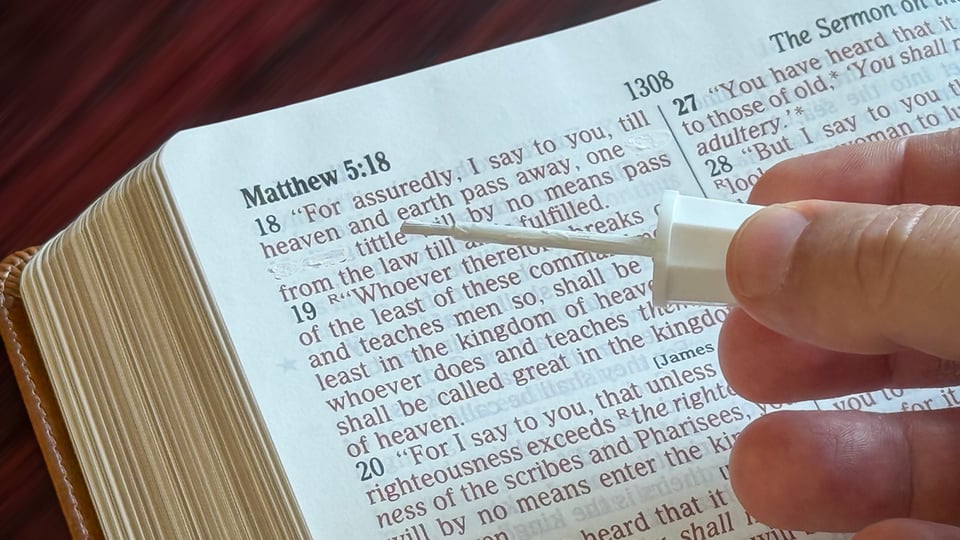
Is not the God who commanded these things the same God who said, “I do not change” (Malachi 3:6)? Is He not the same Jesus who said that “one jot or one tittle” will not pass away from His law until “all is fulfilled” (Matthew 5:18)?
If such things were required of Israel, the apostles and the first-century Church, why would they no longer apply to Christians today?
The Bible tells us that “every word of God is pure” (Proverbs 30:5) and that “all Scripture is given by inspiration of God, and is profitable for doctrine” (2 Timothy 3:16).
It’s not our place to decide that a command is too inconvenient or difficult to obey. Whether God’s commandments challenge us or not, it is the responsibility of every Christian to follow them faithfully.
Where does it all lead?
It isn’t enough to simply claim to follow Jesus Christ—true Christianity requires obedience to His commandments. Jesus Himself said, “If you love Me, keep My commandments” (John 14:15). Not just some, not only the convenient ones—all of them.
He also said, “Man shall not live by bread alone, but by every word that proceeds from the mouth of God” (Matthew 4:4, emphasis added).
The entire Bible, from Genesis to Revelation, is directly inspired by God Himself (2 Timothy 3:16-17). If we must live by “every word” of God and if “all Scripture is given by inspiration of God,” then the only logical conclusion is for us to faithfully follow all Scripture.
A true test of Christianity is the willingness to follow all of God’s commandments, no matter the cost.
A true test of Christianity is the willingness to follow all of God’s commandments, no matter the cost. Even seemingly minor compromises can set a dangerous precedent. If one passage can be dismissed, what’s to stop us from dismissing another?
It’s a slippery slope.
Over time, compromise can make God’s Word feel flexible—something to reshape according to our personal or cultural preferences. Sadly, this is exactly what we see in many mainstream churches today: the steady redefinition of Scripture to suit human desires.
God takes the sanctity of His Word very seriously. The final book of the Bible ends with a dire warning to those who would take away from its contents, promising that God will “take away his part from the Book of Life, from the holy city, and from the things which are written in this book” (Revelation 22:19).
It is no small thing to strip any of God’s commandments away from your religion. When it comes to the Bible, there is no such thing as a meaningless omission.
Look at the whole picture
The Bible is a profound and awe-inspiring book—one that we can best understand when we take it as a whole. Ignoring or dismissing portions that challenge our preconceived beliefs inevitably leads to dangerous misinterpretation.
It’s not a Christian’s role to decide which parts of Scripture deserve attention. All of it does. Every word serves a purpose and carries divine authority.
True followers of Christ must embrace the entire message of the Bible, not just the parts that are comfortable or easy.
Take a moment to reflect on this question: Do your beliefs and practices align with what God actually commands in His Word?
Our series “Christ vs. Christianity” looks at many common mainstream Christian beliefs and examines how they contradict the teachings of Jesus Christ and the rest of the Bible.
Date Posted: November 10, 2025
About the Author

Jordan Iacobucci
Jordan Iacobucci attends the Raleigh, North Carolina, congregation of the Church of God, a Worldwide Association.