Did Paul Abolish the Biblical Holy Days in Galatians 4:8-11?
Many argue against keeping the biblical festivals because of Paul’s words in Galatians 4:8-11. But did Paul actually condemn them in these verses?

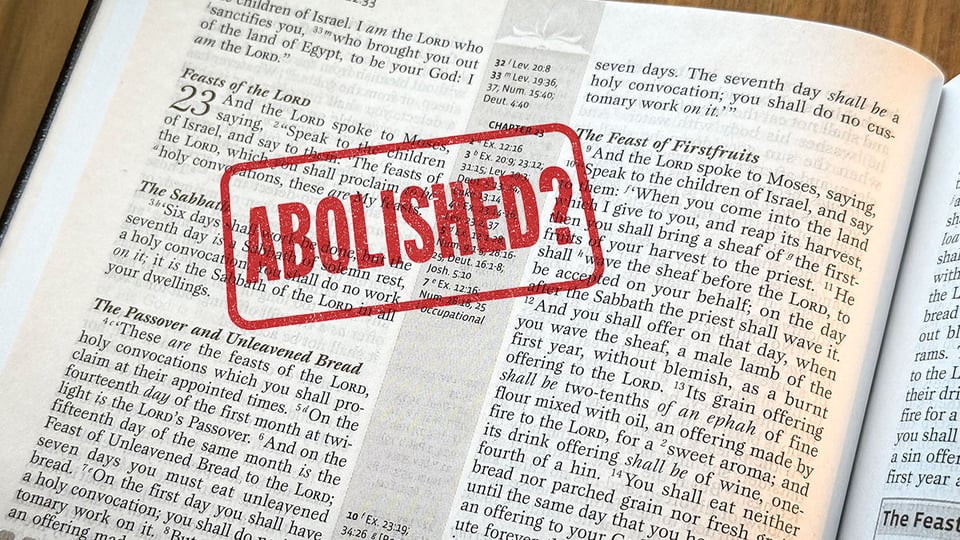
What does Galatians 4:8-11 say?
“But then, indeed, when you did not know God, you served those which by nature are not gods. But now after you have known God, or rather are known by God, how is it that you turn again to the weak and beggarly elements, to which you desire again to be in bondage? You observe days and months and seasons and years. I am afraid for you, lest I have labored for you in vain.”
- “What Was Nailed to the Cross in Colossians 2:14?”
- “Colossians 2:16-17: Did Paul Abolish the Law?”
- “Curse of the Law: What Did Paul Mean?”
- “What Is the Teaching of Galatians on Law and Grace?”
The reason for the confusion boils down to the fact that many Bible students have misread Scripture and failed to understand Paul’s words in their proper context.
Let’s examine one passage—a favorite proof text of some for arguing against the biblical festivals.
In Galatians 4:10-11, Paul wrote: “You observe days and months and seasons and years. I am afraid for you, lest I have labored for you in vain.”
Did Paul change his mind?
Many of the Christians Paul wrote to were gentiles—people who hadn’t grown up reading Scripture or practicing the traditions of the Bible.
Paul was different.
Before his conversion, he was an I-dotting and T-crossing Pharisee—careful to obey every last detail of the law (Philippians 3:4-6). But now he was a Christian—and more than that, an apostle of Jesus Christ. So if the message Paul was given to proclaim involved abolishing the festivals he’d always observed as a religious Jew, he would have said so.
The first-century Church was a growing community of Jews and gentiles who oriented their lives around the weekly and annual Sabbaths.
But he didn’t.
Instead, he told the mostly gentile congregation in Corinth: “Let us keep the feast, not with old leaven, nor with the leaven of malice and wickedness, but with the unleavened bread of sincerity and truth” (1 Corinthians 5:8).
Let us keep the feast.
Jew or gentile, it didn’t matter. For New Covenant Christians, keeping the Passover and the Feast of Unleavened Bread wasn’t strange or out of place. Why would it be? The wine and the bread symbolized Jesus’ body and His complete sacrifice (Matthew 26:26-28). Leaven represented sin, so clearing it out of their homes was symbolic of their commitment to get rid of sin in their lives (1 Corinthians 5:6-8).
These days were—and still are—packed with spiritual meaning.
And it wasn’t just those days he was concerned about.
Luke records that Paul “was hurrying to be at Jerusalem, if possible, on the Day of Pentecost” (Acts 20:16). He and Barnabas attended synagogue services on the weekly Sabbath (Acts 13:14-15), and Paul’s regular practice was to teach on the Sabbath (Acts 17:2). Even gentiles asked to be taught on the Sabbath (Acts 13:42-44).
Luke also makes a passing comment about the Day of Atonement in Acts 27:9, showing that it remained a factor in the Church’s life and conscience.
When we put these scriptures together, a picture forms. The first-century Church was a growing community of Jews and gentiles who oriented their lives around the weekly and annual Sabbaths. In the Old Testament, these days were sacred times for God’s people to come together to worship Him.
Nothing about that ever changed.
Paul—the man who upheld the law as “holy and just and good” (Romans 7:12) and saw it as part of the “oracles of God” entrusted to the Jews (Romans 3:2)—didn’t change his mind about the biblical festivals.
So, then, what religious observances was Paul condemning in Galatians 4?
Galatians in context
To really grasp what Paul means in Galatians 4:10-11, we have to follow the flow of thought in the verses leading up to it.
“But then, indeed, when you did not know God, you served those which by nature are not gods” (verse 8).
The key thing to note here is the Galatians’ former lifestyle. There was a time when they “did not know God” and “were slaves to those who by nature are not gods” (New International Version). Paul was reminding them of their entanglement with the pagan world.
The long and short of it is that these gentile Christians were ex-idolaters. And that detail matters because it helps us understand what Paul means when he warns about their returning to “bondage” in the next verse: “But now after you have known God, or rather are known by God, how is it that you turn again to the weak and beggarly elements, to which you desire again to be in bondage?” (verse 9).
Notice how the thought unfolds in these two verses: before knowing the true God, the Galatians were enslaved to false gods and pagan religions; after coming to know Him, they were set free. But now the Galatians were wandering back toward their old chains, the “weak and beggarly elements” of their former religion.
The Greek word for “elements” (stoicheion) can refer to simple truths and teachings (Hebrews 5:12), but in this context it most naturally means something else. As the Zondervan Exegetical Commentary on the New Testament points out: “Seeing the ‘elements’ here as spiritual powers, as ‘elemental spirits,’ makes good sense in that the Galatians are returning to the gods they previously served” (Thomas Schreiner, 2010, note on Galatians 4:9).
In other words, this phrase is a reference back to the false gods of verse 8. Paul’s concern was that the Galatians were spiritually regressing.
Holy days or other days?
With that background in mind, let’s look again at the verses in question: “You observe days and months and seasons and years. I am afraid for you, lest I have labored for you in vain” (Galatians 4:10-11).
What days was Paul referring to?
It’s impossible that he meant the biblical holy days. That would contradict not only his personal example and teachings, but also the immediate context. The biblical festivals were not part of the Galatians’ pre-Christian past.
Nowhere in God’s law are His people commanded to observe months or seasons or years.
It’s also worth paying attention to Paul’s choice of words. He didn’t say “sabbaths,” “new moon” or “festival”—terms he uses elsewhere when referring to the holy days (see Colossians 2:16). Instead, he used “days,” “months,” “seasons” and “years,” an entirely different string of words.
Nowhere in God’s law are His people commanded to observe months or seasons or years. (See more about this in our article “Galatians 5: What Does ‘Yoke of Bondage’ Mean?”)
This leaves us with only one explanation: Paul was referring to pagan festivals. The Galatians were turning back to religious observances they had left behind.
Paul didn’t spell out which festivals the Galatians were drawn back into, but the Greco-Roman calendar was saturated with days for honoring some deity or religious purpose.
Some days were set apart to celebrate Apollo or Dionysus. Months were marked by special festivals dedicated to Zeus. There were also springtime festivals to honor fertility gods. Even years carried religious meaning. Every four years, for example, the Olympic Games were held in honor of Zeus at Olympia.
What about the broader context of Galatians?
Some object to this explanation, though, arguing that it doesn’t fit within the broader context of Galatians.
It’s true that in much of Galatians Paul was confronting certain elements of Judaism that had crept into the Church (Galatians 2:4-6). Throughout the letter, there are references to false teachers who wormed their way into churches, pressuring gentile Christians to be circumcised (Galatians 4:17; 6:12-13). It was a distorted version of the gospel that placed strict law-keeping as the basis for our justification rather than faith (Galatians 2:16).
So it’s a fair question: Why does Paul address the problem of returning to paganism in the middle of a letter focused on avoiding elements of Judaism?
Paul’s readers lived under Roman rule, where participation in the imperial cult—the worship of gods and emperors—was a civic duty. The Galatians were expected to offer sacrifices, attend ceremonies and take part in other religious functions on certain days throughout the year.
It seems that specific demand wasn’t always enforced, especially early in the Christian movement. But as time went on, the line was drawn more clearly.
Historian Steven Katz explains:
“Pagan communities and civic authorities were for the most part willing to adjust to and respect Jewish religious difference, even to the point—remarkably—of tolerating former pagans who, as converts to Judaism, sought the same rights and exemptions as ‘native’ Jews.
“However, as the early Gentile churches discovered, when Christians began conspicuously to insist on exercising Jewish religious prerogatives without themselves becoming Jews, this tolerance expired” (The Cambridge History of Judaism, Vol. 4: The Late Roman–Rabbinic Period, 2006, p. 993).
In other words, the Galatians were in a tough spot. Some were tempted to accept circumcision to avoid persecution, while others felt pressured and gave in to the religious customs they had once observed.
Paul wrote to both groups, but in Galatians 4:8-11, his focus was on the second group—those who were falling back into the “weak and beggarly elements” of pagan worship.
Days worth keeping
Nothing in Galatians supports God’s people throwing away the biblical festivals. They weren’t a heavy burden to begin with, and observing them doesn’t equate to returning to the Old Covenant. Claims like that are unscriptural.
The early Church recognized these festivals as sacred time set apart by God for a special purpose, and true Christians today continue to observe them.
Each holy day is rich in meaning, and God invites you to experience them for yourself. Learn more in our booklet From Holidays to Holy Days: God’s Plan for You.
Date Posted: November 17, 2025
About the Author

Kendrick Diaz
Kendrick Diaz is a full-time writer at the Life, Hope & Truth offices in McKinney, Texas. He spends his workdays writing blog posts and articles for Discern magazine and LifeHopeandTruth.com.