The Declaration of Independence led to a republic that has been called “the last great experiment” in human government. What have been the results of all man’s experiments?
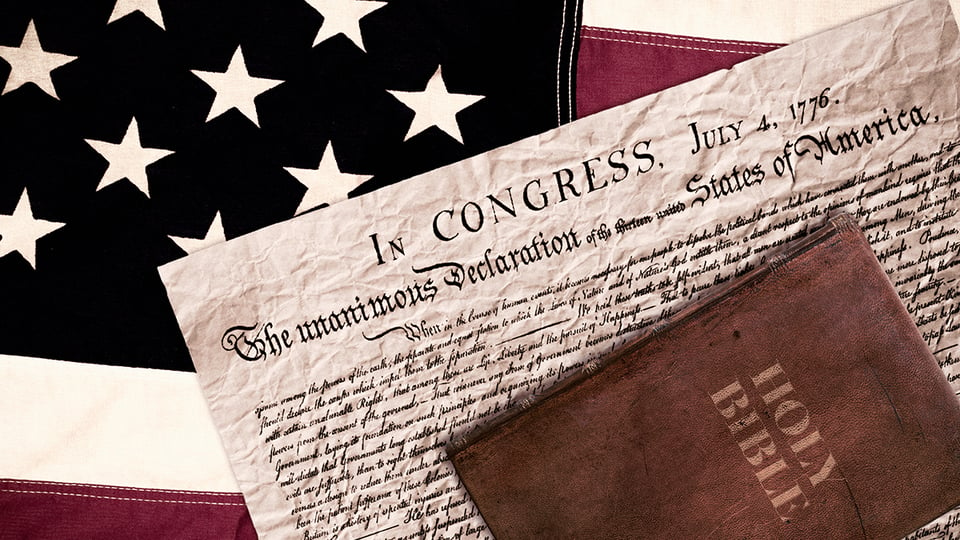
joebelanger via Getty Images
July 2026 marks the 250th anniversary of the U.S. Declaration of Independence. While specific to the founding of the American republic, the Declaration also influenced and shaped other independence movements in the 19th and 20th centuries.
The signing of the Declaration formally initiated a revolution that led to the formation of the United States of America.
A beacon of hope
After a long eight years of war, the American colonies prevailed. The British signed the Treaty of Paris on Sept. 3, 1783, but it wasn’t until June 21, 1788, that the U.S. Constitution was ratified. This established a new system of government that was heralded as a beacon of hope and possibility. (This came after the Articles of Confederation proved unworkable.)
George Washington, commander of the American forces and the nation’s first president, later described the new government as “the last great experiment” in human government (letter to Catharine Sawbridge Macaulay Graham, Jan. 9, 1790).
Abraham Lincoln, in a Dec. 1, 1862, speech to Congress, famously described the nation as “the last best hope of earth.”
List of grievances
Essentially, the Declaration of Independence was a list of grievances. The signers identified 27 points of contention—a list of reasons the colonists should be free from British rule.
These ranged from the British king’s sending “swarms of Officers to harass our people, and eat out their substance” to “imposing Taxes on us without our Consent.”
The Declaration is still celebrated, but the idea of a grievance-based revolution was not new. While some may look back on the Declaration as a novel or unique expression of citizens against a central government, Scripture reminds us “there is nothing new under the sun” (Ecclesiastes 1:9).
Human history is littered with a long list of separatist and resistance movements. Numerous groups, bound together by ethnicity, religion, political beliefs, trade, family or anger, have thrown off one form of government to embrace another.
The Bible tells of God’s chosen nation also seeking a different type of government. “Then all the elders of Israel gathered together and came to Samuel”—the last of the judges appointed by God to lead His people—“at Ramah, and said to him, ‘Look, you are old, and your sons do not walk in your ways. Now make us a king to judge us like all the nations’” (1 Samuel 8:4-5).
The leaders in Israel had their own list of reasons they wanted an updated form of government. A disheartened Samuel took the matter to God in prayer.
God’s response is telling. “And the LORD said to Samuel, ‘Heed the voice of the people in all that they say to you; for they have not rejected you, but they have rejected Me, that I should not reign over them. According to all the works which they have done since the day that I brought them up out of Egypt, even to this day—with which they have forsaken Me and served other gods—so they are doing to you also” (1 Samuel 8:7-8).
God saw through their list of grievances and identified the heart of the matter.
The real issue: “They have rejected Me, that I should not reign over them.”
This approach stretches back to the Garden of Eden when our first parents rejected God as ruler and governing authority. Adam and Eve declared independence from God, and the human family has wrestled with independence ever since.
Failed attempts to govern ourselves
Since Eden, humans have devised an incredible array of political systems: monarchy, dictatorship, oligarchy, theocracy, democracy, republic, communism, anarchy, etc. All have been tried, and all have been set aside, overthrown and rejected in turn.
Political ideologies, including socialism, capitalism, Marxism, despotism and anarchism, have been championed as the newest, best, most innovative means to offer lasting, peaceful government. Yet none has proved lasting.
Some attempts have proved to be much worse for millions of people. Others have brought measurable good—to some.
For example, the Pax Romana, the Roman peace, was a “state of comparative tranquillity throughout Classical antiquity and the Mediterranean world from the reign of Augustus (27 BCE-14 CE) to the reign of Marcus Aurelius (161-180 CE)” (Britannica). Yet, it was only a limited, measured peace, reserved for those who submitted to the domination and rule of Rome. Those who did not submit to Roman will were often brutalized, enslaved or slaughtered.
The American republic has certainly allowed personal liberty on a scale largely unknown before. Not only has it allowed true Christians to live out their beliefs freely, but it has also made possible the freedom to preach the gospel message.
Yet no system of government has established real peace, perpetual unity and community satisfaction. And, perhaps more importantly, no system of government has produced genuine morality in its people. The American system of freedom and liberty, while allowing freedom of religion, has also facilitated the conditions for ever worsening immorality.
Independence from God
A fatal flaw has been shared by all forms of man-devised government. Man’s quest for independence in response to real and perceived grievances has essentially meant rejection of the authority and power of God.
Some governments have certainly given lip service to God. Many founders of the American republic expressed an understanding of the need to rely on God’s providence. However, even though many of the founders mentioned a higher power in their writings, that has not resulted in a nation that consistently stands for and practices godly values.
God’s assessment—“They have rejected Me, that I should not reign over them”—aptly describes all man’s attempts at governance.
This is prophesied to worsen toward the end of the age. “But know this, that in the last days perilous times will come: For men will be lovers of themselves, lovers of money, boasters, proud, blasphemers, disobedient to parents, unthankful, unholy, unloving, unforgiving, slanderers, without self-control, brutal, despisers of good, traitors, headstrong, haughty, lovers of pleasure rather than lovers of God, having a form of godliness but denying its power. And from such people turn away!” (2 Timothy 3:1-5).
The tragic results of rejecting God’s government include violence, war, abuse, corruption and the social plagues of racism, injustice and poverty. These have plagued every government system man has ever devised to one degree or another.
Dependence day is coming
What is the solution? Are humans doomed to a cycle of revolution, resistance and overthrowing governments? Will governments continue to be incapable of producing a moral people?
The only real solution for the human family is the righteous government of God.
Jesus Christ is coming to establish a lasting Kingdom (Revelation 19:11-16). He will bring about vast and systemic changes. He will rule with justice and equity. He will restore the peace that existed in Eden before Adam and Eve chose to declare independence from God.
The Bible describes incredible changes that will come about under the rule of Jesus Christ.
- The international order will be transformed as former enemies learn to live in harmony (Isaiah 19:18-25).
- Warfare will no longer be part of the human experience (Isaiah 2:2-4).
- The environment will be restored and people will be healed of disease (Isaiah 35:1-10).
- And so much more!
Download our booklet The World to Come: What It Will Be Like to explore the complete transformation that is coming.
Declaration of dependence
As we mark 250 years since America’s Declaration of Independence, consider the bigger theme of independence that has characterized human history. For thousands of years, human beings have been living independently from God.
Independence from God is the cause of many of the troubles our world has experienced throughout history. Despite the appeal of relying on ourselves or our government systems, human history demonstrates the truth of Proverbs 14:12: “There is a way that seems right to a man, but its end is the way of death.”
But you don’t have to remain independent from God and suffer those consequences. Instead, you can personally declare your dependence on our loving Father and reap the blessings. Choose obedience. Choose faith. Choose to yield to Him.
The apostle John summarized God’s way of love: “For this is the love of God, that we keep His commandments. And His commandments are not burdensome” (1 John 5:3).
Do you want to experience positive, righteous government in your life? If so, make a declaration of dependence today. Determine that you’ll obey God’s instructions and let Him govern your life now.
For more information on how to embrace Jesus Christ’s beneficial government, download What Is a True Christian?
About the Author

Jason Hyde
Jason Hyde serves as the pastor for three congregations of the Church of God, a Worldwide Association. He was ordained as a minister in 2014 and began serving in the full-time ministry in 2025.