With our devices taking more of our time, the idea of a digital detox is spreading in medical and self-help literature. Can the Bible help us gain control?
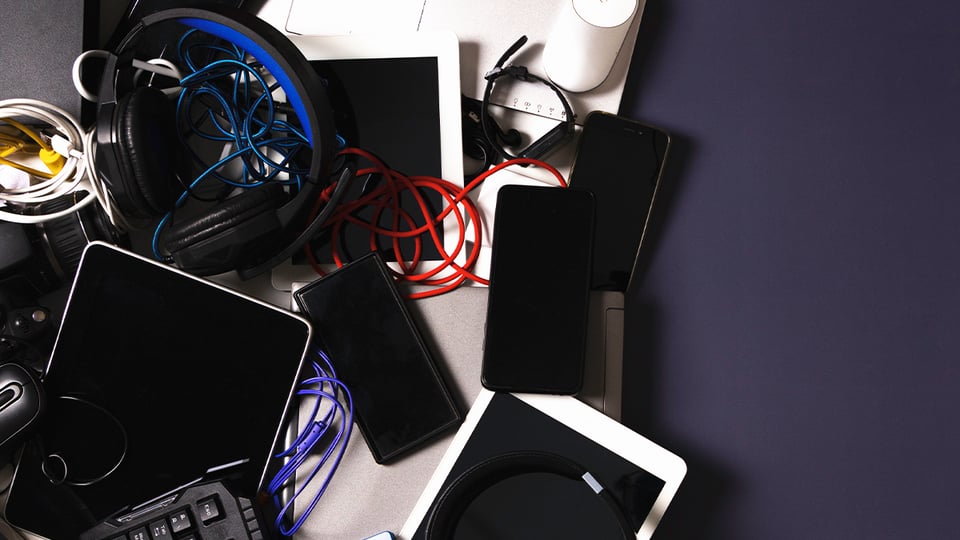
vejaa via Getty Images
Older Millennials, like me, can remember growing up with the emergence of the Internet and the digital era. We remember the sound of dial-up like we just heard it yesterday, and we remember sending that first text on a flip phone using T9 predictive text.
Has the digital world that emerged been a net plus for society?
Yes! And no.
Pros and cons of the digital age
On the one hand, our smartphones now bring more opportunity and assistance into our lives than we ever thought possible.
We use them for complex calculations, getting directions to anywhere on the planet, looking up useful (and useless) information, watching movies, listening to music, playing video games, calling our loved ones, texting, emailing, getting personalized advice from AI-powered virtual assistants, shopping, getting coupons, making appointments and the list goes on.
On the other hand, our smartphones have also brought more problems and challenges than we ever imagined.
We now have instant access to more life-crushing addictions than ever—from gambling and pornography to addiction to the devices themselves. In many ways, we have literally become the product. Corporations sell our data and even harvest our conversations through our always-on devices.
So, there are pros and cons. Life can be amazingly better and easier, but the price can be steep.
Alarm bells have been ringing for a while, and many are waking up to the havoc that instant and nonstop access to social media is having on people’s mental health. Addiction to devices is becoming so widespread it is difficult to ignore.
The rise of the digital detox
As a result of all of this, the idea of a digital detox has been gaining popularity. Many experts and influencers now advocate for scheduled periods of disconnection from our devices. Studies are highlighting the benefits of digital “fasts” from devices—especially for reducing anxiety and depression.
Of course, as with any trend, there are those seeking to profit from digital detox retreats or other flashy therapies with different levels of success.
But many commonsense digital detox strategies are free and self-directed.
Still, the question is, how can we know if we need a detox?
Do I need to do a digital detox?
When considering whether your digital use warrants a detox, think in terms of addiction or slavery. In Romans 6:16, the apostle Paul used this imagery to talk about becoming either slaves to sin or slaves to righteousness.
So, consider these questions to determine if you’ve become a slave of your devices:
- Just how much of my free time do I spend using my devices?
- What percentage of my day is spent continuously scrolling through reels that I probably won’t remember five minutes after viewing?
- When others are speaking to me, am I using (or thinking of) my device instead of actively listening?
- How much of my device time is spent endlessly scrolling or getting jealous over FOMO (fear of missing out) or looking at brain-rotting content?
- Have I gotten angry with someone who has pointed out that I might have an addiction?
- Do I believe I am addicted to my device?
When confronted with these questions, we might quickly get defensive and come up with a parade of excuses:
- “My devices help me get through the day (or the workout or the dishes or parenting).”
- “I work hard all day and just want to relax when I have some free time.”
- “I listen to podcasts, watch documentaries, connect with loved ones—all good things.”
On the surface, we may see ourselves in a lot of these statements. Listening to a podcast or music really does make monotonous tasks more tolerable, and entertainment can provide a relaxing reprieve after a long workday. Devices provide many valuable tools that we take advantage of routinely throughout the day.
But are we recognizing the whole story behind those excuses? Such justifications can be a hallmark of an addiction that doesn’t want the dopamine hits to stop.
- “My devices help me get through stuff.” (That’s why I use them all day in every part of my day, which means my entire day is somewhat intolerable, and I haven’t dealt with why I feel that way.)
- “I just want to relax when I have some free time after work.” (My work drains me so much that anything meaningful feels exhausting, so I settle for endless reels of mostly useless media.)
- “I use my phone for all these good things all day.” (But this leaves no time for silence, personal reflection or just old-fashioned quality time with family and friends.)
Generalizations? Yes. Uncomfortably close to home? Probably.
Time to detox
When choosing how to detox—or “fast”—from the digital realm for a period of time, the prescription should fit the severity of the ailment. Some of us may have to start small, if only to discover how addicted we’ve become to our devices. Others might be able to easily go hours or even a whole weekend without being connected.
Starting somewhere is the key, rather than just excusing or justifying current habits—“it’s really not that bad” or “it’s not really an addiction if so many people do it.”
There are ways to monitor how much time we spend on certain apps so we can target those that take up the most time. Helpful tools are available. “Digital Wellbeing” (for Android users) and “Screen Time” (for iPhone users) actually come preloaded on most modern smartphones.
As the Bible points out, we are to be temperate in all things (1 Corinthians 9:25). This includes our use of devices and technology.
We may discover that it isn’t a complete phone detox that we need, but a break from specific apps that eat up huge amounts of our time with little benefit to show from it.
For example, we may want to keep our app for listening to audio books, but find a way to limit our time on apps that display endless mindless reels.
We can also work on building routines into our lives that don’t depend on devices. (For example, reading physical books, taking walks outside or playing a musical instrument.)
We can pray and study using a physical Bible. This can be a spiritually productive way to disconnect for a while if we want to examine whether our devices have quietly become a second master (Matthew 6:24).
And yes, there can be benefits to silence and boredom. Our devices have almost completely taken these two states away from us. Boredom can be a negative emotion, but it can also have many positive effects on us (providing, for instance, quiet time for reflection or fuel for creativity).
One of the biblical tools for spiritual growth is meditation, focused contemplation of God’s Word. God encourages the type of meditation in which we can examine ourselves (2 Corinthians 13:5) and, through His Spirit, search out the deep things of God (1 Corinthians 2:10).
Some digital detox ideas
Here are a few ways to do your own personal digital detox:
- Set clear limits and boundaries. This could include rules like “no devices during meals together” or “stop using devices an hour before bed.”
- Build in device-free activities throughout the day. Reading, studying, praying, journaling, exercising or having conversations with others are examples of valuable device-free activities. To truly avoid notification distractions, it may be necessary to place your phone in another room during these times.
- Identify time-consuming apps. Disabling notifications, or even deleting those apps for a time, may be necessary if they prove to be a persistent temptation.
Keep what’s beneficial
Smartphones and other modern devices are not evil in themselves. They are very powerful tools that can be both a positive and a negative in our lives. They are necessary for the level of connection and immediacy that is needed for most jobs, and they make connection with loved ones much easier and affordable.
As the Bible points out, we are to be temperate in all things (1 Corinthians 9:25). This includes our use of devices and technology. When moderation is lost, we should take intentional steps, such as a digital detox, to make the needed correction.
Learn more in our online article “How to Stop Phone Addiction.”
Sidebar: Discerning Quality in the Digital Realm
Positive engagement with our devices in the realm of entertainment, social media and news has everything to do with quality.
For every well-researched podcast that provides useful knowledge, there are dozens featuring angry and poorly informed voices loudly expressing their opinions with the goal of provoking outrage or gaining views and ad revenue.
For every YouTube instructional video on how to fix a toilet or make wise investments, there are dozens designed solely to keep viewers scrolling, offering little beyond shock, spectacle or shallow entertainment.
We need to discern (Philippians 1:9) between what is good and what is harmful, and between what is meaningful and what is meaningless, in the digital realm.
About the Author

Eddie Foster
Eddie Foster was born in Ohio, and after living in several parts of the northeastern United States, he once again lives in the Buckeye State, most likely for good this time. He lives in the Dayton area with his wife, Shannon, and two daughters, Isabella and Marley. They attend the Cincinnati/Dayton congregation of the Church of God, a Worldwide Association.