A widely held Jewish tradition maintains there are 613 laws in the Bible. Does God really expect us to learn more than 600 laws?
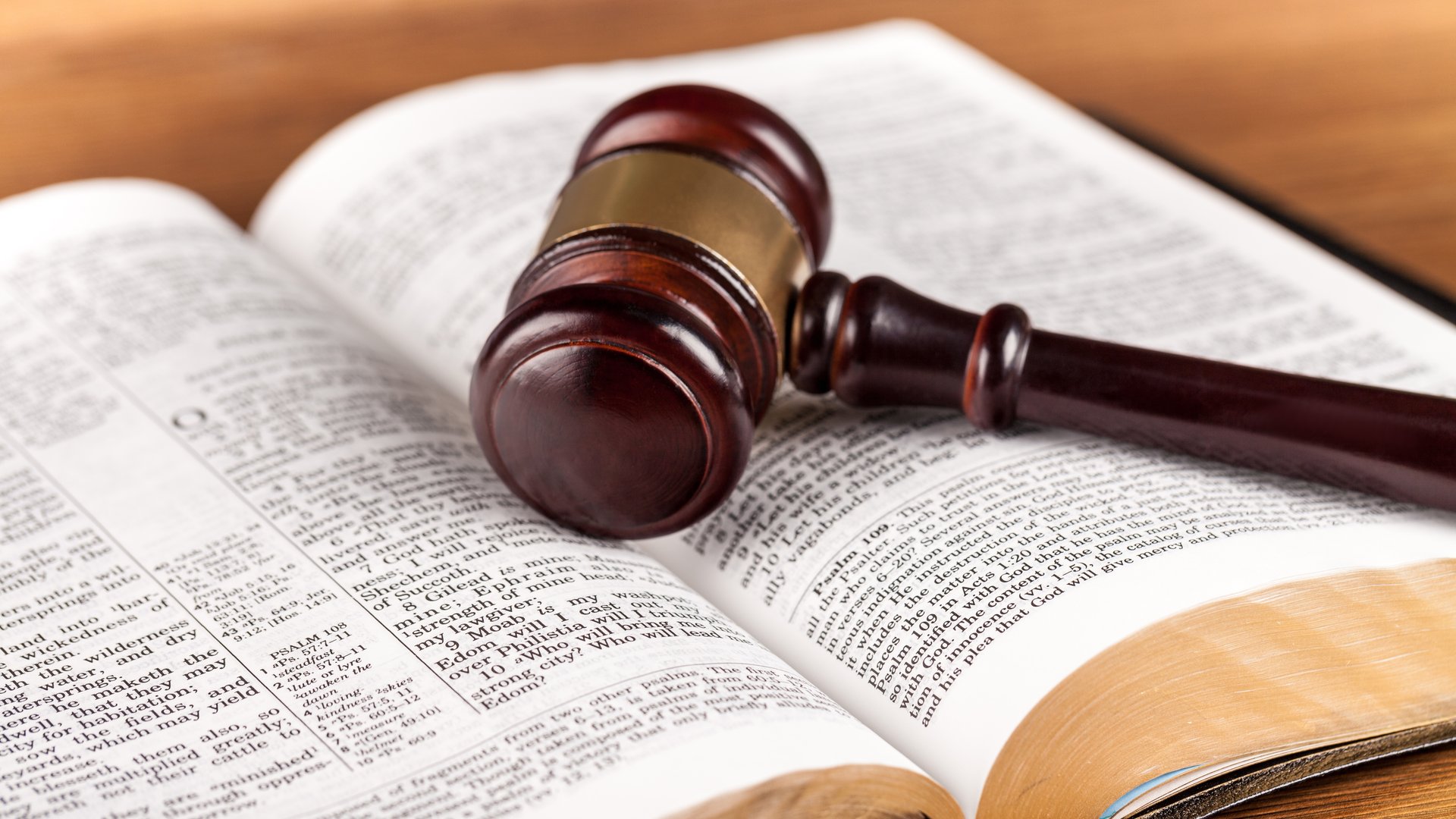
artisteer via Getty Images
The origins of the tradition that there are 613 laws go back many centuries. There are different theories regarding how the number 613 was originally arrived at. Most indicate that the number itself was first proposed or established, and then the list of laws was drawn up to make it fit that number.
However, even those who believe there are 613 agree that the Torah (the first five books of the Old Testament) does not explicitly enumerate a specific number of laws.
The Bible is clear that there are laws God gave to humans. And, yes, there are more than 10. But if you read straight through the first five books of the Bible, it can seem perplexing to know which laws God intends us to keep today and which are not applicable. How can we know how many apply to Christians today?
The New Testament does not negate the Old Testament
Most Christian churches today view the Old Testament as largely irrelevant, particularly regarding God’s laws. This is a false premise, which has led to incorrect conclusions about God’s laws.
In order to know which laws are applicable today, it is important to first understand the connection between the Old and New Testaments.
The Old Testament was not replaced by the New Testament. Notice this statement by the apostle Paul: “All Scripture is given by inspiration of God” (2 Timothy 3:16). When he penned this, there was no New Testament. When he said “all Scripture,” he was referring to the Old Testament.
The Modern King James Version (MKJV) accurately conveys the sense of the original Greek wording as, “All Scripture is God-breathed, and is profitable for doctrine, for reproof, for correction, for instruction in righteousness, that the man of God may be perfected, thoroughly furnished to every good work” (emphasis added throughout).
Notice also verse 15, where he said the Holy Scriptures “are able to make you wise for salvation.” Again, he was referring to what we now call the Old Testament.
This answers a common question: Why aren’t certain laws repeated in the New Testament? The simple answer is that God had already spelled them out in His Holy Scriptures, which were never nullified.
A correct way to view the Bible
A correct way to view the Bible is as a complete compilation. The entire Bible—from Genesis to Revelation—is God’s inspired Word to His human creation.
The Old Testament can be grouped in three sections—the Law, the Prophets and the Writings—and these form the foundation of God’s revelation to mankind. What follows is then built upon that foundation. Christ plainly stated, “Do not think that I came to destroy the Law or the Prophets” (Matthew 5:17). Many churches seem to disagree with Christ.
Following the foundational first three sections are the Gospels, Acts, the epistles and Revelation—which make up the New Testament.
Realizing the Bible is a complete revelation from God, we can clearly see why He did not need to repeat all of the laws He had already spelled out in the foundational first section. Christ said, “It is written, ‘Man shall not live by bread alone, but by every word that proceeds from the mouth of God’” (Matthew 4:4). He said this near the beginning of His ministry, long before there was a New Testament.
Having said that, are all laws in the Old Testament applicable today? The short answer is no. But we need to understand why that is so, and why other laws are applicable.
Different categories of law
If we carefully read the Law section (the first five books of the Bible), we can see several different categories of laws, each addressing different circumstances. Essentially, there are three categories of law given by God.
1. Laws for everyone
This category includes the 10 Commandments, listed in Exodus 20 and Deuteronomy 5. These are the 10 fundamental tenets of God’s moral law for all humans.
It is important to realize that these commandments did not originate with Moses at Mount Sinai. They originated from the beginning of mankind, and each can be seen in existence long before Moses. For example, the Fourth Commandment—God’s holy Sabbath—was instituted from creation (Genesis 2:3).
All God’s commandments are based on His overarching law of love. Christ summarized God’s laws as demonstrating love toward God and fellow man (Mark 12:30-31).
There are also statutes within this first category. Statutes are laws that amplify or elaborate on God’s fundamental moral laws, showing how they apply in practical, everyday life. Like the 10 Commandments, statutes explain how to show love and respect in specific ways to God and our fellow man. Showing love to God also includes specific ways of respecting His creation and the human bodies He gave us. Some statutes amplify one of the 10 Commandments.
Another word that can be used is ordinances. (Sometimes the Hebrew word for statute is translated as ordinance in the text, and sometimes it’s the reverse.)
Below are some of the statutes and ordinances that are intended for everyone, with a scriptural reference for each.
- Holy days (Leviticus 23).
- Holy day offerings (Deuteronomy 16:16).
- Tithing (Leviticus 27:30, 32).
- Clean and unclean meats (Leviticus 11; Deuteronomy 14).
- Prohibited types of sexual behavior (Exodus 22:19; Leviticus 18:22).
- Not marrying close relatives (Leviticus 18:6-16).
- Not speaking evil of rulers (Exodus 22:28).
- Bribery (Exodus 23:8).
- Safety railings (Deuteronomy 22:8).
- Not cross-dressing (Deuteronomy 22:5).
- Teaching children (Deuteronomy 6:7).
2. Civil laws for rulers
Some statutes and ordinances were given by God for the rulers of His nation to implement, and were to be followed within the governmental structure of the entire nation.
There were also judgments. A judgment is a decision or precedent that Israelite judges were to follow when deciding cases involving violations of God’s laws. Since carrying out these judgments fell on the shoulders of the nation’s leaders, most of them are not something we as individuals can keep today.
However, most of the judgments reflect a principle that still applies today. It is also valuable to see God’s mind in all the areas addressed by His judgments and see that there are varying consequences for different infractions, ranging from restoring items to the death penalty.
Below are some examples of statutes, ordinances and judgments that the nation’s leaders and judges were responsible for carrying out within the national context.
- Fines and restitutions.
- Corporal punishment (physical punishment).
- Capital punishment (death penalty).
- Military regulations.
- Multiple witnesses required.
- The Jubilee (50th) year.
- Seventh-year release of debts.
- Inheritance laws.
- Levirate marriage.
- Redemption of family real estate.
- Cities of refuge (for involuntary manslaughter).
3. Ceremonial laws for priests
After delivering Israel from slavery in Egypt, God instituted a priesthood to teach God’s ways to the people. This priesthood system included a tabernacle, where organized sacrifices and other rituals and ceremonies would take place. This system was governed by a separate set of regulations.
This ceremonial system was added after God revealed His fundamental laws to His people and entered a covenant with them. In Galatians 3:17, the apostle Paul refers to this separate law that was added to God’s law.
“And this I say, that the law, which was four hundred and thirty years later, cannot annul the covenant that was confirmed before by God.” Paul is pointing to a law that was introduced 430 years after God entered the covenant with Abraham. (And that covenant extended down through the centuries, through his descendants, who became the nation of Israel.)
God’s foundational moral laws—including commandments, statutes and other laws—were already in force in Abraham’s day. And Abraham was obeying them. “Abraham obeyed My voice and kept My charge, My commandments, My statutes, and My laws” (Genesis 26:5).
So what law was added four centuries after Abraham? It was the sacrificial system, with its regulations governing the rituals, ceremonies, offerings, priesthood, etc. The apostle Paul continues in Galatians 3:19: “What purpose then does the law serve? It was added because of transgressions, till the Seed should come.”
The word transgressions refers to breaking God’s preexisting law. Violation (transgression) of that law necessitated an “added” law. The “Seed” is Jesus Christ. The ceremonial animal sacrifices in particular all foreshadowed the sacrifice of Christ, whose shed blood would pay the penalty for human sins.
Paul goes on to elaborate on the purpose for this added body of law: “Therefore the law was our tutor to bring us to Christ” (verse 24). In other words, the system of sacrifices and rituals was needed until Christ came. It was instructive, like a teacher, pointing humans to the ultimate sacrifice of Christ. The need for that sacrificial system (with its own governing laws) ended for Christians after Christ’s sacrifice.
The points Paul makes are that Christ’s sacrifice fulfilled what the animal sacrifices foreshadowed and that what God has always desired was wholehearted obedience to His perfect, holy law.
What does “fulfill” mean?
Are there 613 laws in the Bible that we must learn? No. But there are laws we should know and obey.
Christ said, “Do not think that I came to destroy the Law or the Prophets. I did not come to destroy but to fulfill . . . Whoever therefore breaks one of the least of these commandments, and teaches men so, shall be called least in the kingdom of heaven; but whoever does and teaches them, he shall be called great in the kingdom of heaven” (Matthew 5:17, 19).
Some churches explain the word fulfill to mean that Christ obeyed God’s law so that we don’t have to. Does that make sense? If your sibling obeyed your parents’ commands, would that free you from obeying them? If your employer gave you instructions, would you not “fulfill” those instructions by doing them?
The Greek word translated as “fulfill” is pleroo, which means: “1) to make full, to fill, to fill up . . . to fill to the full . . . 2a) to fill up to the top: so that nothing shall be lacking to full measure, fill to the brim” (Thayer’s Greek Lexicon).
In other words, Christ came to fill it up to the full. Reading the rest of the Sermon on the Mount, it becomes clear He was actually elevating God’s laws, telling us to not only keep them in the letter, but also embrace them internally.
Learning to love God’s law
Christ said at the beginning of His ministry, “Man shall not live by bread alone, but by every word that proceeds from the mouth of God” (Matthew 4:4). Shortly before His death He said, “If you love Me, keep My commandments” (John 14:15).
The more we become acquainted with God’s laws, the more we appreciate the wisdom and perfect intent behind them. Ultimately, God wants us to be able to agree with the words of Psalm 119:97: “Oh, how I love Your law!”
Study this subject further in our booklet God’s 10 Commandments: Still Relevant Today and our article “What Is the Torah?”
Sidebar: What Are the “613 Commandments”?
While it is not easy to find a definitive origin of the idea that there are 613 commandments, it is easy to find lists of the 613.
Some listings simply show all 613 laws in a single list, while others are broken into categories. But different listings will show entirely different categories. On top of that, there is no unified or standard numbering system. So, we cannot match up all listings of the 613. However, one of the most popular listings is called the Rambam version.
In general, one thing that becomes clear when reading through the list is that while some laws are identifiable as clearly stated in the Bible, other laws seem to repeat prior commands in just different words, or with a slightly nuanced variation.
To give an idea of what the list includes, below is a sampling of laws drawn from a number of different categories, using the Rambam version mentioned above.
1 To know there is a God (Exodus 20:2).
2 Not to entertain thoughts of other gods besides Adonai (Exodus 20:3).
36-41 These six are all about Deuteronomy 13, regarding a person who promotes idolatry.
139-161 These are all from Leviticus 18, where God identifies sexual behaviors that are forbidden.
176-188 These are all from Leviticus 11 and Deuteronomy 14, where God identifies clean and unclean meats.
217-226 These are all about someone taking the Nazarite vow.
301-399 These 99 laws detail regulations for tabernacle and temple sacrifices and offerings.
436-462 Most of these laws concern ceremonial uncleanness.
540-577 These laws mainly concern judgments (precedents) that judges are to render when deciding cases. More judgments are also listed in other places in the listing.
599 Remember what Amalek did to the Jewish people (Deuteronomy 25:17).
Reading through the full list of 613, one can become confused about how those who compiled the list decided what constitutes a law of God versus what is just one of God’s many instructive statements in the Bible.
God didn’t intend His law to be convoluted. He intended it to be clear for all of us to comprehend, in order to follow it in practical ways in everyday life and thereby have successful, blessed lives. Instead of trying to memorize 613 laws, we encourage readers to begin with the two great commandments that Christ used to summarize all the other laws. Start with our article “The Great Commandment” and related articles.
About the Author

Paul Luecke
Paul Luecke and his wife, Ronda, have three married children and have served congregations in Arizona, Kentucky, Tennessee, North Dakota, South Dakota, Canada, Pennsylvania, Kansas and Oklahoma, currently pastoring congregations in Alabama and Georgia.