His subjects considered him both human and divine. In reality, Pharaoh defied the true God by afflicting His people. What should we learn from this villain?
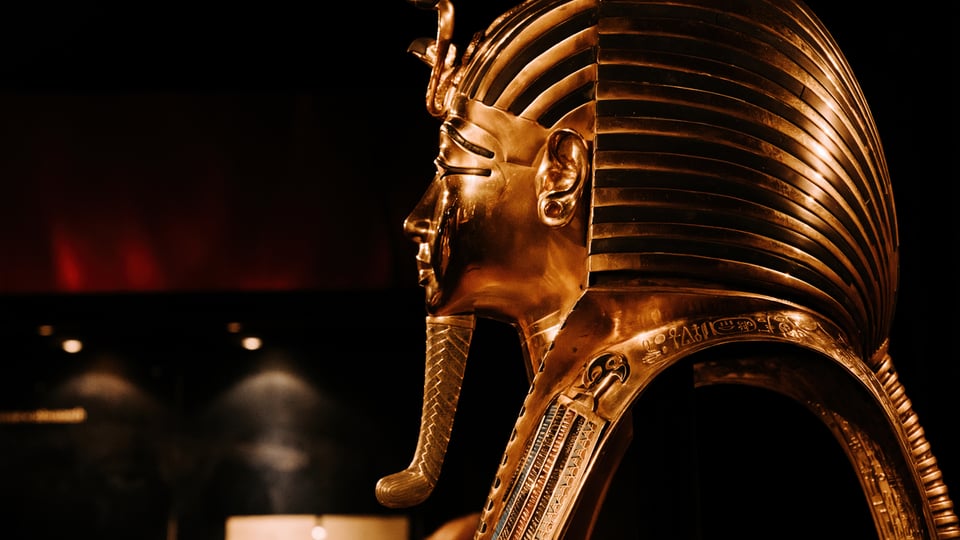
Stock Holm via Lightstock
Dread filled the hearts of the people as they looked back toward Egypt. The clouds of dust that extended across the horizon could mean only one thing—the army of Egypt was pursuing them.
At that moment “the children of Israel cried out to the LORD” (Exodus 14:10). They knew that their pursuer, Pharaoh, was one of the most powerful rulers in the ancient Near East. They were stuck between his army and the Red Sea.
Moses calmed the people, assuring them that “the LORD will fight for you” (verse 14), and He did. But how could Pharaoh, a mere mortal, think he could fight against God?
How did the culture of Egypt drive Pharaoh?
To grasp the thinking of the pharaoh of the Exodus, we must first understand something of the culture and religion of ancient Egypt. Each pharaoh was more than a ruler.
He was the political and military leader, the “Lord of the Two Lands,” called such because he ruled both Upper and Lower Egypt. In addition, he was the “High Priest of Every Temple.” (In practice, though, he delegated many of his priestly duties to individuals he appointed.)
Perhaps his most important duty was to safeguard maat, what Egyptians believed to be the divinely established order in the world. Maat was more than order. It included overtones of justice, balance and control.
The people of Egypt viewed maat as fundamental to the nation’s well-being. The desire to maintain this sense of order and balance resulted in a society in which everyone was more or less locked into his or her role.
In such an environment, change was difficult, if not unheard of.
Why was Pharaoh so powerful and arrogant?
Even more significant in shaping the attitude of the pharaoh of the Exodus was his status. It was not merely a matter of Pharaoh’s personal ego, but of social and cultural expectations.
According to Bible Gateway’s Encyclopedia of the Bible, Pharaoh was viewed as “a god among men and a man among the gods, the human holder of a divine office, the intermediary between the people of Egypt and the gods of the cosmos.”
This cultural belief undoubtedly permeated the mindset of each crown prince as he prepared for his future role as pharaoh. Humility would have been an anomaly.
Encyclopedia of the Bible suggests that “this high status of the pharaohs” was behind God’s intent to make Moses “as God to Pharaoh” (Exodus 7:1).
When Moses communicated God’s will—the will of the only true God—to Pharaoh, Moses became the true intermediary between the divine and human realms. In the mind of Pharaoh, this role was his as the “High Priest of Every Temple.”
What made matters worse was that Moses was a foreigner. He was a member of an enslaved race, and the Israelites, as shepherds, were “an abomination to the Egyptians” (Genesis 46:34). It’s no wonder that Pharaoh resisted.
How long had Pharaoh been on the throne?
Another factor that surely played into the mindset of this villain of the Bible is that the pharaoh of the Exodus had very little experience in his role. God called Moses fairly soon after Pharaoh’s predecessor had died (Exodus 4:19).
Pharaoh likely saw Israel’s God—the God of a slave people—as weak.
Naturally, he had been groomed for the role. However, there is a huge gulf between that sort of preparation and absolute authority. Even if there had been a period of coregency with his predecessor, he would have had very little experience as the final word on any matter.
In their first appearance before Pharaoh, as The Expositor’s Bible Commentary asserts, “Moses and Aaron . . . boldly demanded that he release the people” (Vol. 2, p. 336). They were challenging Pharaoh’s newly acquired authority, an authority that he surely would have been jealously guarding.
Expecting unquestioning obedience rather than demands from a lowly, enslaved people, Pharaoh refused the petition. As he did so, he asked, “Who is the LORD, that I should obey His voice to let Israel go?” (Exodus 5:2).
Pharaoh, like his people, believed in many gods, so he was not denying the existence of the God of Israel. He likely saw Israel’s God—the God of a slave people—as weak. After all, if the God of the Bible were powerful, Pharaoh assumed, He would be the God of a mighty nation.
How did God answer Pharaoh’s stubbornness?
God answered Pharaoh’s question with a series of plagues demonstrating His supremacy over the imagined gods of Egypt. The divine answer was spelled out prior to the first, fourth and seventh plagues.
Through these plagues, the God of Israel was letting the Egyptian people and Pharaoh himself know that He is the true God. In addition, these plagues let all the world know:
- “And the Egyptians shall know that I am the LORD, when I stretch out My hand on Egypt and bring out the children of Israel from among them” (Exodus 7:5).
- “I will set apart the land of Goshen, in which My people dwell . . . in order that you may know that I am the LORD in the midst of the land” (Exodus 8:22).
- “I have raised you up, that I may show My power in you, and that My name may be declared in all the earth” (Exodus 9:16).
How were the plagues a judgment on the gods of Egypt?
Like many peoples of the ancient world, the Egyptians worshipped many gods and goddesses. Many of them were associated with aspects of the natural world, including animals.
The Nile River itself was considered a god. When God turned the waters of the Nile (and all the streams, rivers, ponds and pools) into blood in Exodus 7, He was demonstrating His supremacy over this imagined god.
Each successive plague demonstrated God’s absolute control over every conceivable god.
The 10th and final plague, the death of “all the firstborn in the land of Egypt, both man and beast,” was aimed at all the gods of Egypt. As God told Moses and Aaron, “Against all the gods of Egypt I will execute judgment: I am the LORD” (Exodus 12:12).
As Expositor’s notes, “Those deities whose representatives were linked with beasts were dealt direct blows—the bulls, cows, goats, jackals, lions, baboons, rams, etc. With the sudden death of these sacred representatives, there could be little doubt that it would be interpreted as a direct blow to the gods of Egypt themselves” (Vol. 2, p. 372).
What was Pharaoh’s perspective on the plagues?
Pharaoh himself, considered both a god and a man, was among the gods of Egypt that God judged. His firstborn died in this ruinous plague (verse 29).
His absolute power as the “Lord of the Two Lands” (both of which had been devastated by the plagues) had been broken. His reputation as “High Priest of Every Temple” was under attack as much as the gods he represented.
On top of that, Egypt no longer enjoyed maat. From the perspective of the Egyptians, their country had already been destroyed (Exodus 10:7). There was no order, justice, balance or control.
Yet Pharaoh refused to give in. He momentarily wavered in his shock and grief over the death of the firstborn, telling Moses, “Go, serve the LORD as you have said” (Exodus 12:31). But that did not last.
Why did God harden Pharaoh’s heart?
Throughout the Exodus narrative, we read that Pharaoh “hardened his heart” (Exodus 8:15, 32; 9:34) or that God hardened Pharaoh’s heart (Exodus 4:21; 7:3; 9:12; 10:1, 20, 27; 11:10; 14:4, 8).
People have been puzzled by the idea that God would harden Pharaoh’s heart. Why would a loving God do such a thing?
It was in this seemingly hopeless situation that God demonstrated His unequaled power. He opened a way in the midst of the Red Sea for His people to escape.
Before we consider the “why,” we should take note of the “when.” God did not harden Pharaoh’s heart until the sixth plague (Exodus 9:12), though He had previously told Moses He would do so. For each of the first five plagues, Pharaoh himself hardened his heart. It seems God only amplified what Pharaoh had already chosen to do.
So why did God harden the heart of this arrogant ruler? The apostle Paul, quoting Exodus 9:16, explains that it was to demonstrate God’s sovereignty and power: “For the Scripture says to the Pharaoh, ‘For this very purpose I have raised you up, that I may show My power in you, and that My name may be declared in all the earth’” (Romans 9:17).
How could Pharaoh think he could fight God?
In his stubborn pride, Pharaoh prepared for one final confrontation with Moses, Aaron and the people of Israel as they camped at the Red Sea (Exodus 14:3-9).
Surprisingly, he did not seem to consider the possibility that the same God who had wreaked havoc on his land would stop him. For that matter, the possibility of divine help seemed to elude God’s own people, who “were very afraid” as Pharaoh’s army approached (verse 10).
At that same moment Pharaoh undoubtedly felt both pride and power. He saw that the people were hemmed in by the land without any means of retreat (verse 3).
God had known that Pharaoh, trained in military strategy, would have viewed the situation as impossible for the Israelites. This is how Pharaoh, a mere mortal, could think that he could fight and prevail against God!
It was in this seemingly hopeless situation that God demonstrated His unequaled power. He opened a way in the midst of the Red Sea for His people to escape, and when the Egyptian army followed, He swallowed them up in the waters (verses 21-29).
What does God’s deliverance of Israel from Pharaoh mean for God’s faithful?
This remarkable miracle against one of the most powerful villains of the Bible became a legacy for the nation, repeated throughout Scripture. God’s faithful have looked back on this amazing deliverance at noteworthy moments. Here are a few instances:
- Joshua referred to the Exodus in his farewell address to the 12 tribes (Joshua 24:5-7).
- Gideon referred to His people’s miraculous deliverance from Egypt when he asked the Angel of the LORD why God had not intervened during the Midianite oppression (Judges 6:11-13).
- Asaph and David each recounted the Exodus story in songs (Psalms 78:12-14; 105:25-39).
- Stephen, in his defense before the Sanhedrin (Jewish council), used the Exodus story to rebuke the religious leaders for the same stubborn attitude displayed by their forefathers (Acts 7:23-36).
- The “Faith Chapter” relates the faith of Moses leading up to and during the Exodus (Hebrews 11:23-29).
What God accomplished against the pharaoh of the Exodus was to assert His rightful authority. Pharaoh sought to preserve maat, or order and balance, in the land of Egypt. But it was God’s order and balance that prevailed.
What can we learn from Pharaoh’s sins?
Many commentators have pointed out that just as Egypt is a symbol for the sin that enslaves humanity, Pharaoh is a symbol of Satan. However, we can also learn something by looking at his humanity.
Even if we are not wealthy or powerful, all of us can learn from the downfall of this ruler who set himself up in opposition to God.
Like Pharaoh, we are shaped by the culture around us and our individual life experiences. We base our lives on what we have seen and done and know. We become confident in our beliefs.
Pharaoh was supremely confident in his beliefs, but he was wrong. There may come a time in your life when your beliefs will be challenged.
It may come as you read Scripture, or even as you read an article on Life, Hope & Truth. You might come to question your understanding of who God is and what He expects from you.
How will you react to those challenges? Will you resist change, as Pharaoh did, or will you stop to think?
Don’t make his mistakes. Humble yourself before the Almighty God and accept His help to change.
Learn more in our helpful booklet Change Your Life.
About the Author

Bill Palmer
Bill Palmer has devoted much of his life to writing and editing. He studied journalism at TCU in Fort Worth, Texas, prior to attending Ambassador College in Pasadena, California.